
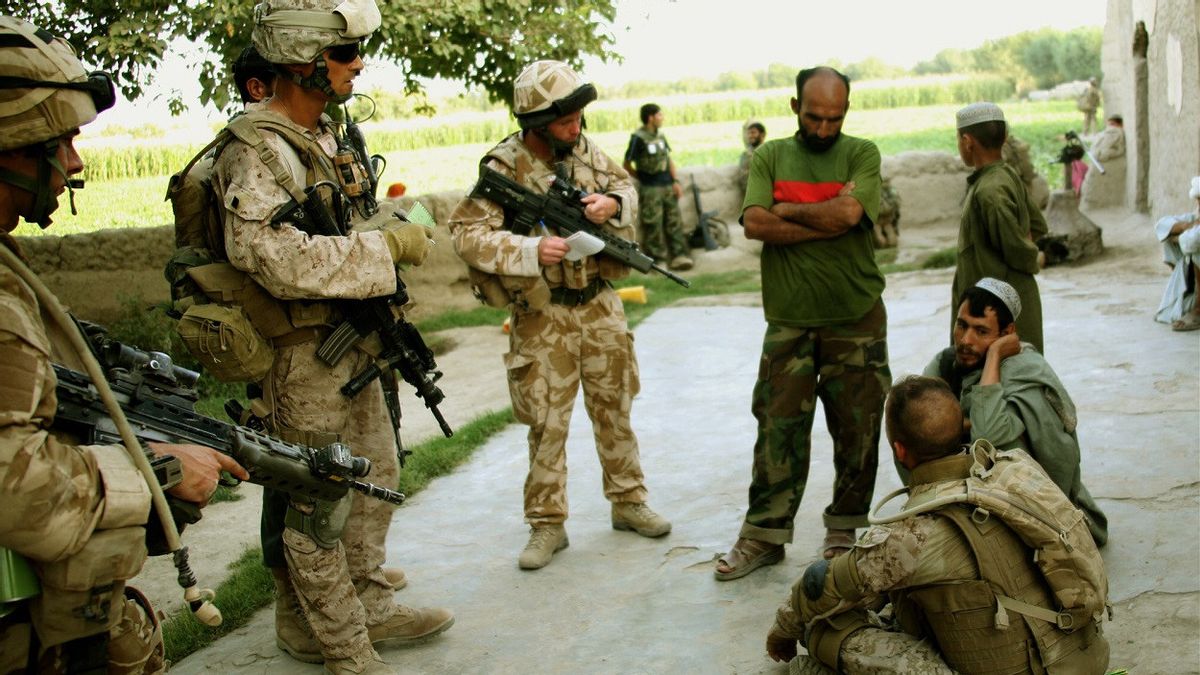


JAKARTA - Former senior British officer said in a public investigation that British special forces in Afghanistan appeared to have committed war crimes by executing suspects, who, although widely known in the command chain, no action was taken.
The British Ministry of Defense (MoD) ordered the investigation after the BBC documentary reported that soldiers of the elite Special Air Service (SAS) forces had killed 54 people during the war in Afghanistan more than a decade ago in suspicious circumstances.
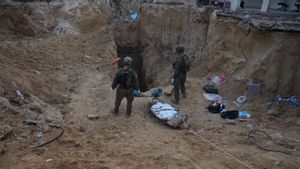
The investigation investigated a number of night attacks by British troops from mid-2010 to mid 2013, as they became part of a US-led coalition fighting the Taliban and other militants.
British military police have previously conducted several investigations into allegations of abuses by troops in Afghanistan, including those filed against SAS, but MoD said none had found enough evidence for prosecution.
The purpose of this investigation is to ascertain whether there is credible information regarding unlawful killings, whether investigations carried out by military police years later related to such concerns have been carried out correctly, and whether unlawful killings have been covered up.
The head of the investigation, senior judge Charles Haddon-Cave, said it was important for anyone who violated the law to be referred to the relevant authorities while suspicions of those innocent were removed.
His previous investigations have heard concerns from British troops in Afghanistan about a subunit called UKSF1, with one unit saying they killed men of mandatory military age during the operation regardless of the threats they pose.
In new evidence, which was given behind closed doors but released on Monday, an officer known as N1466, who at the time served as Assistant Chief of Operations at the British Special Forces Headquarters, revealed how in 2011 he began to suspect the number of prisoners killed during UKSF1 activities.
Based on the examination of the official post-attack report, he said the number of enemies killed in the action (EKIA) exceeded the number of seized weapons, and reports of detainees repeatedly trying to retrieve weapons or use grenades after arrest did not appear credible.
"I emphasize that we are talking about war crimes. We are talking about bringing prisoners back to the target and executing them under the pretext that they are committing violence against troops," N1466 told Oliver Glasgow, the main jakasa of the investigation.
He further said he had conveyed this matter to the Director of Special Forces, referred to as 1802, but instead of considering criminal acts, he only ordered a review of operational tactics.
The former officer said he regretted not reporting directly to the military police at the time, although he later reported his concerns in 2015.
"I am very concerned about what I strongly suspect is an extrajudicial murder of innocent people, including children," he said in a witness statement.
"I have come to the view that the problem of extrajudicial killings is not limited to a small number of soldiers from one UKSF1 subunit, but has the potential to be wider, and it appears that many soldiers in the UKSF are known," he said.
Other evidence provided to the investigation by former officers and a Defense Ministry official stated that there was frustration among the soldiers as those arrested during the intelligence-led operation were released days later because the Afghan justice system was unable to contain it.
SEE ALSO:
-
 | BERITA
KJRI Hong Kong Lakukan Upaya Repatriasi Terbaik Jenazah dan Hak-hak WNI Korban Kebakaran
01 Desember 2025, 17:50 -
 | BERITA
35 WNI Belum Diketahui Keberadaannya, KJRI Hong Kong Terus Melakukan Koordinasi
01 Desember 2025, 16:35 -
 | BERITA
Presiden Trump Akui Melakukan Panggilan Telepon dengan Presiden Maduro
01 Desember 2025, 15:00
The investigation also revealed that there was fierce competition between two units of special forces, UKSFI and UKSF3, which contained N1466.
"I'm also aware that some people out there may want to describe me as, me, not as if I have a grudge. I just want to emphasize, nothing is further from the truth," N1466 told the investigation.
"We don't join the UKSF for behavior like this, for example, toddlers who are shot in their beds or random killings. It's not special, not elite, it's not what we're fighting for, and I'm sure most of us won't want to forgive or cover it up."
The English, Chinese, Japanese, Arabic, and French versions are automatically generated by the AI. So there may still be inaccuracies in translating, please always see Indonesian as our main language. (system supported by DigitalSiber.id)


