

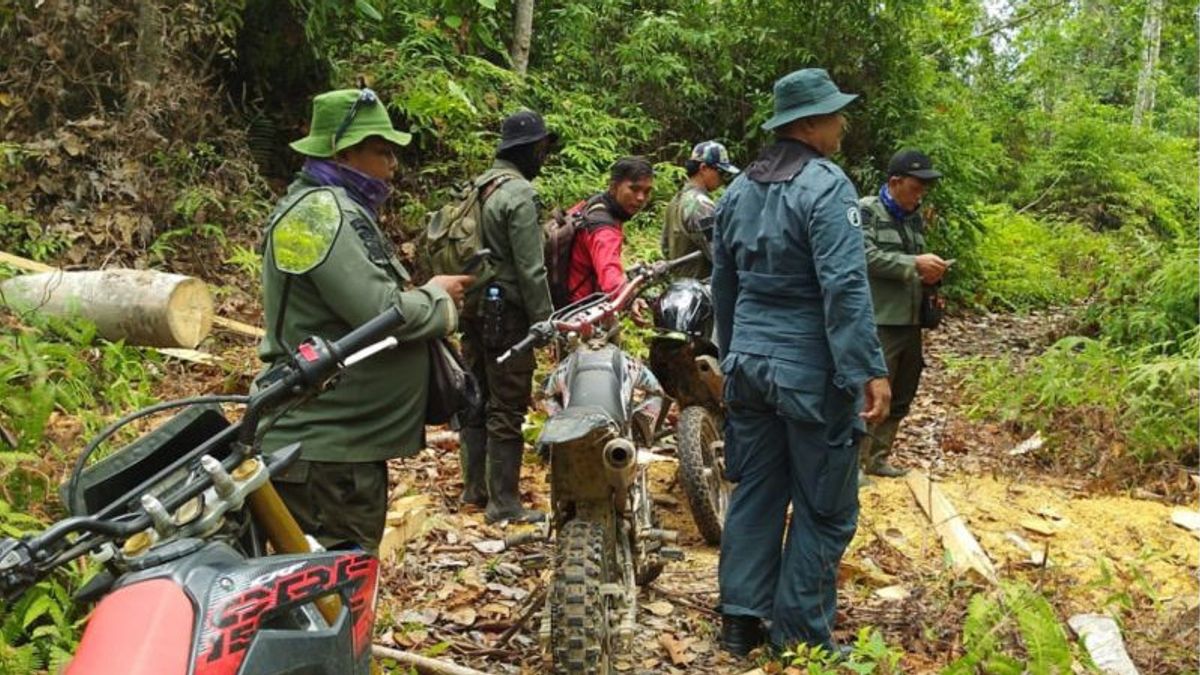


The Directorate General of Law Enforcement of the Ministry of Forestry (Gakkum Kemenhut) has pocketed the name of the owner of the oil palm plantation in the Tesso Nillo National Park (TN) area and the palm oil storage plant produced from the area.
"The Directorate General of Forestry Gakkum has pocketed the names of oil palm plantation owners and oil palm storage plants from the Tesso Nilo National Park area. There are dozens of garden owners, Ram and dozens of factories that accommodate palm oil," said Director General of Gakkum Kemenhut Dwi Januanto Nugroho as reported by ANTARA, Thursday, November 27.
"The area of oil palm plantations ranges from tens to thousands of hectares," he added.
He explained that after pocketing the name, the Ministry of Law and Human Rights Gakkum would proceed to the investigation stage. The Director General of Gakkum said that the violators would be dealt with firmly in accordance with the regulations.
The Ministry of Transportation ensures that law enforcement operations in these conservation areas will continue to save TN Tesso Nilo, which is the habitat of various endangered animals including Sumatran elephants (Elephas maximus sumatranus).
Previously, the Ministry of Transportation together with the Forest Area Control Task Force (Satgas PKH) had been late in tightening security in the Tesso Nilo National Park area after the destruction of the command post by a group of people against controlling illegal oil palm plantations.
To secure the results of controlling and prevent the resurgence of illegal activities, additional forestry police personnel are assigned to strengthen routine patrols, maintain points prone to addition, supervise guard posts, portals, and border trenches, and oversee the implementation of ecosystem recovery which targets around 8,000 hectares of priority areas.
Since the implementation of the control operation, the joint team of the Directorate General of Forestry Gakkum, PKH Task Force, Tesso Nilo National Park and related agencies have curbed around 4,700 hectares of illegal oil palm plantations in the national park area.
Field action includes controlling illegal palm FFB shelters to break supply chains, demolition of cottages and buildings, termination of new land clearing, destruction of access facilities such as illegal roads and bridges, construction of boundary trenches, as well as installation of prohibited boards and marking land control subjects.
The English, Chinese, Japanese, Arabic, and French versions are automatically generated by the AI. So there may still be inaccuracies in translating, please always see Indonesian as our main language. (system supported by DigitalSiber.id)
Most Popular Tags
#Prabowo Subianto #donald trump #firearm #8791 #giias 2026Popular


