

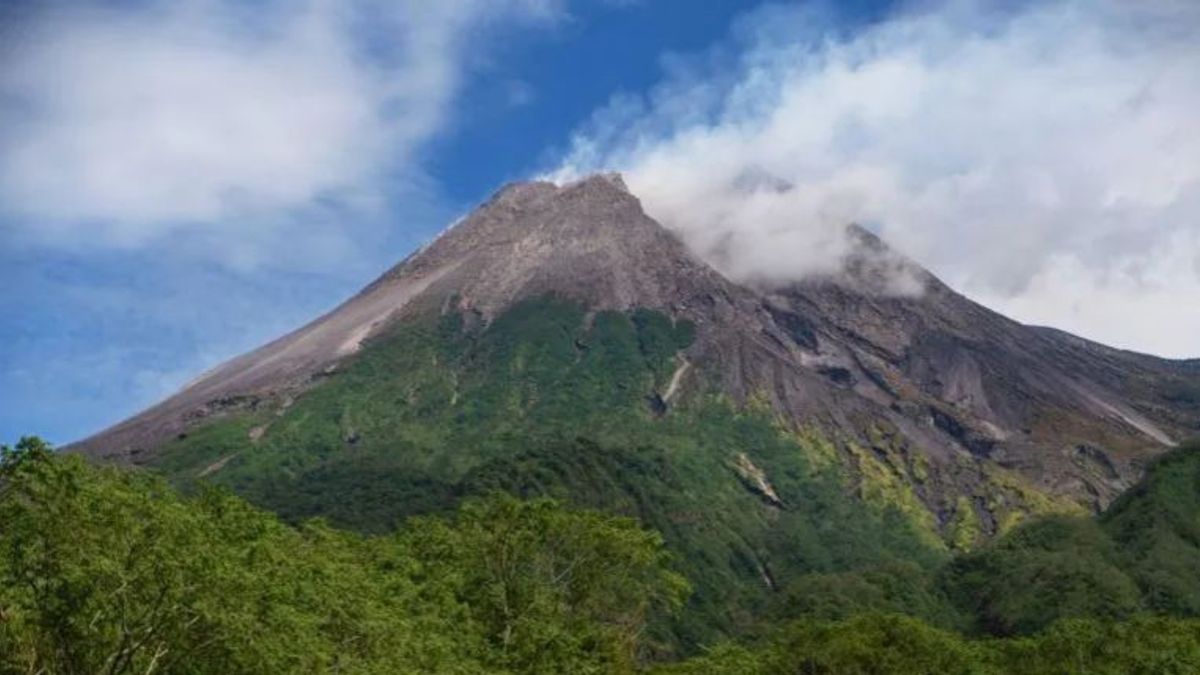


JAKARTA - Head of the Yogyakarta Geological Disaster Technology Research and Development Center (BPPTKG) Agus Budi Santoso said the activity of Mount Merapi with hundreds of avalanches occurring every day and occasionally hot clouds, is still safe for daily community activities.
"Although the intensity of the eruption is high, it is still safe because it is only up to 2 kilometers away, while the residents who live closest are 6.5 kilometers. So God willing, it is still safe to control for people to be able to carry out their activities as usual and enjoy the beauty of Mount Merapi," he said as quoted by ANTARA, Tuesday, November 25.
According to him, the activity of Mount Semeru in East Java does not affect the activities of Mount Merapi in Central Java and the Special Region of Yogyakarta.
"So it's like a family, Mount Semeru or Mount Merapi has their respective kitchens so they don't have any effect, they are far away so they don't affect each other, God willing, it's safe," he said.
The safe situation related to the volcanic activity of Mount Merapi is based on data on monitoring the mountain at any time.
"If since 2001 the five kilometers are at most in Gendol River, so we need to be vigilant too, so far we know the activity of the eruption to the southwest, but don't forget that there is a lava dome in the middle of the crater that is directed to Gendol River, so in the Glagahharjo area, then southwest in Keningar, Kaliurang, Tuguarum still needs to be aware of this eruption activity," he said.
He said the worst-case scenario was with a distance of up to seven kilometers, while the current launch of the eruption material was up to two kilometers.
"So it is still far from the scenario we have made, which we recommend as a danger area. We ask our residents to stay in harmony with Merapi as usual, we have gone through these five years well, so God willing, we can still coexist with Merapi's activities for some time to come," he said.
In addition, this rainy season also affects the instability of the lava dome of Mount Merapi.
"So it is natural that during the rainy season in November, December (2025), then the peak will be January, February (2026), the intensity of avalanches will increase slightly," he said.
The English, Chinese, Japanese, Arabic, and French versions are automatically generated by the AI. So there may still be inaccuracies in translating, please always see Indonesian as our main language. (system supported by DigitalSiber.id)
Most Popular Tags
#Prabowo Subianto #donald trump #2026 World Cup #venezuela #Bhayangkara hut #konflik timur tengahPopular


