

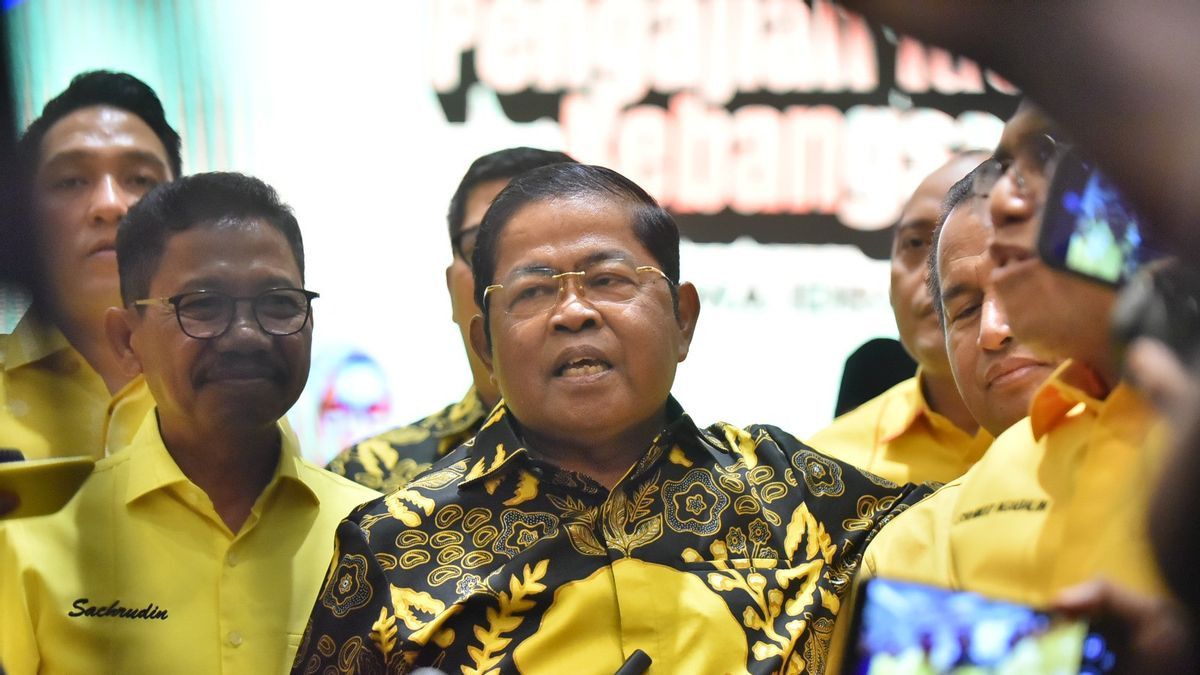


JAKARTA Member of the MPO PB IKA PMII, Idrus Marham, called for the internal conflict of the Nahdlatul Ulama Executive Board (PBNU) to be cleared immediately. He emphasized that the dispute that occurred was not just a matter of figures, but an indication that NU was starting to move away from the value of joint ownership' which became the main spirit of jamiyah.
Tensions peaked after the circulation of the Risal of the PBNU Sharia Daily Meeting which demanded the General Chair of PBNU, KH Yahya Cholil Staquf (Gus Yahya), to resign within three days. Rais 'Aam PBNU, KH Miftachul Akhyar, and said Syuriah would forcibly dismiss Gus Yahya if he refused to resign.
Gus Yahya dismissed the pressure. He emphasized that his term of office as a result of the 34th Congress was still five years old and would be carried out in full. He also questioned the validity of the viral minutes for using manual, not digital signatures, and admitted that he had not received any physical letter from Syuriah.
In a closed meeting with the Chairman of PWNU throughout Indonesia in Surabaya, Gus Yahya opened a consolidation room and left it entirely to PWNU to respond to this turmoil. "NU is not only mine. All administrators have rights and responsibilities," he said. He said several PWNUs rejected pressure for him to resign, although a number of media reported that many regional heads were not present.
In the midst of internal escalation, Idrus Marham appeared as one of the most vocal critics. He emphasized that NU should not turn into an elite "zone for power".
"NU belongs to the people, belongs to NU residents, not belonging to a small group," said Idrus in his statement, Tuesday, November 25.
Idrus reminded that NU's history was built from Islamic boarding schools, grassroots, and the collectivity of the people. He emphasized that this organization stands on the basis of service, not exploring political interests.
He alluded to the names of NU muassis such as KH Hasyim Asy'ari, KH Wahab Hasbullah, KH Bisri Syansuri, and other founding figures who built NU as the main houses of the people and nation. The values of the struggle of the early generation, said Idrus, must be an ethical standard that guides the dynamics of PBNU today.
"If personal interests or groups control the space of the organization, which is threatened not only the dignity of the clock, but also the trust of the people," he said.
Idrus called for a structural and cultural solution through dialogue between senior kiai and a family approach so that PBNU returns to the khittah: maintaining tradition, strengthening morals, and being a national moral guide.
Risalah Syuriah, which sparked controversy, contained a number of criticisms of PBNU, including allegations of financial management intransparency and the presence of NU National Leadership Academy (AKN) resource persons who were considered controversial.
Gus Yahya admitted that the issue had been discussed in the Syuriah forum and said that some of its members regretted not getting the initial information. He is optimistic that NU will be able to get through this internal storm.
From the other hand, the absence of many PWNU Chairs in the Surabaya meeting was in the spotlight of a number of observers because it was considered to show non-uniform solidity.
SEE ALSO:
-
 | BERNAS
Konflik Tak Berkesudahan Nahdlatul Ulama adalah Cermin Gejolak Elit Politik Indonesia
25 November 2025, 08:00

According to Idrus, this crisis should be a momentum for NU to strengthen identity as a socio-religious organization that prioritizes moral value, not as an elite maneuver arena.
"It's not enough just to clarify internally. NU requires reconciliation and transparency steps to remain a large house for the people, not a stage for power," he said.
The English, Chinese, Japanese, Arabic, and French versions are automatically generated by the AI. So there may still be inaccuracies in translating, please always see Indonesian as our main language. (system supported by DigitalSiber.id)
Most Popular Tags
#Prabowo Subianto #donald trump #firearm #8791 #giias 2026Popular


