

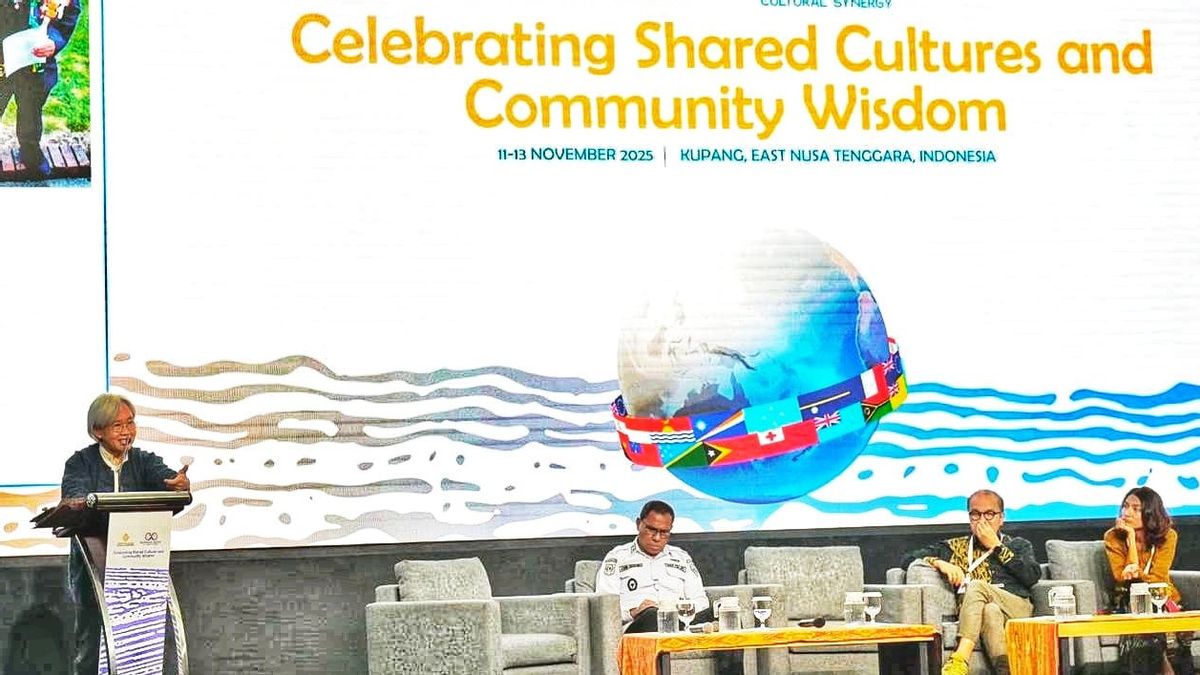


The 2025 Indonesian-Pacific Cultural Synergy (IPACS) plenary session presents strong ideas about the role of culture as a motor for economic sustainability and the environment in the Pacific region. In a forum themed Reinventing the Future: Harnessing the Power of Culture for Environmental and Economic Sustainability, which was held Wednesday, November 12, six regional figures explained strategies for strengthening cross-border cultural collaboration.
Coordinating Minister for Human Development and Culture Pratikno, as a keynote speaker, emphasized the need for Pacific solidarity through creative collaboration. He said UNESCO 2023 data showing that the cultural and creative industry sector contributed 3.1 percent of global GDP and 6.2 percent of the world's employment opportunities. In Indonesia, the contribution reached 94 million US dollars with 26 million workers.
Pratikno conveyed four collaborative strategies: Co-create, Co-train, Co-market, and Co-protect. IPACS 2025 must be a movement that turns art into life and culture into a common force, he said.
Ambassador Extraordinary and Plenipotentiary of the Republic of Indonesia to New Zealand, Samoa, and the Kingdom of Tonga, Tantowi Yahya emphasized that the local Pacific tradition "starting from Sasi in Maluku to Raui in Cook Islands" is a life technology' that maintains human and natural balance. He assesses that the transition to sustainability must depart from local wisdom. Tantowi also encourages government partnerships, communities, and cultural organizations to strengthen sustainable cultural governance.
Meanwhile, Fiji's Minister of Culture, Cultural Heritage and Art Iferemi Vasu highlighted the role of culture as the foundation of regional values and identities. He called the creative and cultural industry a growing and important sector for Fiji's economy. Vasu stressed the need for cultural rights protection, expansion of the creative economy for youth, and partnerships to maintain sustainability.
SEE ALSO:
-
 | BERITA
Di Forum IPACS 2025 Indonesia dan Negara-negara Pasik Bikin Kesepakatan
12 November 2025, 18:39 -
 | BERITA
Indonesia dan Fiji Sepakat Perkuat Diplomasi Budaya di Kawasan Pasifik
12 November 2025, 22:20

Deputy Governor of NTT Johanis Asadoma emphasized culture as a moral and spiritual guideline for the future. He quoted the One Village, One Product program as an example of a tradition-based green economy. True development is not only about infrastructure, but also about human development and social relations," he said.
On that occasion, Secretary General of Asia Pacific Crafts Alliance Joseph Lo explained that the sustainability of the creative industry depends on cultural capital, cultural driving, creative producers, and reactitalization. He emphasized the importance of mapping data and vocational education to develop a strong and inclusive CCI ecosystem.
Paparan ditutup oleh pendiri Bhumi hala Jogja Bukhi Prima Putri, yang menggabakkan geraan Boja The Magic Table. Ia menjelaskan pengadarisan 10.000 retah tradisional dan praktik hidup berbasis lingkungan yang diterapkan komunitasnya. Bukhi berharap ini belahirkan generasi muda yang peduli kedaulatan pangan dan ekonomi lokal.
The plenary session IPACS 2025 emphasized one message: culture is a strategic force to organize the future of the Pacific, connect humans, nature, and creativity in one vision of sustainability.
The English, Chinese, Japanese, Arabic, and French versions are automatically generated by the AI. So there may still be inaccuracies in translating, please always see Indonesian as our main language. (system supported by DigitalSiber.id)
Most Popular Tags
#Prabowo Subianto #donald trump #Febrie Adriansyah #8791 #giias 2026Popular


