

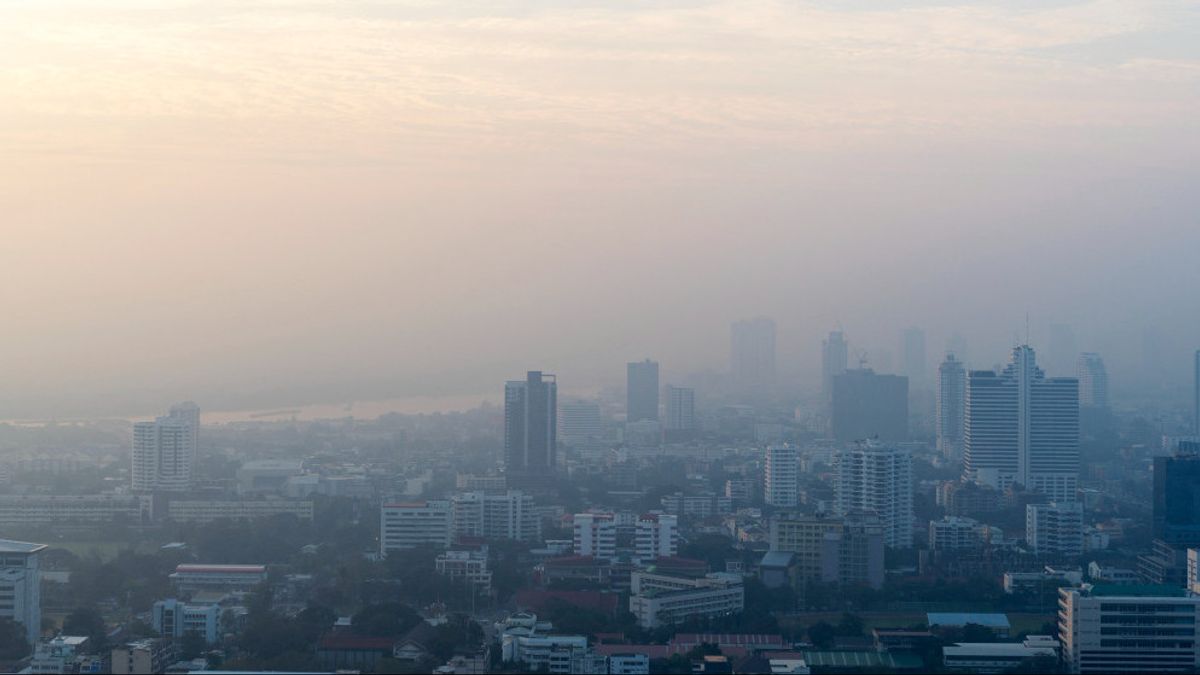


Air pollution is often associated with human activities such as vehicle smoke and factories. However, did you know that there are also many examples of air pollution that occur naturally around us?
Nature has its own mechanism that produces harmful particles and gases into the atmosphere. Volcano eruptions, desert dust, to natural forest fires are clear evidence of this phenomenon occurring millions of years ago.
Air Quality Education Specialist, Marijuana Green, was quoted from the Clarity Movement Co. page explaining several things about air pollution in nature. Here's a summary of VOI for you:
Natural air pollution is air pollution originating from natural sources without human intervention. In contrast to anthropogenic pollution resulting from human activities such as vehicles and industries, natural pollution occurs through natural processes on earth.
Although most of the hazardous air pollution comes from human activity, natural sources also release pollutants such as particulates, ozone, methane, and volatile organic compounds that can affect air quality and health.
When erupting, the volcano releases dangerous gases into the atmosphere including carbon dioxide (CO2) and sulfur dioxide (SO2). SO2 gas can cause irritation of the throat, eyes, and respiratory tract. In addition, the volcano also produces volcanic ash in the form of dangerous particulates.
In dry areas like deserts, strong winds lift sand particles and dust into the air, creating PM10 and PM2.5 particulate storms.
Please note, this storm affects 151 countries and more than 300 million people daily, causing respiratory and cardiovascular disease.
Sea water spray produces aerosols consisting of inorganic sea salt and organic materials. Marine salt particles are emitted by wind pressure at sea level, containing sodium chloride, magnesium, and sulfate in various sizes PM2.5 and PM10.
Forest fires produce various dangerous pollutants such as PM2.5, PM10 (grey), black carbon, carbon monoxide, nitrogen oxide, ozone, and volatile organic compounds (VOCs).
In addition, black carbon can cause heart and lung disease, as well as contribute to global warming.
Also read the article that discusses Problems With Lung Signs that Must Be Known: Here's the Full Explanation
Plants release volatile organic compounds (VOCs) to attract pollinators and respond to environmental conditions. More than 1700 VOCs have been identified from various plant species. In contrast to anthropogenic VOCs, the VOCs of plants tend to be less dangerous.
The process of decomposing organic matter produces ammonia, methane, FUEL oxide, and carbon dioxide through an anaerobic (without oxygen) or aerobic (with oxygen) decomposition.
Who would have thought that through extreme temperatures, lightning produces nitrogen oxides that contribute to the formation of soil surface ozone. But lightning also produces hydroxyl radicals that help clean the air from certain greenhouse gases.
Uranium that decays naturally in rock and soil forms radioactive radon gas. This gas is invisible, odorless, but can cause lung cancer if accumulated indoors.
Natural air pollution can lower air quality and have an impact on human health. In addition, short-term exposure can also cause eye irritation, difficulty breathing, to asthma attacks.
Some natural pollutants such as black carbon from forest fires contribute to global warming.
SEE ALSO:
-
 | BERITA
Generasi Z dan Alpha di Maladewa Tak Akan Pernah Bisa Merokok Seumur Hidup!
03 November 2025, 05:25 -
 | EKONOMI
KAI Commuter Pastikan Kesiapan 102 Rangkaian Kereta Hadapi Libur Natal dan Tahun Baru
03 November 2025, 06:10
However, emissions from human activity currently produce 60 times more pollution than natural sources such as volcanic ones.
By understanding examples of air pollution that occur naturally helps us realize that air pollution is not just the result of humans. However, anthropogenic activity remains the largest contributor to air pollution.
The English, Chinese, Japanese, Arabic, and French versions are automatically generated by the AI. So there may still be inaccuracies in translating, please always see Indonesian as our main language. (system supported by DigitalSiber.id)
Most Popular Tags
#Prabowo Subianto #donald trump #2026 World Cup #Febrie Adriansyah #8791Popular


