

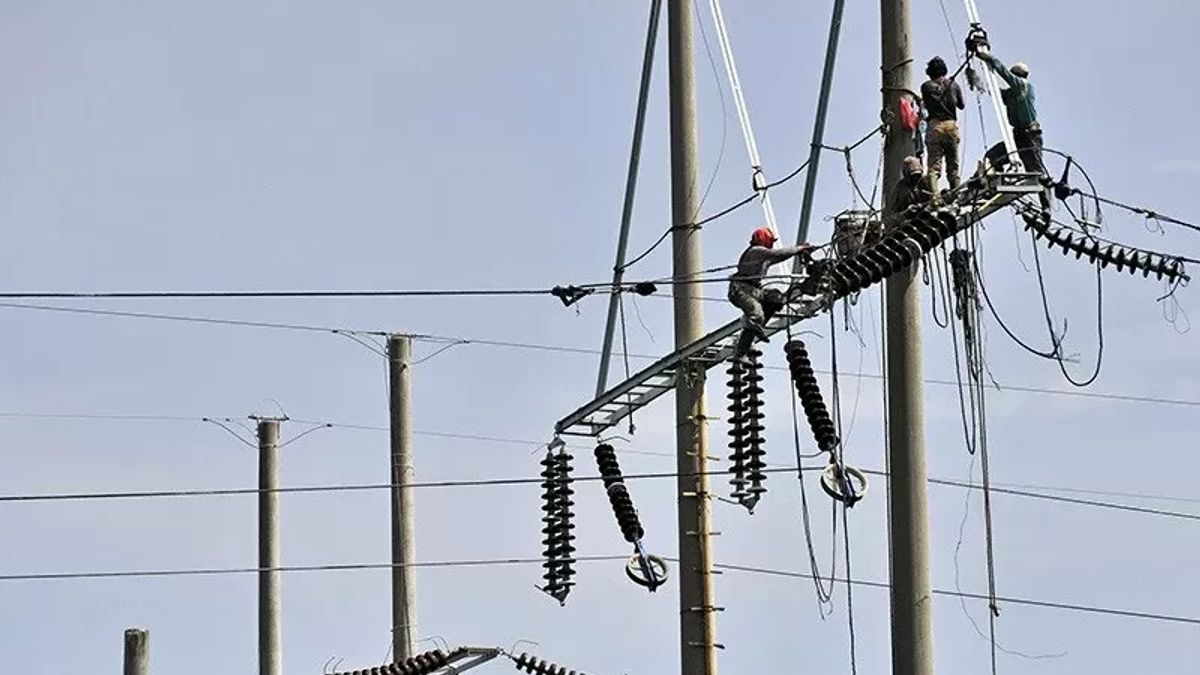


JAKARTA Academics in South Sumatra (Sumsel) assess the policy direction of the Minister of Energy and Mineral Resources (ESDM) Bahlil Lahadalia regarding village electricity (lisdes) emphasizing the energy fair and energy independence launched by Prabowo Subianto-Gibran Rakabuming Raka in Asta Cita.
Sriwijaya University (UNSRI) Public Policy Expert, Dr. Andries Lionardo, said the village electricity program was a symbol of the government's alignment with the small community.
"The village electricity policy is very good and very pro-village. Currently, the era of information technology, the era of big data, and the era of digitalization. Without electricity, energy power in the village will not grow," Andries said in an energy policy discussion in Palembang, Tuesday, October 21.
He assessed that the availability of electricity that is evenly available opens up great opportunities for improving the quality of education, health, and employment in rural areas. In South Sumatra alone, there are 11 villages that are part of a total of 1,285 locations for the 2025 Additional Budget Village List (ABT) Program. Of the 11 villages, 7 of them are in the Musi Banyuasin area, namely Bandar Jaya Village, West Election Village, Kepayang Village, Mangsang Village, Muara Merang Village, Pangkalan Bulian Village, and Sako Suban Village.
"Without electricity, there will be no technology-based village administration. Village infrastructure also cannot develop. Look at village roads, school buildings, everyone needs strong electricity and bright lighting so that children can read well and maintain the health of their eyes," he said.
SEE ALSO:
-
 | BERITA
Terkecuali Hongaria-Slovakia, Uni Eropa Setop Impor Gas LNG Rusia Akhir 2027
21 Oktober 2025, 14:36 -
 | BERITA
Eropa Dihantui Kekurangan Minyak dan Gas, Rusia Bakal Jadi Solusinya
06 Oktober 2025, 17:45 -
 | BERITA
Trump Kunjungi Inggris Bawa Investasi Teknologi Rp689,9 Triliun, Ini Detailnya
17 September 2025, 12:13 -
 | BERITA
Badan Nuklir Dunia Kembali Kerahkan Inspekturnya Awasi Fasilitas di Iran
27 Agustus 2025, 15:38 -
 | BERITA
Bunuh 14 Ilmuwan Nuklir Iran, Apakah Israel Punya Program Senjata Nuklir?
25 Juni 2025, 18:11 -
 | BERITA
Akui Punya Kenangan Indah dengan Trump, Kim Jong Un Siap Diskusi Asal Tak Kekang Program Nuklir
22 September 2025, 17:57
According to Andries, the domino effect of the village electricity program has been seen from the increasing employment and economic activity of the community. Many villages are now starting to form energy cooperatives and electricity-based home businesses. This policy is not just an infrastructure project, but empowerment tools," he said.
Meanwhile, UNSRI Energy Expert, M. Taufik Toha, explained that technically the current national electrification achievement is close to perfection. The government with the driving force of the Ministry of Energy and Mineral Resources was also asked to speed up the work on the program.
"Our village electricity is now good, it's 99 percent nationally. The ratio of electricityed households also reaches 91 percent," said Taufik.
He also encouraged the government to use renewable energy to flow electricity in villages and no longer use fossil energy. This new renewable energy can also be adjusted to the characteristics of energy sources in each region.
The solar panel is more likely, because Indonesia is tropical. Sunlight is available throughout the year. The energy can be stored in batteries for use at night. That's the most efficient for villages in remote forests or areas," he said.
With these various achievements, Taufik considered the village electricity policy to be a milestone towards national energy self-sufficiency.
Meanwhile, Unsri economist Dr. M. Subardin said the government had succeeded in encouraging economic growth in the regions through increasing access to energy that had proven to accelerate the productivity of rural communities.
"When viewed from the elasticity of electrical energy to economic growth, it is very high. Every 1 percent increase in electricity consumption will encourage the economic growth of GDP per capita of 1 percent. Because almost all community activities now require electricity, both industry, households, and public services," said Subardin.
The English, Chinese, Japanese, Arabic, and French versions are automatically generated by the AI. So there may still be inaccuracies in translating, please always see Indonesian as our main language. (system supported by DigitalSiber.id)


