

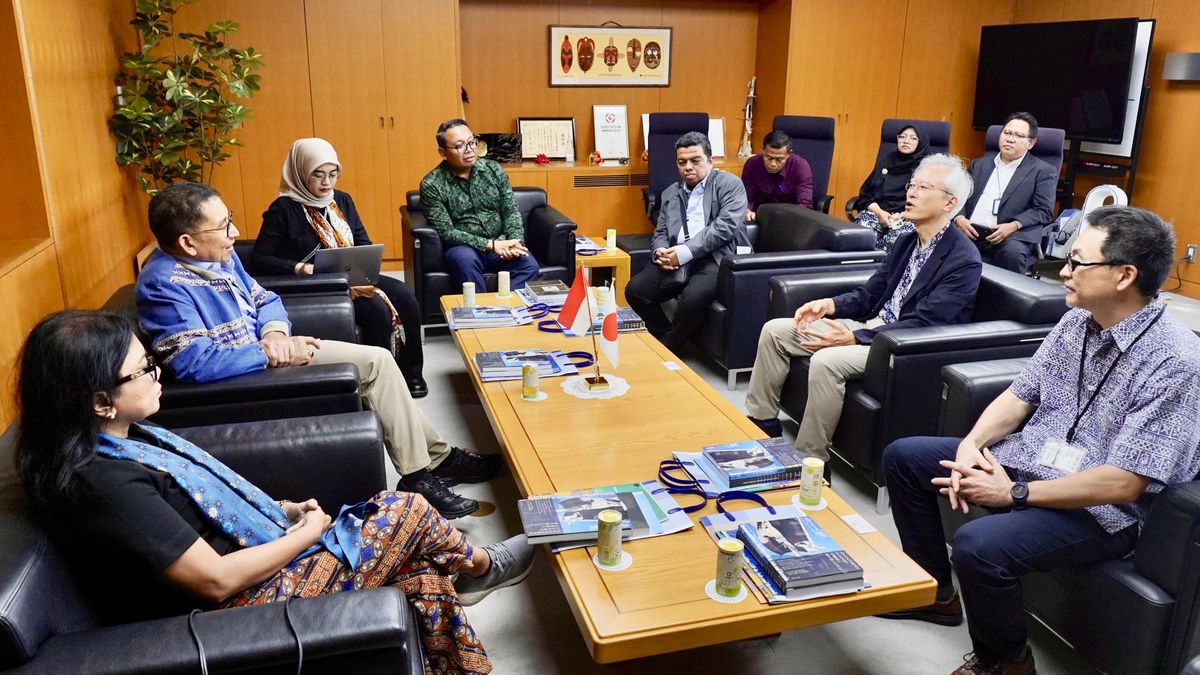


JAKARTA - Minister of Culture of the Republic of Indonesia Fadli Zon emphasized the importance of strengthening research and Indonesian cultural studies as the foundation for the development of science and cultural diplomacy. During his visit to the National Museum of Ethnology (Minpaku) in Osaka, Sunday, October 12, he emphasized that Indonesia is not only a source of world cultural heritage, but also a center of knowledge that plays an important role in global cultural and humane studies.
Indonesia has extraordinary cultural wealth. But what is no less important is the knowledge that was born from culture itself. Through research and academic cooperation, we deepen our understanding of humans, history and civilization," said Culture Minister Fadli Zon, as stated in a written statement received by VOI, Sunday, October 12.
The meeting at Minpaku was attended by Japanese academics who researched Indonesian culture, including Prof. Shota Fukuoka, an ethnomusicologist who researched Sundanese music; Prof. Rintaro Ono, maritime archaeologist; Dr. Hiroyuki Imamura, researcher in traditional martial arts pencak silat; and Dr. Masami Okabe, a Javanese dance and cultural art expert.
Discussions focused on research collaboration in the fields of ethnomusicology, dance, maritime anthropology, martial arts, and archipelago ethnography. Fadli Zon also explained research initiatives being carried out by the Ministry of Culture, such as digitizing cultural archives, studying the Mount Padang megalithic site, and documentation of Nusantara beads. He added that Indonesia had just agreed to return 28,131 Dubois Collection fossils from the Netherlands as part of national prehistoric research.
SEE ALSO:
-
 | MUSIK
Hadiri Peluncuran Buku Enteng Tanamal, Menbud Sebut Tata Kelola Royalti Harus Ikuti Zaman
10 Oktober 2025, 13:00 -
 | BERITA
Terima Artefak Nganjuk, Menteri Kebudayaan Tegaskan Komitmen Pelestarian Warisan Sejarah
10 Oktober 2025, 08:19
Minpaku itself is a leading anthropological and ethnological research institute in Asia, under the National Institutes for the Humanities (NIHU). Founded in 1974 and opened to the public since 1977 in the former Osaka Expo area, the museum now has more than 50 permanent researchers and collections of ethnographics from around the world.
On that occasion, Fadli Zon also visited the exhibition Humans and Boats: Maritime Life in Asia and Oceania which featured a collection of boats and marine artifacts from Indonesia, including traditional boats and pictures of ancient boats from the cave in Maros and Muna.
This collection shows that maritime civilization of the archipelago is one of the oldest and most influential in the world. The sea for Indonesia is not just a resource, but a cultural space and knowledge that forms our identity," he said.
The Minister of Culture also reviewed the exhibition with the theme A Day in the Life of Southeast Asia which displays the lives of the people of Southeast Asia, including Indonesian artifacts such as masks, wayangs, batik, and traditional musical instruments.
This visit is expected to strengthen the Indonesian cultural research network "Japan" and open cross-disciplinary collaboration in the field of culture. "This research collaboration is the best way to expand world understanding of Indonesia and make our culture a source of living science," concluded Fadli Zon.
The English, Chinese, Japanese, Arabic, and French versions are automatically generated by the AI. So there may still be inaccuracies in translating, please always see Indonesian as our main language. (system supported by DigitalSiber.id)
Popular


