
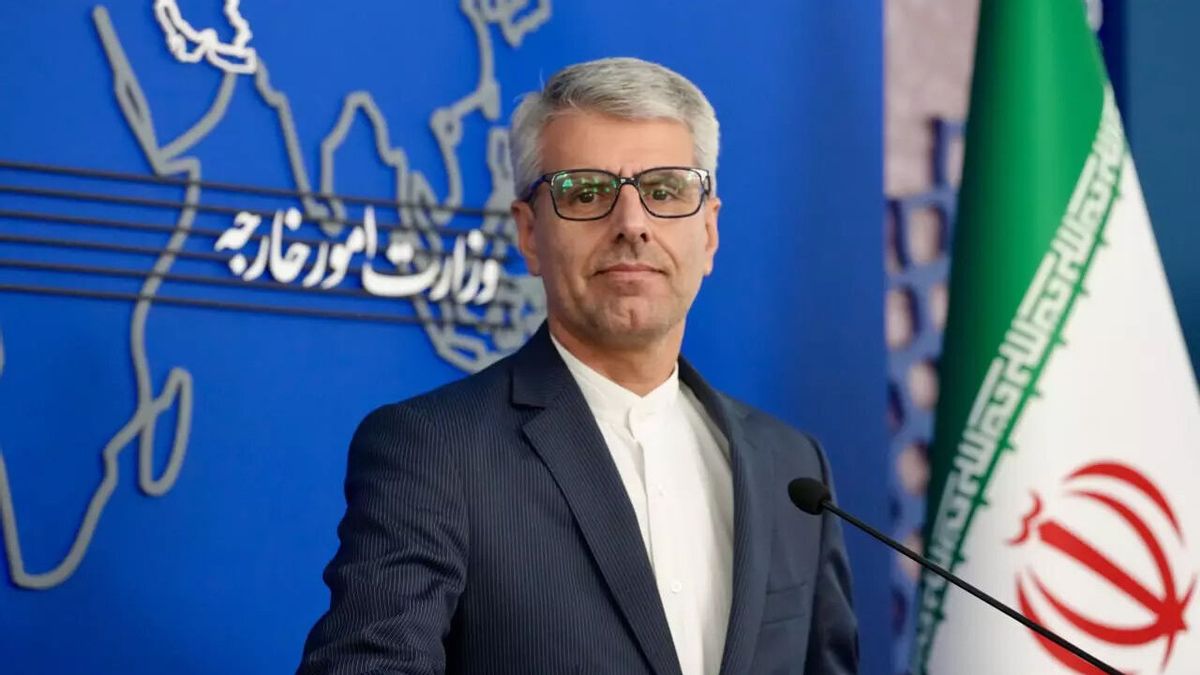


JAKARTA - Iran has no immediate plans to resume nuclear negotiations with European countries after Tehran was subject to another sanction last month, Iranian Foreign Ministry spokesman Esmail Baghaei said Monday.
Speaking at a news conference, Baghaei explained that Tehran's current focus is "reviewing the impacts and consequences of actions taken by three European countries (England, France, and Germany)", which is familiarly called E3, activating a snapshotback mechanism against Iran at the United Nations.
Baghaei said "dislomacy, in its current form with them, is not productive" and these countries are taking steps "to calm the US," as quoted by The National 7 October.
The UN sanctions were reinstated against Iran in September for what Western powers say is Tehran's failure to comply with the 2015 deal governing the country's nuclear energy program.
The purpose of the deal is to stop Iran from developing a nuclear bomb by offering incentives. However, Iran ignored agreed terms after US President Donald Trump withdrew his country from the agreement in 2018.
Britain, France, and Germany launched the process at the United Nations in August to reimpose the sanctions, saying Tehran had violated its commitments.
Known as a snapshotback mechanism, this procedure has led to the reimposition of restrictions that could have a negative impact on Iran's already slumped economy.
Tehran itself has repeatedly warned that reimposing sanctions will result in the suspension of cooperation with the International Atomic Energy Agency (IAEA).
On Sunday, Iranian Foreign Minister Abbas Araghchi said cooperation with the UN's nuclear watchdog was "no longer relevant".
"The Cairo agreement is no longer relevant to our cooperation with the IAEA," said Foreign Minister Araghchi.
Last month, Iran and the IAEA signed an agreement to continue inspection of Tehran's nuclear program and location, including those attacked by the US and Israel in June.
The agreement came after talks between Foreign Minister Araghchi and IAEA Director-General Rafael Grossi, during a meeting organized by Egyptian Foreign Minister Badr Abdelatty in Cairo. The meeting lays the groundwork for the possible return of observers to Tehran while still paying attention to additional negotiations.
The signing of the agreement at the time was "required for changes in the field and security threats, including attacks on nuclear facilities," said Foreign Minister Araghchi.
SEE ALSO:
-
 | BERITA
Jumlah Kasus Keracunan di Korsel Lampaui Tahun 2024, Dipengaruhi Gelombang Panas
06 Oktober 2025, 20:45 -
 | BERITA
Arab Saudi hingga Indonesia Apresiasi Langkah Hamas Terkait Upaya Perdamaian Gaza
06 Oktober 2025, 20:20 -
 | BERITA
FSB Rusia Gagalkan Serangan Teroris Terhadap Situs Yahudi di Krasnoyarsk dan Stavropol
06 Oktober 2025, 18:45 -
 | BERITA
Perdamaian Tidak akan Terwujud di Timur Tengah Tanpa Berdirinya Negara Palestina
06 Oktober 2025, 18:00
The minister said the role of E3 in the upcoming nuclear negotiations had been "reduced" due to the sanctions.
"The three European countries think they can achieve results through a snapshotback mechanism, but the tool is ineffective and only complicates diplomacy," explained Foreign Minister Araghchi.
"The three European countries have of course reduced their roles and lost justification for negotiating. In the upcoming negotiations, their role will be much smaller," he stressed.
The English, Chinese, Japanese, Arabic, and French versions are automatically generated by the AI. So there may still be inaccuracies in translating, please always see Indonesian as our main language. (system supported by DigitalSiber.id)
Most Popular Tags
#Prabowo Subianto #donald trump #Febrie Adriansyah #8791 #giias 2026Popular


