
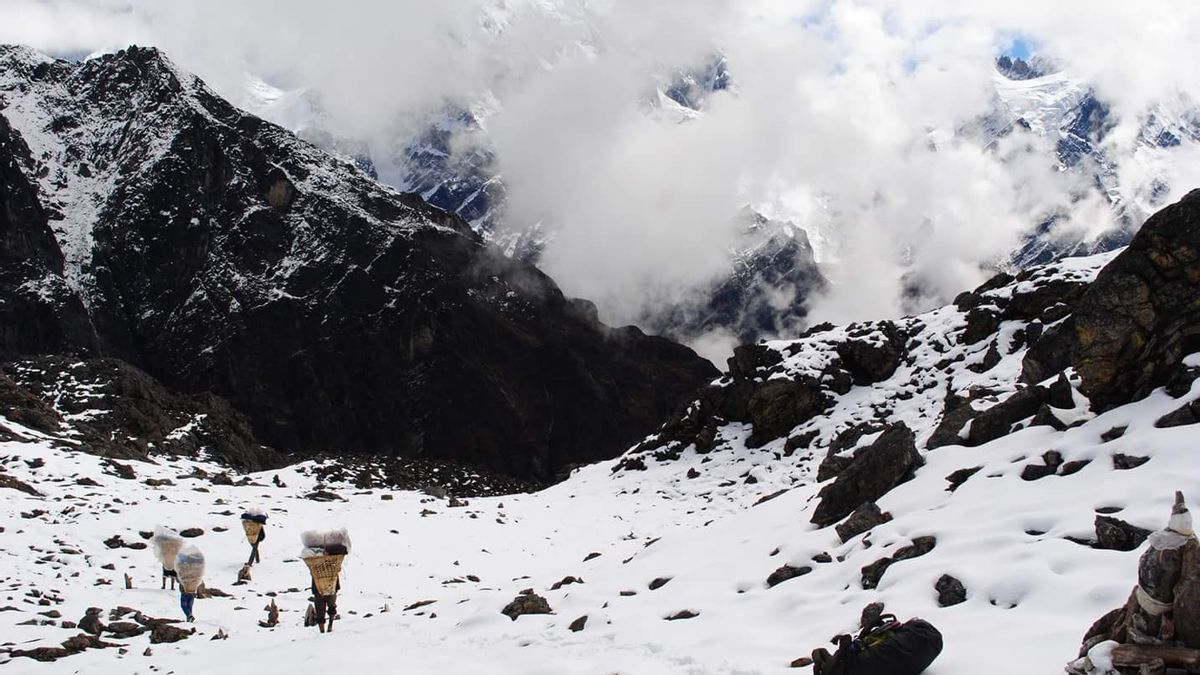


JAKARTA - Hundreds of climbers stranded in a snowstorm near the eastern side of the Everest Mountains in Tibet have been evacuated to safety by rescue teams, Chinese state media reported on Sunday, as snow and unusual heavy rains hit the Himalayans.
As of Sunday, 350 climbers had reached the small town of Qudang, while contact with more than 200 other climbers had been made, CCTV reported.
Visitors to Karma's remote valley, which leads to the eastern side of Kangshung Everest, hit hundreds of people this week, taking advantage of China's eight-day National Day holiday.
"The weather in the mountains is very wet and cold, and hypothermia is a real risk," said Chen Geshuang, who is part of an 18-member climbing team that managed to reach Qudang.
"The weather this year is not normal. The guide said he had never experienced such weather in October. And it happened too suddenly," he added.
Chen's group descended from the mountain on Sunday and was greeted by villagers after a terrible night with heavy snowfall accompanied by thunder and lightning. With tears in his eyes, Chen accepted the sweet tea offer, he said.
"Back to the village, we ate and finally felt warm," he said.
Hundreds of local villagers and rescue teams have been deployed to help clear snow blocking access to the area, where nearly 1,000 people are trapped, according to a previous report from government-backed Jimu News.
The remaining climbers will arrive in Qudang gradually under the guidance and help of rescue teams organized by the local government, CCTV reported.
The report did not state whether local guides and support staff from a group of climbers had been found.
The snowfall in the valley, which is located at an average height of 4,200 meters (13,800 feet), began on Friday night and continued throughout Saturday.
"Rain and snow fall every day, and we don't see Everest at all," said Eric Wen, who survived the event.
The 18-member climbing group had decided on Saturday night to return from their fifth and final camp, fearing the continuing snowfall.
"We only have a few tents. More than 10 people are in large tents and barely sleep," Wen told Reuters on Monday.
"Salju fell too heavily," he added.
Wen said his group had to clear the snow every 10 minutes.
"Otherwise, our tents would have collapsed," he said.
Two men and a woman in the group developed hypothermia as temperatures dropped below freezing, although they had worn adequate clothing, Wen said.
However, his expedition entourage mostly survived unharmed, including eight other expedition guides and several others who took care of those carrying their equipment and equipment.
SEE ALSO:
-
 | BERITA
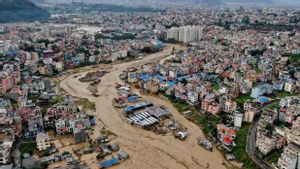
Hujan Deras Sebabkan Banjir dan Longsor di Nepal, Puluhan Orang Tewas
06 Oktober 2025, 14:00 -
 | BERITA
Presiden Trump Klaim AS Kembali Menyerang Kapal yang Diduga Membawa Narkoba
06 Oktober 2025, 10:00 -
 | BERITA
Menhan AS Klaim Miliki Otorisasi untuk Menyerang Kapal yang Diduga Membawa Narkoba
06 Oktober 2025, 09:17

The Karma Valley, which was first explored by Western explorers a century ago, is a relatively beautiful part of the Everest region. Unlike the northern side of the arid peak, this valley has a leafy vegetation and an untouched forest, which is flowed by the melting water of the Kangshung glacier at the foot of the highest mountain in the world.
It is not clear whether the climbers near the north side are affected or not.
The north side, because of its easy access through paved roads, routinely attracts many tourists. October is the peak season, when the sky is usually sunny at the end of India's rainy season.
In southern Tibet in Nepal, heavy rains triggered landslides and flash floods that had blocked roads, swept away bridges, and killed at least 47 people since Friday.
Thirty-five people died in a separate landslide in eastern Ilam District bordering India. Nine people were reported missing after being swept away by floods, and three others were struck dead by lightning.
The English, Chinese, Japanese, Arabic, and French versions are automatically generated by the AI. So there may still be inaccuracies in translating, please always see Indonesian as our main language. (system supported by DigitalSiber.id)
Popular


