
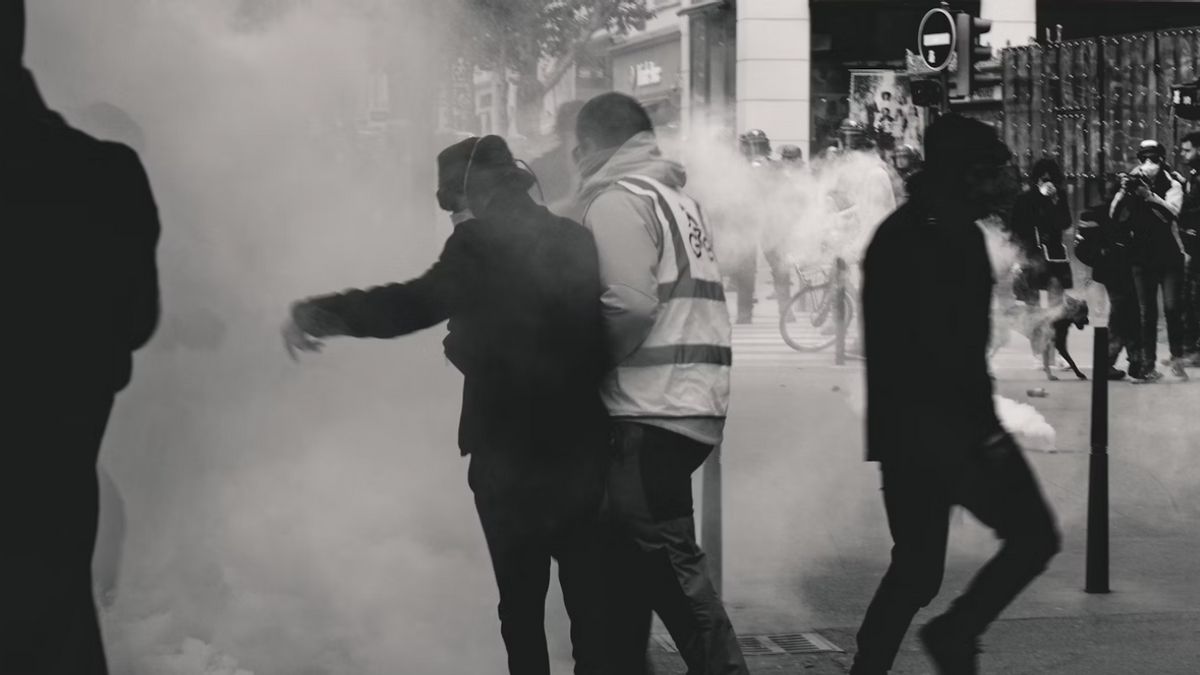


JAKARTA - Nepalese police fired tear gas and rubber bullets to disperse a crowd of young people trying to break into the parliament building in a protest on Monday.
Demonstrators protest the closure of social media and allegations of government corruption.
Nepal blocked access to several social media platforms, including Facebook, last week after it failed to register with authorities in an attempted abuse crackdown.
The government says social media users with false identities have spread hate speech and fake news, as well as committed fraud and other crimes through several platforms.
Authorities imposed a curfew around the parliament building after thousands of protesters tried to enter the legislative building by breaking through police barricades.
"We have imposed a curfew that will remain in effect until 22.00 local time to control the situation after protesters began to turn violent," Mukiram Rijal, spokesman for the district office of Kathmandu, told Reuters on Monday, September 8.
Police were ordered to use water cannons, batons, and rubber bullets to control the crowd.
Thousands of youths, including students, many of whom wore school or campus uniforms and carried national flags and placards, were stopped by police who installed barbed wire barricades to march to the parliament building, where demonstrations were prohibited.
Protesters carried placards bearing slogans such as "Close corruption, not social media", "Cancel social media blocking", and "Young opponents of corruption", as they lined up in Kathmandu.
Many in the Himalayan country consider corruption rampant, and Prime Minister KP Sharma Oli's government has been criticized by his opponents for failing to fulfill his promises.
The blocking of social media in Nepal comes as governments around the world, including the US, European Union, Brazil, India, China, and Australia, take steps to tighten social media surveillance and Big Tech due to growing concerns about issues such as misinformation, data privacy, online hazards, and national security.
The English, Chinese, Japanese, Arabic, and French versions are automatically generated by the AI. So there may still be inaccuracies in translating, please always see Indonesian as our main language. (system supported by DigitalSiber.id)
Most Popular Tags
#Prabowo Subianto #donald trump #2026 World Cup #Febrie Adriansyah #8791Popular


