


The international Forum of CHANDI 2025 in Bali opens an important conversation about how the world views cultural heritage. Three panel discussions held at The Menur, Denpasar, Bali, Wednesday, September 3 presented the idea of being brave: restoring stolen history, maintaining local wisdom, and opening investments for the future of culture.
The first panel, titled 'Reclaiming History, Restoring Justice', highlighted the repatriation struggle of cultural objects. Prof. Ismunandar, Expert Staff of the Minister of Culture for Inter-Institutional Relations as well as Chair of the Expert Panel of the Indonesian Cultural Heritage Repatriation Team emphasized that many colonial stories were not entirely accurate and Indonesia had the right to demand the return of iconic artifacts, from the Nagaravartagic manuscript to the painting of Raden Saleh. For the Indonesian Ambassador to the Netherlands 2016 2020, I Gusti Agung Wesaka Puja, repatriation is not just a repatriation of objects. This is about restoring the soul of the nation,' he said.
The second panel brings a different perspective: traditional knowledge and local practice as the foundation of community resilience after 2030. The Chancellor of ISI Bali, I Wayan Adnyana, gave an example of the contemporary arts of Bali which is now recognized by the world thanks to the power of local habitus. From China, Zou Yi Qing shows how the wisdom of the forests on Mount Jingmai protects the climate and the tea economy. Meanwhile, Elvira Rufriani from Unpad explained the Awiq-awiq tradition in Lombok which protects forests through traditional sanctions. Culture, ecology, and spirituality are intertwining,' he said.
SEE ALSO:
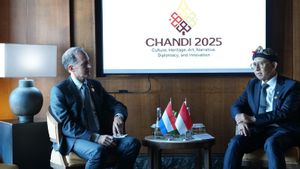
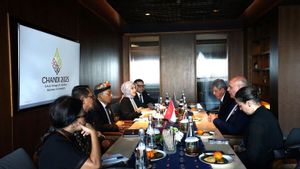
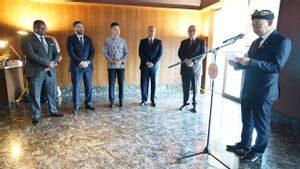
The third panel highlights the biggest challenge: money. Dr. Donovan Rypkema, President Heritage Strategies International stressed that conservation cannot rely solely on regulation. Fiscal incentives and adaptive reuse models are needed to make cultural heritage a development bike. Meanwhile, Hasti Tarekat, founder of Heritage Hands-on in Amsterdam who is also Co-Chair Asian Network for Industrial Heritage provides a real example of Amsterdam, how abandoned tram depots turn into cultural centers without operational subsidies.
From the younger generation, Ahmad Saifudin Mutaqi from the Islamic University of Indonesia presents a model of participatory funding through digital technology, while Sultan Prasasti from Maastricht University reviews tax incentives that support classical music. All boil down to the message summarized by Dr. Catrini Pratihari, Chairman of the Indonesian Heritage Trust. That conservation not only safeguards the past, but also organizes the future.
CHANDI 2025 shows that cultural heritage is not just a silent artifact. It is the soul of the nation, life knowledge, and economic opportunities that must be jointly guarded across generations.
The English, Chinese, Japanese, Arabic, and French versions are automatically generated by the AI. So there may still be inaccuracies in translating, please always see Indonesian as our main language. (system supported by DigitalSiber.id)
Most Popular Tags
#Prabowo Subianto #donald trump #firearm #8791 #giias 2026Popular


