

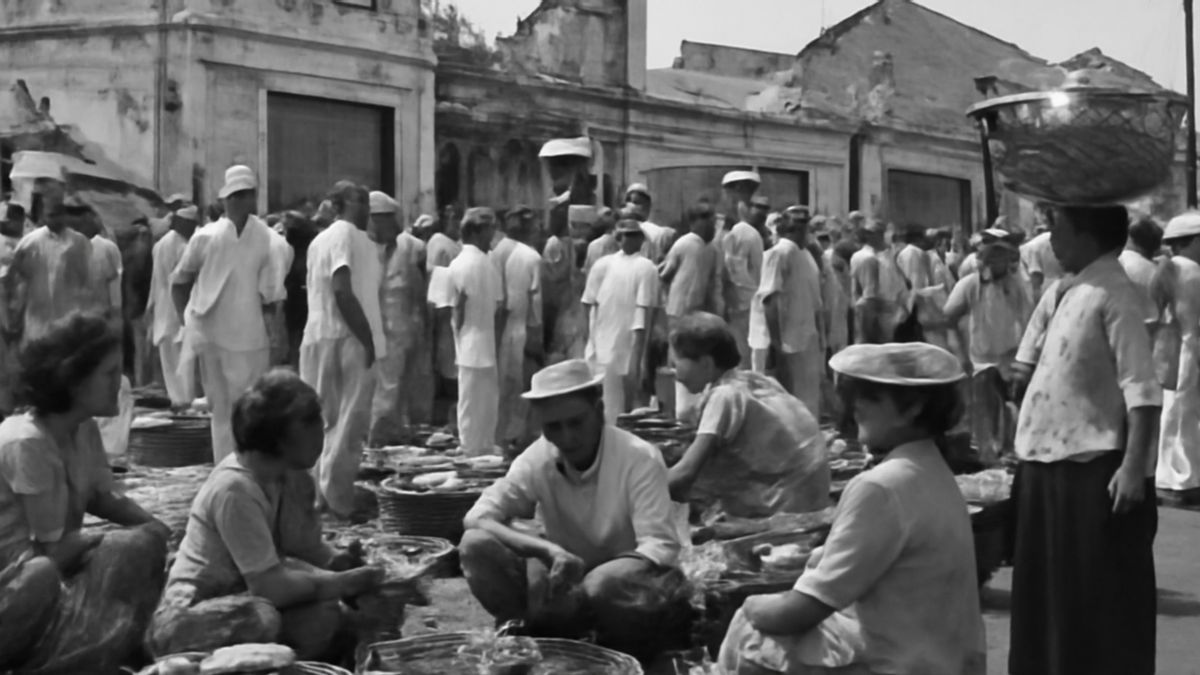


YOGYAKARTA - After the proclamation of Indonesia's independence on August 17, 1945, this country faced various challenges, one of which was economic problems. The condition of the Indonesian economy at the beginning of independence was very difficult and full of obstacles.
Indonesia must rebuild its economy after years under Dutch colonialism, which left a weak economic heritage. This article will review more about the Indonesian economic situation in the early days of independence, the challenges faced, as well as the steps taken to improve the current economic situation.
The condition of the Indonesian economy at the beginning of independence was greatly influenced by the conditions abandoned by the Dutch colonialists. During the colonial period, Indonesia was more directed at managing its natural resources for the sake of the Dutch economy. Important sectors such as agriculture, plantations, and mining were controlled by Dutch companies, while the Indonesian people mostly worked as farm laborers or rough workers with very low wages.
In addition, the existing infrastructure during the colonial period was mostly built to support the interests of the colonial economy, not for the welfare of the Indonesian people. This makes Indonesia in a state that is underdeveloped in the economic sector when independence is obtained.
After independence, Indonesia immediately faced very high inflation. Indonesia's economic condition at the beginning of independence was accompanied by difficulties in managing the currency. The newly independent Indonesian government had to replace the Dutch East Indies currency with rupiah. However, without a strong monetary system and adequate resources, the rupiah experienced significant depreciation.
High inflation causes the prices of basic goods to be very expensive, while people's purchasing power is decreasing. At that time, it was very difficult for the Indonesian people to meet their daily needs because the prices of goods were very unaffordable. This crisis is also accompanied by a lack of foreign exchange reserves and the lack of goods needed by the community.
The war of independence against the Netherlands (1945-1949) also had a major impact on Indonesia's economic conditions at the beginning of independence. In addition to destroying many important infrastructures, the war also caused a vacancy in human resources working in economic sectors. Many agricultural and industrial sectors are disrupted due to fighting in various regions.
As a result of this war, the Indonesian economy is getting worse. Many areas experience a shortage of food, as well as the goods needed to maintain their daily lives. This is exacerbated by the existence of trade embargoes implemented by foreign countries towards Indonesia.
In 1945, the newly formed Indonesian government began making various efforts to improve Indonesia's economic condition at the beginning of independence. One of the first steps taken is to nationalize Dutch companies in Indonesia. The purpose of this nationalization is to regain economic resources previously controlled by the Dutch and utilized for the benefit of the state.
The government is also trying to improve the agricultural sector by providing support to farmers, although the improvements are carried out in stages due to budget constraints. On the other hand, the new government is also making efforts to improve the monetary system by introducing new policies in currency management.
To overcome the economic crisis that took place in the early days of independence, Indonesia also established international relations with several major countries. One of them is assistance from countries that support Indonesia's independence. In 1949, after a long struggle, Indonesia received recognition from the Netherlands through the Round Table Conference (KMB), which was also followed by economic assistance from friendly countries.
Cooperation with countries such as the United States and other Asian countries, such as India, helps Indonesia in gaining access to economic and trade assistance that is urgently needed to rebuild the Indonesian economy.
6. Long-Term Impact and Economic Recovery Process
Although at the beginning of Indonesia's independence experienced enormous difficulties in the economic sector, over time, the Indonesian government began to improve Indonesia's economic conditions at the beginning of independence through various policies and hard work. One of the important achievements in the early period of independence was the start of infrastructure development which was urgently needed by the community.
In the following years, despite the challenges, Indonesia began to show signs of economic recovery. Success in building the agricultural and trade sectors as well as increasing political stability has a positive impact on Indonesia's economic growth.
SEE ALSO:
-
 | BERITA
KPK Bakal Tanya Bareskrim Soal Penanganan Kasus Pencucian Uang Setya Novanto
19 Agustus 2025, 08:25 -
 | INTERVIU
Eksklusif, Syahganda Nainggolan Sarankan Prabowo Harus Bebas dari Pengaruh Masa Silam
18 Agustus 2025, 10:00

Indonesia's economic condition at the beginning of independence can be described as a time full of challenges and difficulties. After years of colonization, Indonesia had to struggle hard to rebuild its economy. Despite many obstacles, such as inflation, war, and resource shortages, the Indonesian government at that time tried their best to improve the situation. These efforts, although taking a long time, show significant results in the process of Indonesia's economic recovery. With the right international support, as well as policies, Indonesia began to rise from adversity and build stronger economic foundations in the future.
In addition, you also need to know the Story of Falling and Building the State Financial Supervisory Agency
So after knowing the condition of the Indonesian economy at the beginning of independence, see other interesting news on VOI.ID, it's time to revolutionize news!
The English, Chinese, Japanese, Arabic, and French versions are automatically generated by the AI. So there may still be inaccuracies in translating, please always see Indonesian as our main language. (system supported by DigitalSiber.id)
Most Popular Tags
#Prabowo Subianto #donald trump #2026 World Cup #Febrie Adriansyah #8791Popular


