


JAKARTA - The participating countries of the BRICS Summit on Monday dismissed allegations of 'anti-American' by President Donald Trump and Brazilian presidents saying the world does not need an emperor after US Leaders threatened an additional 10 percent tariff against the bloc.
President Trump's threat late Sunday comes as the US Government prepares to finalize dozens of trade deals with various countries before the July 9 deadline for the significant implementation of a "reciprocal rate".
At the end of the BRICS summit in Rio de Janeiro, Brazilian President Luiz In laycio Lula da Silva when asked by reporters about Trump's tariff threat replied: "The world has changed. We don't want an emperor," quoted from Reuters July 8.
"This is a group of countries that want to find other ways to regulate the world from an economic perspective," he said of the block.
"I think that's why BRICS makes people uncomfortable," said President Lula.
Later, sources familiar with additional tariffs said President Trump's Administration did not intend to immediately impose an additional 10 percent tariff on BRICS countries, as threatened, but would proceed if each country adopted a policy deemed "anti-American."
In February, President Trump warned BRICS would face a "100 percent rate" if they tried to undermine the role the US dollar plays in global trade. The BRICS presidency under Brazil has withdrawn efforts to advance common currencies for the group proposed by several members last year.
However, President Lula reiterated his views on Monday, global trade required an alternative to the US dollar.
"The world needs to find a way so that our trade relations don't have to go through the dollar," President Lula told reporters at the end of the BRICS summit in Rio de Janeiro.
"Obviously, we have to be responsible for doing it carefully. We have to discuss it with the central bank from other countries," he explained.
"That is something that happens gradually until it is consolidated," said President Lula.
Other BRICS members also dismissed Trump's threats more subtlely.
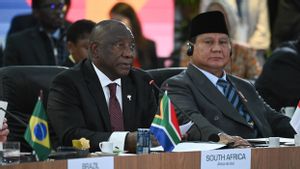
South African President Cyril Ramaphosa told reporters the group did not want to compete with other powers, expressing its confidence to reach a trade agreement with Uncle Sam's country.
"Tarif should not be used as a means of coercion and pressure," said Mao Ning, spokesman for China's Ministry of Foreign Affairs in Beijing.
BRICS recommends "profit-to-profit cooperation," he added, and "does not target any country."
Meanwhile, a Kremlin spokesman said Russia's cooperation with BRICS was based on "the same world view" and "would never be directed at a third country."
India did not immediately give Trump an official response.
It is known that many members of BRICS and many of the group's partner countries rely heavily on trade with the United States.
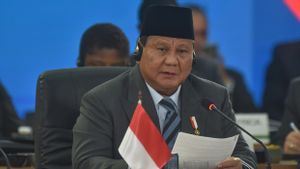
The Coordinating Minister for Economic Affairs of Indonesia, a new member of BRICS, Airlangga Hartarto who is in Brazil accompanying President Prabowo Subianto, will fly to the United States Monday local time to attend tariff talks. It is known, Indonesia in the announcement of the Trump tariff on Monday was subject to 32 percent.
Malaysia, which comes as partner countries and is subject to a 24 percent tariff which is then suspended, said it maintains an independent economic policy and does not focus on ideological alignment.
With forums such as the main G7 and G20 economic groups hampered by the divisions and approaches of President Trump's "America First", the BRICS group has presented itself as a haven for multilateral diplomacy amid violent conflicts and trade wars.
In a joint statement released on Sunday afternoon, the leaders at the summit condemned the recent bombing of Iran's member states and warned of rising rates threatening global trade, continuing its covert criticism of President Trump's tariff policy.
Hours later, President Trump warned he would punish countries wishing to join the group.
It is known that BRICS was founded in 2009 by Brazil, Russia, India and China. The bloc then added South Africa and last year included Egypt, Ethiopia, Indonesia, Iran and the United Arab Emirates as members.
SEE ALSO:
-
 | BERITA
Presiden Prabowo Lakukan Kunjungan Kenegaraan ke Brasilia Usai KTT BRICS
08 Juli 2025, 08:00
Saudi Arabia has officially accepted an invitation to become a full member, but participates as a partner country.
"BRICS countries now represent more than half the world's population and 40 percent of its economic output," President Lula said in remarks on Saturday to business leaders warning about rising protectionism.
And, more than 30 countries have expressed interest in participating in BRICS, both as a full member and partner.
The English, Chinese, Japanese, Arabic, and French versions are automatically generated by the AI. So there may still be inaccuracies in translating, please always see Indonesian as our main language. (system supported by DigitalSiber.id)


