
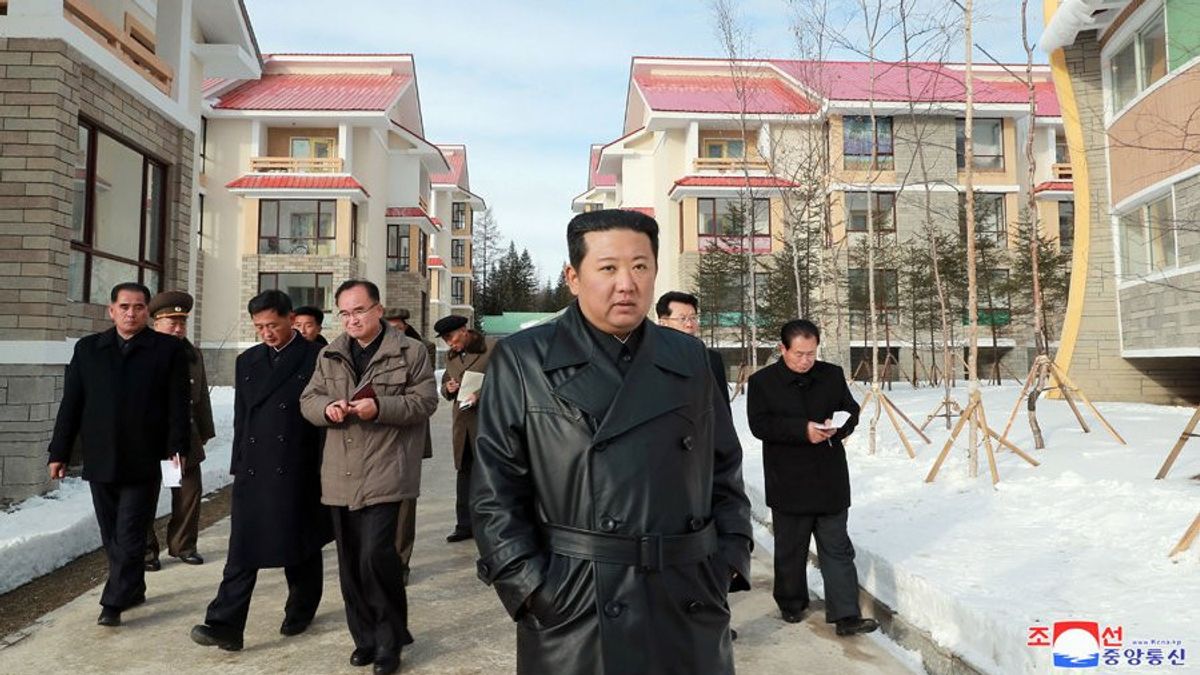


A decade after an important report by the United Nations concluded North Korea was committing crimes against humanity, a UN official investigating human rights in the country said many human rights violations were continuing, exacerbated by the unrevoluted control of the COVID-19 era.
James Heenan, who represented the UN High Commissioner for Human Rights in Seoul, said he was still surprised by the rise of executions, forced labor and reports of Pyongyang hunger.
Later this year, the Heenan team will release a follow-up report on 2014 findings by the Human Rights Investigation Commission in the Democratic People's Republic of Korea, which says the government has committed "systematic, widespread, and severe human rights violations" that constitute crimes against humanity.
The DPRK stands for the Democratic People's Republic of Korea, North Korea's official name.
While the conclusion of this year's report is still in the finalization stage, Heenan said in an interview with Reuters, the past 10 years have shown mixed results, with North Korean governments mostly engaging with several international agencies, but doubling controls at home.
"The post-COVID period for the DPRK means a much larger period of government control over people's lives and restrictions on their freedom," he said in the interview.
The North Korean Embassy in London did not answer a phone call seeking comment.
The Pyongyang government has in the past denied any violations, accusing the United Nations and foreign countries of trying to use human rights as political weapons to attack North Korea.
A Reuters investigation in 2023 found that Leader Kim Jong-un had spent most of the COVID-19 pandemic by building a series of large walls and fences along the borders previously porous with China, and then building fences around the capital Pyongyang.
A report this week by Washington-based Center for Strategic and International Studies said the COVID-19 pandemic hit North Korea for more than two years before the regime acknowledged in May 2022 the virus had spread to its borders, and the regime disrupted responses in a way that violated freedom and left most citizens struggling alone.
On Wednesday, SI Analytics, a Seoul-based satellite image company, released a report noting North Korea was renovating a major prison camp near the border with China, perhaps in response to international criticism, while at the same time strengthening physical control over detainees under the pretext of improving facilities.
Heenan said his team had spoken with more than 300 North Koreans fleeing their countries in recent years, and many expressed despair.
"Sometimes we hear people say they hope the war breaks out, because it might change things a lot," he said.
The interviewed persons will speak in public for the first time next week as part of an attempt to put a humane face on UN findings.
"This is a rare opportunity to hear from the public openly what they want to say about what happened in the DPRK," said Heenan.
SEE ALSO:
He expressed concern about cutting funding for international aid and UN programs around the world, which suppress human rights efforts and threaten support for North Korean refugees.
Although human rights have traditionally been a politically unstable subject, not only for Pyongyang but also for foreign governments trying to engage with nuclear-armed North Korea, Heenan said issues such as prison camps need to be part of any involvement in political settlements.
"There is no point in censoring yourself about human rights, because no one is deceived," he said.
The English, Chinese, Japanese, Arabic, and French versions are automatically generated by the AI. So there may still be inaccuracies in translating, please always see Indonesian as our main language. (system supported by DigitalSiber.id)
Popular


