
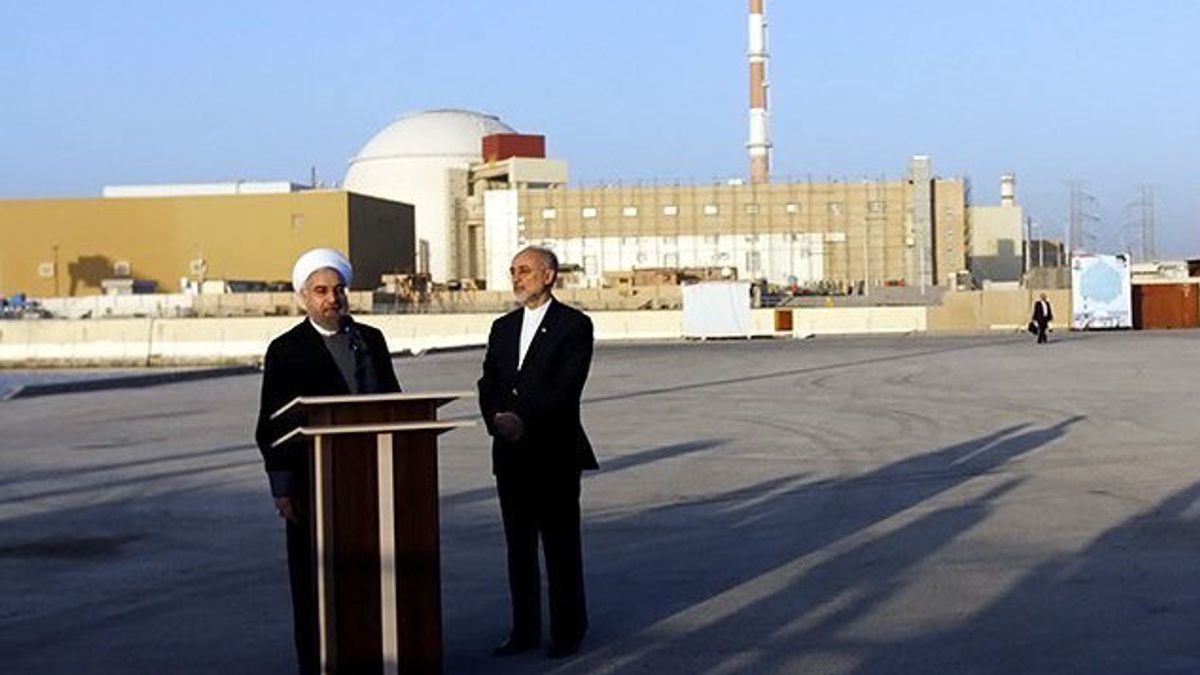


JAKARTA - Iranian and US negotiators will continue negotiations on Friday in Rome, Italy to resolve decades of dispute over Tehran's nuclear ambitions, although Iran's supreme leader warned reaching a new deal may not be overcome amid conflicting red lines.
The stakes are high for both sides. President Donald Trump wants to limit Tehran's potential to produce nuclear weapons that could trigger a regional nuclear arms race. Iran, in part, wants to be free from devastating sanctions against its oil-based economy.
Iranian Foreign Minister Abbas Araghchi and Trump's envoy to the Middle East Steve Witkoff will hold a fifth round of negotiations, through mediator Oman, although Washington and Tehran have taken a strong public stance on Iran's uranium enrichment.
Although Iran insisted the negotiations were indirect, US officials said discussions included the last round on May 11 in Oman were "direct and indirect".
Tehran and Washington both say they prefer diplomacy to complete the deadlock, but remain divided into several red lines that negotiators must push to reach new nuclear deals and prevent future military action.
US Secretary of State Marco Rubio said on Tuesday Washington was working to reach a deal that would allow Iran to have a civilian nuclear energy program, but did not enrich uranium, while admitting reaching such a deal "wouldn't be easy."
On the other hand, Supreme Leader Ayatollah Ali Khamenei, who has the final say on state issues, rejected Washington's demand that Tehran stop enrichment of uranium as "exceeding and outrageous", warning that the talks were unlikely to bear fruit.
Among the remaining stumbling blocks was Tehran's refusal to send all its highly enriched uranium stocks overseas or engage in discussions about its ballistic missile program.
Iran says it is ready to accept some restrictions on its uranium enrichment, but requires strong Washington guarantees it will not renege on the nuclear agreement in the future.
SEE ALSO:
President Trump, who has reimposed a "maximum pressure" campaign against Tehran since February, canceled the 2015 nuclear pact between Iran and world powers in 2018 during his first term of office and reimposed US sanctions that have devastated Iran's economy.
Iran responded by increasing uranium enrichment well beyond the 2015 pact limit.
The cost of failure in negotiations could be expensive. Meanwhile, Tehran said its nuclear program was for peaceful purposes, Iran's arch-enemy, Israel, said it would never allow Iranian clerical institutions to acquire nuclear weapons.
Foreign Minister Araghchi warned on Thursday Washington would take legal responsibility if Israel attacked Iran's nuclear facilities, following CNN reports that Israel may be preparing for an attack on Iran.
The English, Chinese, Japanese, Arabic, and French versions are automatically generated by the AI. So there may still be inaccuracies in translating, please always see Indonesian as our main language. (system supported by DigitalSiber.id)
Most Popular Tags
#Prabowo Subianto #donald trump #firearm #8791 #giias 2026Popular


