

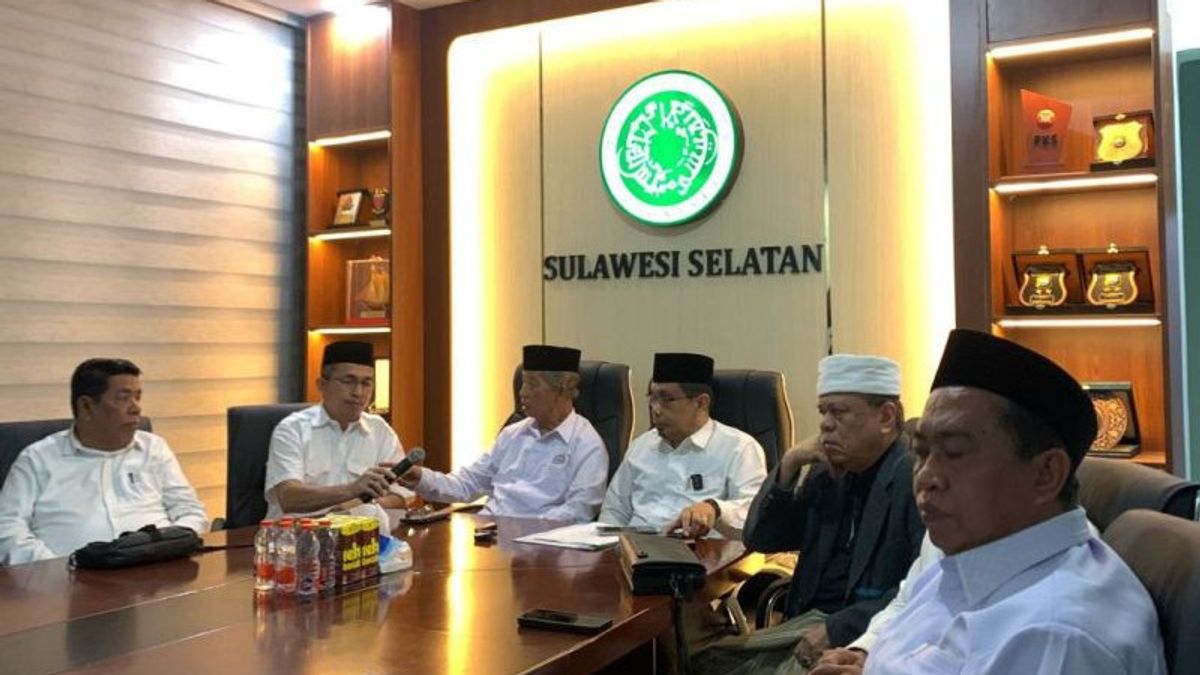


The Fatwa Commission of the Indonesian Ulema Council (MUI) of South Sulawesi Province (Sulsel) issued a fatwa on Social Business Law (Sobis) which is a mode of online fraud, the majority of which are from one of the districts in the province.
"The perpetrators who are usually called Passobis usually use fake identities or other people's personal information to carry out transactions or illegal activities online, for example opening a bank account and conducting online transactions," said South Sulawesi MUI Chairman KH Rusydi Khalid in Makassar, Monday, May 5.
He said Passobs usually uses psychological manipulation tactics to create panic or lucrative offers to obtain personal information or money from victims.
Including, he said, committing fraudulent or fraudulent investment fraud so that according to the Criminal Code, fraud is an act with the intention of benefiting oneself or others by breaking the law, either using a fake name, false identity, deception, or a series of lies to persuade others to hand over goods, giving money, or eliminating receivables.
Observing the practice of Sobis, continued Rusydi, after considering, paying attention to the arguments of the Al Quran and Hadith of the Prophet Muhammad SAW, the opinion of the scholars on fraud, including suggestions and input opinions that developed in the deliberation discussion of the South Sulawesi MUI Fatwa Commission on Friday (21/3), as well as the economic impact and material and psychological losses it caused, the MUI decided and determined that Sobis' law was forbidden in Islamic law.
It was also stated that the assets obtained from Sobis activities were haram and took advantage of these assets as well as haram.
Passobis may be subject to a sentence of ta'zir or sanctions in accordance with the laws and regulations in force in Indonesia.
In addition, the South Sulawesi MUI also recommends six points, namely first strengthening education and digital literacy by increasing education programs about the dangers of online fraud and digital literacy at all levels of society.
Second, strict law enforcement by imposing sanctions on Passobis as a deterrent effect. Third, multi-sector collaboration by encouraging cooperation between the government, law enforcement officials, religious shops, and the community in efforts to prevent and handle Sobis crimes.
Fourth, increasing religious awareness by strengthening the role of local ulama and religious leaders in providing an in-depth understanding of the prohibition of fraud in Islam.
Fifth, technology development and improvement of digital security systems and stricter regulations to protect the public from cyber crime.
Sixth, the empowerment program of the younger generation by providing skills training and job opportunities to prevent their involvement in the practice of Sobis.
The English, Chinese, Japanese, Arabic, and French versions are automatically generated by the AI. So there may still be inaccuracies in translating, please always see Indonesian as our main language. (system supported by DigitalSiber.id)
Most Popular Tags
#Prabowo Subianto #donald trump #Febrie Adriansyah #8791 #giias 2026Popular


