
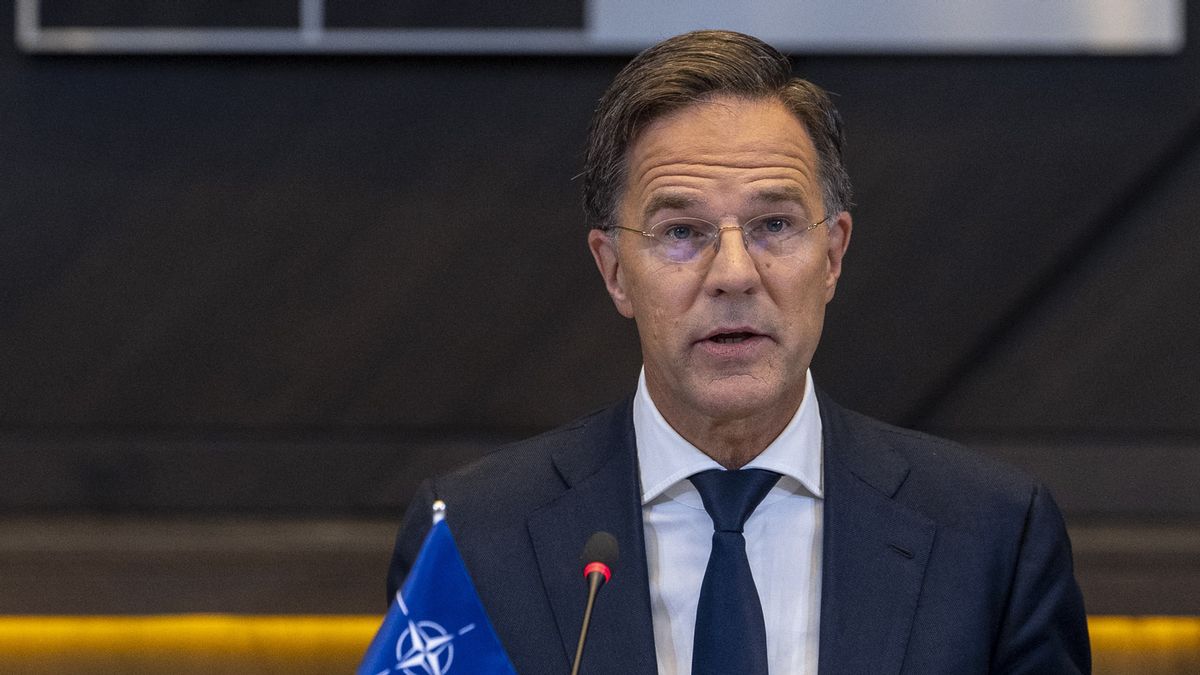


JAKARTA - The North Atlantic Treaty Organization (NATO) will not allow security vacancies to develop in Bosnia and Herzegovina at the time of this crisis, but political leaders must work together to resolve the issue, the head of the military alliance Mark Rutte said Monday.
Tensions have risen in the country since the court sentenced the pro-Russian President of the Republic of Srpska (Russian-run entity) Milorad Dodik to one year in prison last month and banned him from politics for six years for opposing the international peace envoy's decision.
Dodik rejected the ruling and Serbian regional parliament banned police and national justice from entering its territory, prompting a constitutional court to temporarily suspend separatist laws that he said jeopardized Bosnia's constitutional order and sovereignty.
Secretary General Rutte said he did not respect Bosnian peace agreements, constitutional order and national institutions as "unacceptable".
He referred to the Peace Dayton Agreement, which ended the 1992-95 war that killed 100,000 people. This agreement makes Bosnia split into two regions - the Bosnian-Croatia Federation and the Srpska Republic, which are linked through weak central institutions.
Under the peace agreement, NATO forces were deployed to secure Bosnia. The force was replaced in 2004 by EU EU peacekeeping mission, but NATO remains a supporter and can return if peace is threatened.
The crisis in Bosnia has pitted the West against Russia, which together Serbia and Hungary have supported Dodik. Moscow calls the Bosnian court's ruling an "attack on stability in the Balkan region".
"This is not 1992 and we will not allow a security vacuum to emerge," Secretary General Rutte said after meeting with Bosnian tripartite presidents and urging his three members to be "responsible".
SEE ALSO:
-
 | BERITA
Israel Desak PBB dan Kelompok Bantuan untuk Menggantikan Peran UNRWA di Gaza
11 Maret 2025, 08:00
"This country sees the three of you. Make this country proud of the leadership of this president and solve this problem," he said.
Critics say Dodik, who has long called for the Republic of Srpska to separate and form a union with neighboring Serbia, has become an unstable force that has sparked ethnic and political tensions that dividedATAN in the 1990s.
Dodik argues Bosnia is an uninhabitable country run by foreigners such as international High Representative Christian Schmidt, and the Republic of Serbia must regain all powers taken from him after the war, such as its own army, judiciary, and tax administration.
The English, Chinese, Japanese, Arabic, and French versions are automatically generated by the AI. So there may still be inaccuracies in translating, please always see Indonesian as our main language. (system supported by DigitalSiber.id)
Most Popular Tags
#Prabowo Subianto #donald trump #earthquake #independence day #8791 #hut riPopular


