

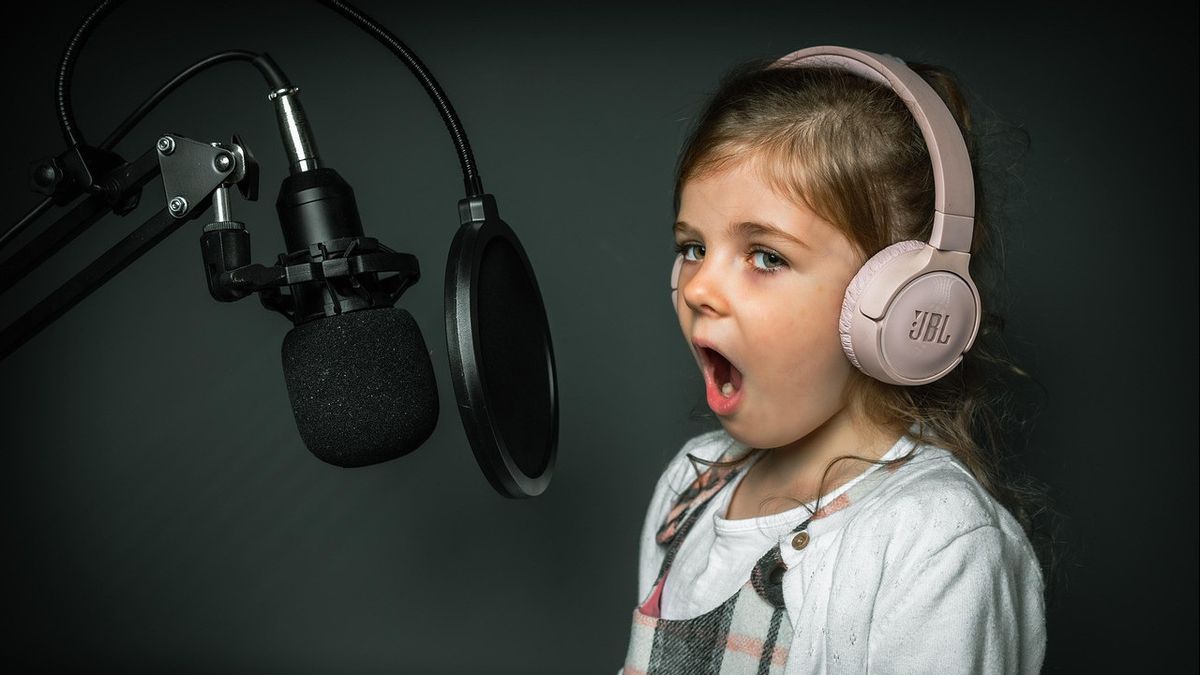


YOGYAKARTA – Children's songs are songs written for or by children. These songs have simple, easy-to-remember lyrics, and are often accompanied by movements to help children learn and have fun. So, what is the rhythm of a children's song?
The rhythm of a children's song refers to the rhythmic pattern that is an essential part of music. Rhythm itself is defined as a regular, repetitive pattern of movement or sound. Without a rhythmic pattern, music or songs would be chaotic and unpleasant to listen to.
What Are the Patterns of Children Song?
Compiled from various sources, the rhythmic pattern in children's songs typically has a simple beat. A simple rhythmic pattern refers to the repetition of sounds according to a specific pattern within a song.
This repetition of sounds creates beauty and makes a song pleasant to listen to.
In general, children's song patterns have the following characteristics:
- Simple beat
Children's songs use a regular, repetitive beat pattern, making them easy to follow and pleasant to listen to. For example, a flat rhythmic pattern has a consistent beat from beginning to end.
- Repetition
Another characteristic of children's songs is repetition, both in rhythm and lyrics. Repetition is a characteristic that makes it easier for children to memorize songs.
- Moderate tempo
Children's songs often use a moderate tempo, neither too fast nor too slow. This ensures children can follow along easily.
- Simple lyric
Children's song lyrics generally contain simple themes related to children's lives and imaginations. They also often contain moral messages or advice delivered humorously.
- Accompanied by movement or play
Some children's songs are designed to be sung while performing body movements or playing games, thus helping children's motor development.
As additional information, children's song patterns should be distinguished from meter. Meter is a grouping of the basic, consistent beats of a song.
Furthermore, in popular music, meter is also referred to as beat, meaning beat. Types of meter form different time signatures, such as 2/4, 3/4, 4/4, 6/4, 3/8, 6/9, 9/8, and 12/8. The rhythm in a song can vary greatly, depending on the time signature.
In children's songs, the rhythmic pattern is repeated regularly throughout the song, forming a specific rhythmic unit. The patterned rhythm is formed from various rhythmic sounds in the music, not just from musical instruments.
This is information about children's song patterns. Get more selected news updates only on VOI.ID.
The English, Chinese, Japanese, Arabic, and French versions are automatically generated by the AI. So there may still be inaccuracies in translating, please always see Indonesian as our main language. (system supported by DigitalSiber.id)
Most Popular Tags
#Prabowo Subianto #donald trump #Febrie Adriansyah #8791 #giias 2026Popular


