

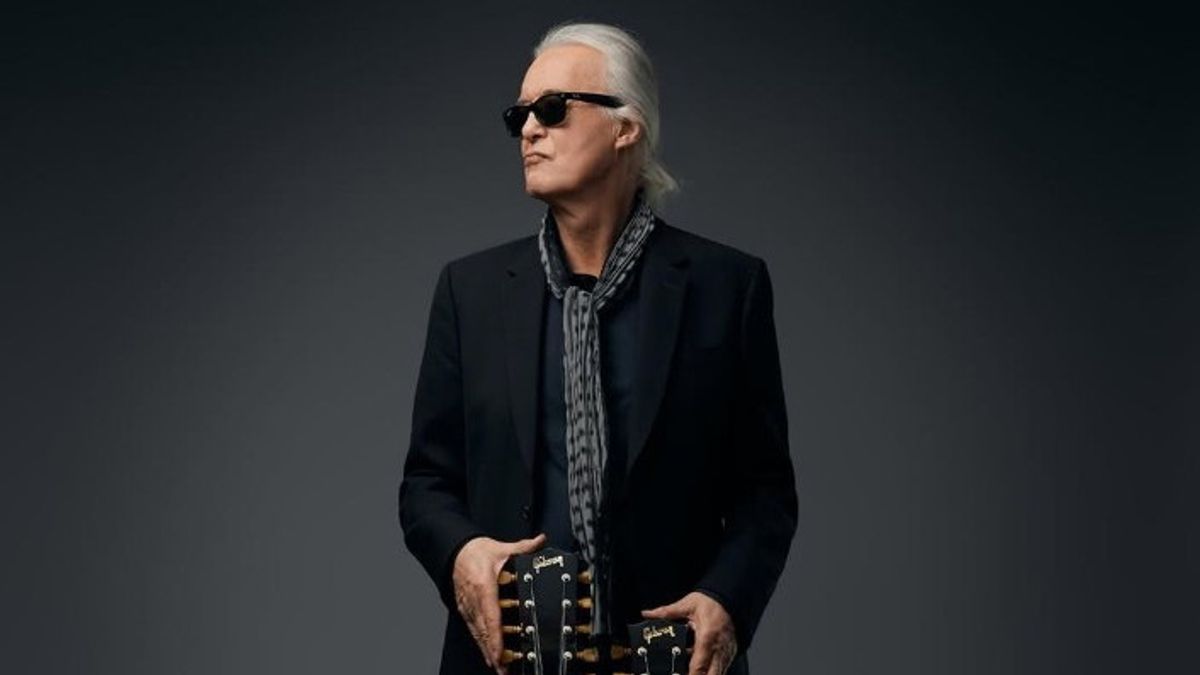


JAKARTA - Led Zeppelin guitarist Jimmy Page also voiced his concerns regarding the copyright protection of British musicians from training on artificial intelligence (AI) models.
As is known, the UK government is consulting on a new approach that protects the interests of AI developers and rights holders and provides solutions that allow both to develop.
They are investigating how copyright law allows creators and rights holders to exercise control and seek rewards for using their work for AI training, by also ensuring AI developers have easy access to a variety of high-quality creative content.
However, plans that would allow tech companies to use copyrighted material to help train AI models have been rejected by musicians including Kate Bush, Imogen Heap, Annie Lennox, Cat totaling, and Hansmen who released silent albums in response to the UK government's proposed amendment to the Copyright Act.
Jimmy Page, although not involved in the album, expressed his refusal through a statement uploaded via his Instagram account.
Guitarist 81 tahun itu menceritakan bagaimana dirinya mengalami banyak hal untuk menghasilkan karya-karya musik yang terus didengar sampai saat ini.
"In the disciplined studios in London in the early 1960s, I honed my skills as a session musician, lent my guitar to many cross-genre artists. Countless hours, often three sessions a day, more than just work; it is a platform for creativity, collaboration, and inspiration that never stops," Page wrote, citing a statement on Instagram, Monday, March 3.
SEE ALSO:
-
 | MUSIK
Gibson Memperkenalkan Gitar Edisi Khusus Jimmy Page dengan Jumlah Terbatas
24 Oktober 2024, 14:35


"Travel from the anonymity of the work of the session to the global stage with Led Zeppelin is not the path paved by algorithms or datasets. It was a journey marked by spontaneous improvisation and measurable sparks of human intelligence. Alchemicals that turn unique riffs into national anthems are engraved in the collective spirit of a synergy band that cannot be imitated by any engine," he continued.
With this long journey, Page saw AI's efforts to produce music synthesized from human works, not having a deep essence that comes from life experiences. He called AI's work "only empty echoes, without struggle, victory, and soul defining true art."
"In addition, the ethical implications are very deep. When AI takes advantage of human creativity to produce content, AI often does it without consent, attribution, or compensation. This is not innovation; this is exploitation," Page said.
"If, during my recording session, someone takes my riff without recognition or payment, it will be considered theft. The same standards must be applied to AI. We must fight for policies that protect artists, ensuring that their work is not sucked into machine learning vacancies. Let's celebrate and preserve human touch in the arts perfection, emotion, the story behind every tone and rhythm," he continued.
By maintaining the ignorance of human creativity against AI disturbances, Page said, we not only protect the rights of artists, but also the soul of cultural heritage.
"However, at this time, the British government is proposing changes that will lift this protection from creators. Under the Data Law (Utilization and Access), AI companies will be allowed to take works, both past and future, and use them as training data without consent or payment. These models digest a large amount of human-made content and then produce imitations, by ignoring the rights of the original creators," he said.
"The 'opt-out' system proposed by the government the idea that artists will always be in a position to preemptively defend their rights is a hoax. Technically, it is impossible for artists to vote out. Government consultation ends today, but we have to be clear: this is not a regulation; it is a free permit for AI to exploit creativity without consequences. We must encourage legislation that ensures AI cannot monetize human creativity without explicit consent and fair compensation. The choices the government likes in the current consultation don't do that."
"Music is not a data product. Music is a generation, disobedience of logic, conflict of time, place, and soul. If we let AI take over the core of human creativity, we are not delivering a new era that dares we are signing a death certificate for the originality itself, he said again. The choice is in our hands. Will we let the machine take over the stage, or will we fight for the irreplaceable magic of human art?"
The English, Chinese, Japanese, Arabic, and French versions are automatically generated by the AI. So there may still be inaccuracies in translating, please always see Indonesian as our main language. (system supported by DigitalSiber.id)
Most Popular Tags
#Prabowo Subianto #donald trump #2026 World Cup #Febrie Adriansyah #8791Popular


