
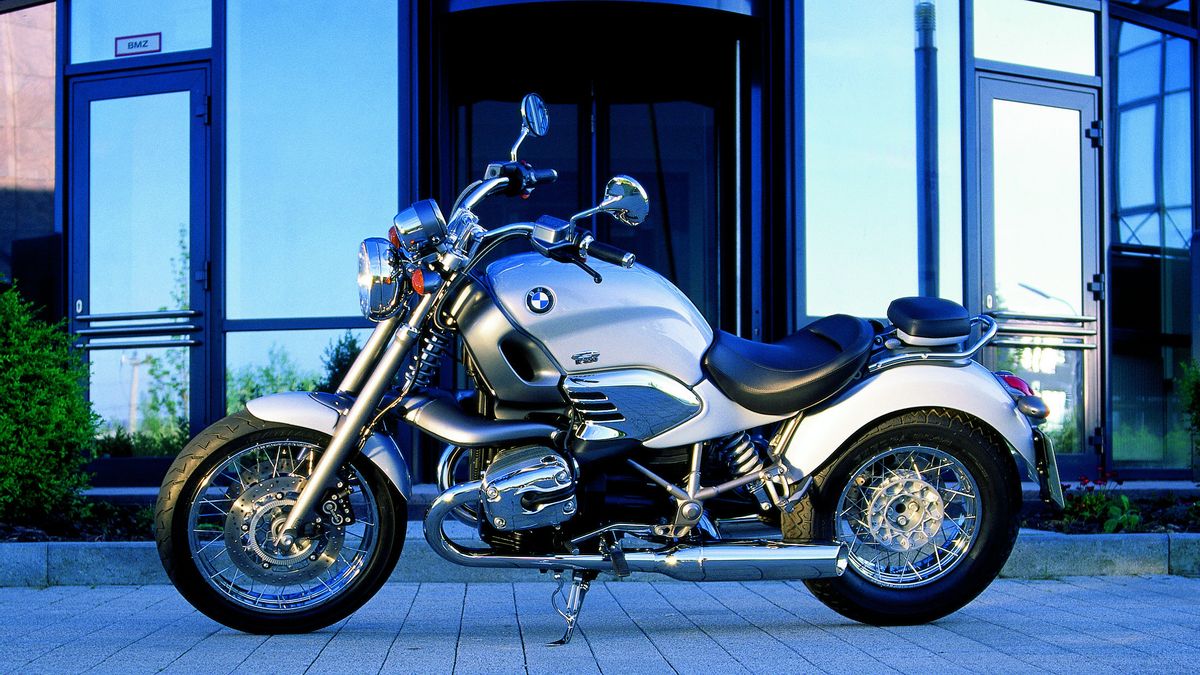


JAKARTA - BMW produces as many as 40,218 units of R 1200 C from 1997 to 2004. Most of these sales occur in North America.
1200 C is considered successful in terms of a bold and different design from a traditional American crudeer. The use of a boxer machine and a unique design element provides its own identity.
In addition, the James Bond film Tomorrow Never Dies premiered on December 9, 1997 also helped the success of this motorbike. The film features Pierce Brosnan and Michelle Yeoh who were handcuffed together driving R 1200 C in the chase scene. This gives a big promotional boost for this bike shortly after its launch. In the same year, the Guggenheim Museum included R 1200 C at the The Art of the Motorcycle exhibition.
Unfortunately, when BMW ended production in the R1200C lineup, Dr. Herbert Diess, who was then President of BMW Motorrad, stated that the main reason for stopping the bike was the mismatch of the 1,170 cc engine with market tastes at the time and the absence of machines suitable for further development.
Then what is the interesting story behind the success of this BMW R 1200 C?
In the mid-1990s, the dominance of a Harley-Davidson-style crudeer V-twin motorcycle was so strong in the United States. Many other manufacturers are trying their luck in this segment, even Ducati, who is known for his sports motorbike, also enlivens the market. Then, what about BMW?
According to Phil Capossela, former Vice-President of North America's BMW Motor Division, demand for cruises continues to increase, especially in the US.
"We asked if BMW could make something competitive, and BMW Motorrad welcomed the idea," he recalled, quoted from the BMW USA website, Tuesday, June 3.
Instead of imitating Harley, BMW chooses a different path. They created a cruiser with a Bavarian touch. If another cruiser is synonymous with a V-twin machine, BMW actually features a traditional Munich twin boxer machine, wrapped in an innovative design under the direction of American designer David Robb.
Robb, BMW's first designer to focus specifically on motorcycles, was tasked with BMW Group's Head of Design Chris Bangle to modernize the BMW motorcycle line. This process opens the door for designers to explore new market niches outside the established touring and GS categories.
SEE ALSO:
-
 | MOBIL
Bentley Bentayga Speed Terbaru Hadir dengan Mesin V8, Performa Lebih Buas
03 Juni 2025, 09:13 -
 | OTOINFO
GWM Sebut Ora 03 Terima Puluhan SPK di Indonesia, Siap Meluncur Tahun Ini
02 Juni 2025, 18:42
The cruise project started at Designworks/USA in Southern California, with an initial sketch of Richard Kong which was later perfected by Dietmar Finger from BMW Design. The styling model itself was done by Stefano Ardagna and Saverio Spadone at Studio Torino, Italy.
Unlike the car that hides its mechanism behind the body, the motor often exposes its functional elements. This BMW Cruiser takes advantage of the design's opportunities in a special framework and the front of the aluminium cor that resembles more artwork. Telelever's front suspension of the new all-new telescope adopts a 'rakish' geometry typical of cruders, executed in glossy aluminum. "We said, 'Don't hide the Telelever function,' and it turns out to be a work of art," Robb said.
Paralever's back suspension at that time was deemed unsuitable, so the designers returned to the older Monolever design, extended more than three inches and strengthened to accommodate the driveshaft. This single monolever further distinguishes the BMW cruiser from its competitors, providing a minimalist look on the left side of the motor where the back shock and linkage suspension are clearly visible.
The retro touch feels thick on the 'swept-back' handlebar, polished valve cover, short exhaust, finger rim, wide rear fender, solo seat with passenger pads, chrome headlights, and instrument panels mounted on the triple clamp. Following in the Harley footprint, BMW offers a wide range of customization options to increase motor flexibility, both for touring and simply changing its appearance according to the owner's taste.
In the midst of unusual design elements, the traditional BMW boxer engine gave the exact identity of Bavaria in this crudeer. With a capacity of 1,170cc, the A63 engine became BMW's largest 'oil-head' boxer at the time and was exclusively used in a model called R 1200 C during its production period.
With a fuel injection system hidden behind a detailed panel, A63 produces 61 hp at 5,000 rpm and 72 lb-ft torque at 3,000 rpm. This torque-focused output clearly challenges Harley, while emphasizing the R 1200 C mission as a motor for medium-range leisurely travel, not for high speed 'cornering' or cross-border adventures. This has drawn criticism from traditional BMW consumers who questioned its authenticity after its launch in 1997.
"We've never had a motorbike like that before, so there's a question whether this is really BMW," Capossela said. "But once people start driving it, they accept it, as well as dealers who get new products in the completely new segment."
When R 1200 C began to appear at dealers, he gained valuable attention as the second BMW to appear in the James Bond film. Thanks to the product placement deal negotiated by Tom McGurn of BMW's Department of Corporate Communications, James Bond also previously rode a Z3 prototype in the film GoldenEye (1995).
R 1200 C does not have a direct successor, but in 2020 BMW will again enter the crudeer segment with a retro R 18 style. Like R 1200 C, which uses BMW's largest water/oil-cooled boxer engine, this time with a capacity of 1,802cc.
The English, Chinese, Japanese, Arabic, and French versions are automatically generated by the AI. So there may still be inaccuracies in translating, please always see Indonesian as our main language. (system supported by DigitalSiber.id)
Most Popular Tags
#Prabowo Subianto #donald trump #firearm #8791 #giias 2026Popular


