

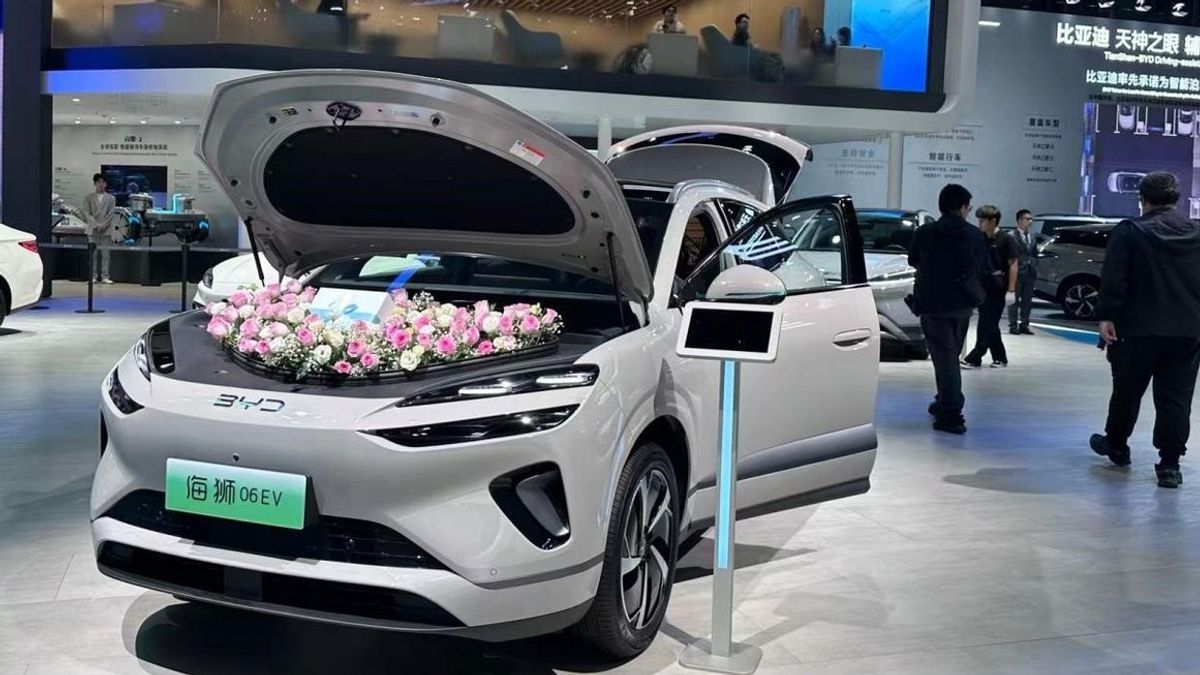


JAKARTA - BYD is making a splash in the midst of competition for smart car technology. The Chinese car manufacturer stated that it is ready to compensate for direct losses if an accident occurs while users use assisted driving features in urban areas.
According to a report by China Daily quoted on Friday, May 29, the protection applies to users of the God's Eye A, God's Eye B, and God's Eye 5.0 systems. The protection period is one year, provided that the urban navigation feature is used according to the rules of the system.
This is not a small promise. BYD says the program is free, with no maximum limit on compensation, and will not affect the user's next insurance premium.
Compensation includes direct economic losses that vehicles should bear. Including repair costs, damage to third-party property, to liability for injury.
With this move, BYD claims to be the world's first major carmaker to take on the risk for two features at once: smart parking and assisted driving on city streets.
The term assisted driving needs to be read carefully. This does not mean that the car can be left to run on its own. The system only helps the driver through navigation, sensors, and computing. Safety responsibility remains an important matter.
China Daily reported that BYD's move came as competition among Chinese car manufacturers in smart driving technology is tightening. Features that used to feel luxurious are now being pushed into mass market cars at more affordable prices.
Industry analysts assess that BYD's decision to provide direct compensation shows one thing: consumer trust is now as important as technological sophistication. Smart cars are not smart enough just in brochures. It also has to convince when used on the road.
BYD said its use of its smart parking feature rose from 21 percent to 93 percent after the company introduced a similar safety guarantee last year. Its accident rate is said to remain close to zero.
At the same event, BYD announced that the laser-based assisted driving system God's Eye B could be installed in all vehicle models for an optional price of 12,000 yuan, or around Rp31.5 million. The estimate is based on an exchange rate of around Rp2,621 per yuan.
BYD also introduced the Xuanji A3, the first 4-nanometer self-developed self-driving chip in China. This chip has a combined computing power of more than 2,100 TOPS through a three-chip architecture. TOPS is a measure of the chip's ability to run trillions of computing operations per second.
BYD Chairman Wang Chuanfu said the company would continue to invest in intelligent driving technology. The goal is to reduce traffic accidents and improve road safety.
For the global automotive market, BYD's move is interesting. So far, car manufacturers have often sold smart features with very confident language. Now BYD is trying to raise the stakes by not only selling features, but also bearing the risk.
The English, Chinese, Japanese, Arabic, and French versions are automatically generated by the AI. So there may still be inaccuracies in translating, please always see Indonesian as our main language. (system supported by DigitalSiber.id)


