

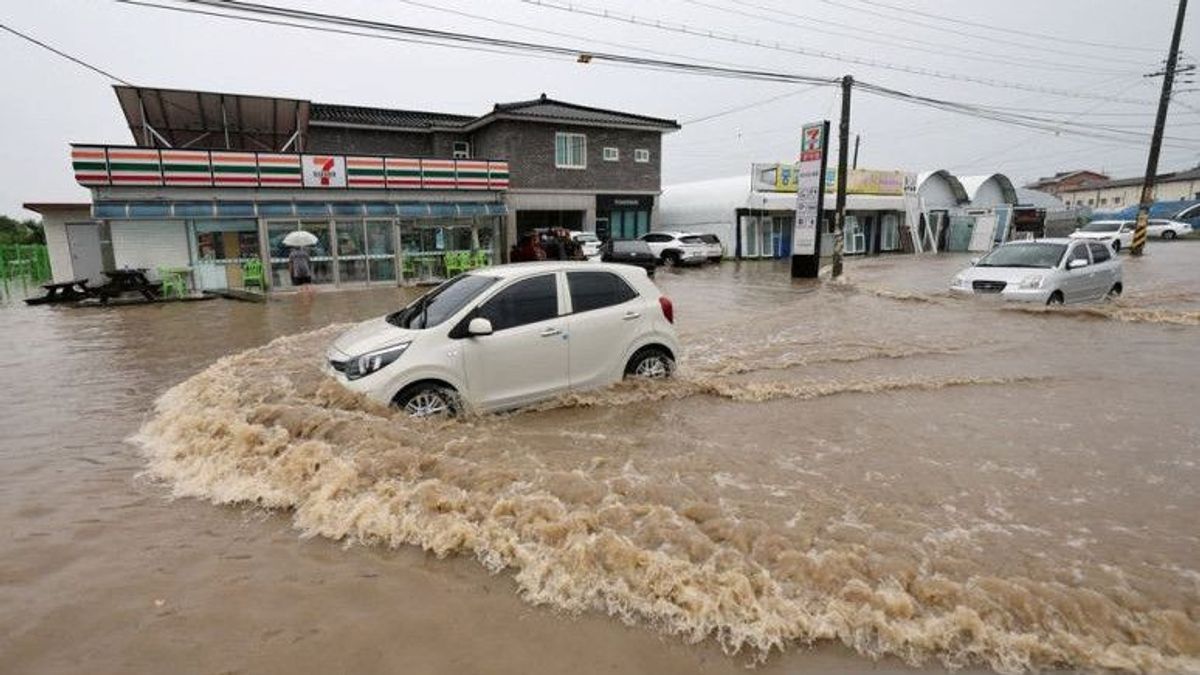


YOGYAKARTA When you drive a car and find puddles of water or floods, don't hit carelessly. The reason is that there is a safe limit for cars to pass through floods that need to be considered. These safe limits can be a guide to prevent water from entering the cabin to prevent certain damage to car components. Then how safe limits can cars hit floods?
When you encounter a deep enough puddle or flood, it is recommended to look for other alternative roads. However, if you have no choice but to hit a flood, you can hit it but with various limits, one of which is to pay attention to the safe boundary of the inundation depth. The safe limit is adjusted to the height under the car you are driving.
Some of the MPV and SUV types such as Mitsubishi Xpander Pajero Sport have high ground clearance. It is so safe to hit puddles of water. Meanwhile, other types of cars such as sedans that have low ground clearance must be careful when hitting puddles.
Reporting from the official Mitsubishi Motor website, the safe limit for cars to hit floods is a maximum of 30 cm underwater intake. To find out this you must know where the car's intake water is and estimate how high it is safe.
Or it can use an easier way, which is to hit the flood with a depth of no more than half the size of the tire when the car is driving.
SEE ALSO:

Avoid puddles or floods whose contents touch the intake or exceed the size of half the tires. The higher the water depth, the greater the risk of damage to the car components. The damage was triggered by the entry of water mixed with mud into the car engine.
Apart from paying attention to the depth of the flood, there are several things that need to be considered, namely as follows.
Before hitting the flood, make sure the driver knows the terrain to be traversed. Because the flood will cover the hole that or ditches on the highway. Make sure to go through a safe road area so that the car tires don't fall into the hole.
Pay attention to the waves of water that arise due to other vehicles driving in front or beside you from the opposite direction. This wave will trigger an increase in water so that it has the potential to get into your car. Also avoid heavy current flooding because it is dangerous for the safety of you and your passengers.
If you drive a manual car, you should minimize dental changes or step on the coupling so that water does not enter the transmission, while when driving an automatic car using L teeth. This step is taken to avoid potential damage after the car is flooded.
That's information regarding the safe limit for cars to pass through the flood. Visit VOI.id to get other interesting information.
The English, Chinese, Japanese, Arabic, and French versions are automatically generated by the AI. So there may still be inaccuracies in translating, please always see Indonesian as our main language. (system supported by DigitalSiber.id)
Most Popular Tags
#Prabowo Subianto #donald trump #2026 World Cup #Febrie Adriansyah #8791Popular


