

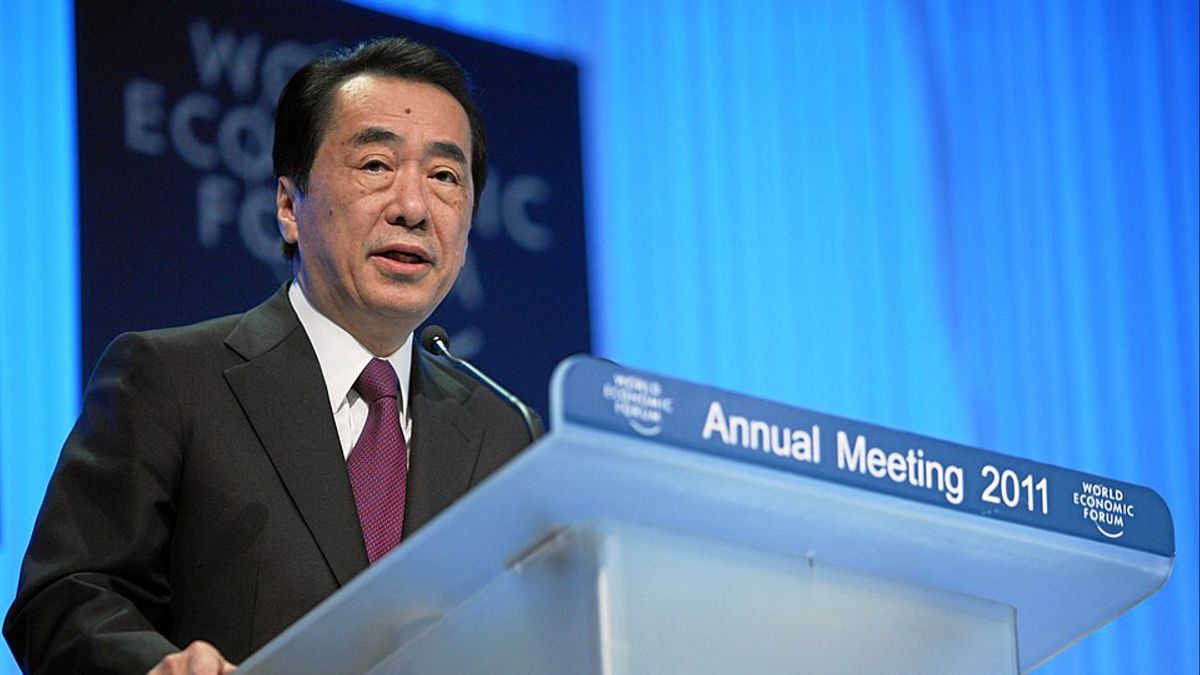


JAKARTA History today, 14 years ago, August 26, 2011, Naoto Kan resigned from the position of Prime Minister (PM) of Japan. The resignation was carried out so that Japanese citizens could choose a new PM. PM candidates who can bring changes after the earthquake and tsunami.
Previously, Japan had invested heavily in preventing earthquakes. The investment was in fact unable to do much when the tsunami hit Japan in 2011. Naoto Kan became the target of the Japanese people's anger.
Japan is one of the countries that has rapid development in Asia. This condition is because Japan is able to adapt to the progress of the times. Moreover, earthquake prevention matters. Japan understands very well that its country is often threatened with high-power earthquakes.
This condition made the Japanese government immediately clean up. They are trying to promote disaster mitigation. An act that aims to reduce the risk and impact of disasters. They also promote disaster adaptation.
A process of adjusting so that the Japanese people can survive and independently face disasters. This action made Japan go out of large-scale funds. As a result, the Japanese people are a lot protected from earthquake disasters.
Japanese society can indeed avoid ordinary earthquakes. However, not with earthquakes accompanied by tsunamis. Take for example on March 11, 2011. An earthquake measuring 9.0 SR invited the arrival of a tsunami.
The series of tsunamis destroyed coastal areas of Japan, especially in the Tohoku region (north of Honshu Sea). The combination resulted in more than 15 thousand casualties, there were also predicting that the actual victims would reach 20 thousand victims.
The Japanese side, then the world mourned. Condolences arise from everywhere. The Japanese people work hand in hand to help those affected.
Jepang has invested heavily in coastal protection and buildings that are earthquake-resistant. However, everything is not enough. Many ports were hit by tsunamis and airports in Sendai were flooded.
The nuclear power plant was closed across the country and a state of emergency was declared at the Fukushima nuclear power plant. Where the cooling system is damaged, said Ian Sample in his writing at The Guardian entitled "Japan Earthquake and Tsunami: What Happened and Why (2011)".
SEE ALSO:
-
 | MEMORI
Kontroversi Warga Negara Indonesia Bernama Tuhan dalam Sejarah Hari Ini, 24 Agustus 2015
24 Agustus 2025, 16:00 -
 | MEMORI
Pendekar Hukum Artidjo Alkostar: Kisah Hakim Agung yang Ingin Hukum Mati Koruptor
24 Agustus 2025, 07:35

The major disaster of earthquakes and tsunamis has made the Japanese people demand that the government act immediately. The name of the Japanese Prime Minister, Naoto Kan, continues to be held accountable. The people asked the Japanese PM to be present and improve the situation. Moreover, the Japanese people who are affected are in trouble.
The Japanese people also saw the slow handling of the steps to improve nuclear facilities. Lately, he can't stand the pressure. In the end, he chose to resign on August 26, 2011. Even though he had just really released from his position on September 2, 2011.
The resignation was carried out so that the Japanese people could immediately choose another better leader. The leader after Kan inevitably inherited the problem of improving nuclear facilities to soaring health and social costs.
"In this difficult situation, I feel like I have done everything I have to do. Now I want you to choose someone who is honored as the new prime minister," Kan said as quoted by The Guardian page, August 26, 2011.
The English, Chinese, Japanese, Arabic, and French versions are automatically generated by the AI. So there may still be inaccuracies in translating, please always see Indonesian as our main language. (system supported by DigitalSiber.id)
Popular


