



JAKARTA - The founders of the nation are never arbitrary in building the foundation of Indonesia. They try to formulate the basis of the state in the form of the 1945 Constitution (UUD). A set of rules is considered as a guideline that can regulate all aspects of the nation and state.
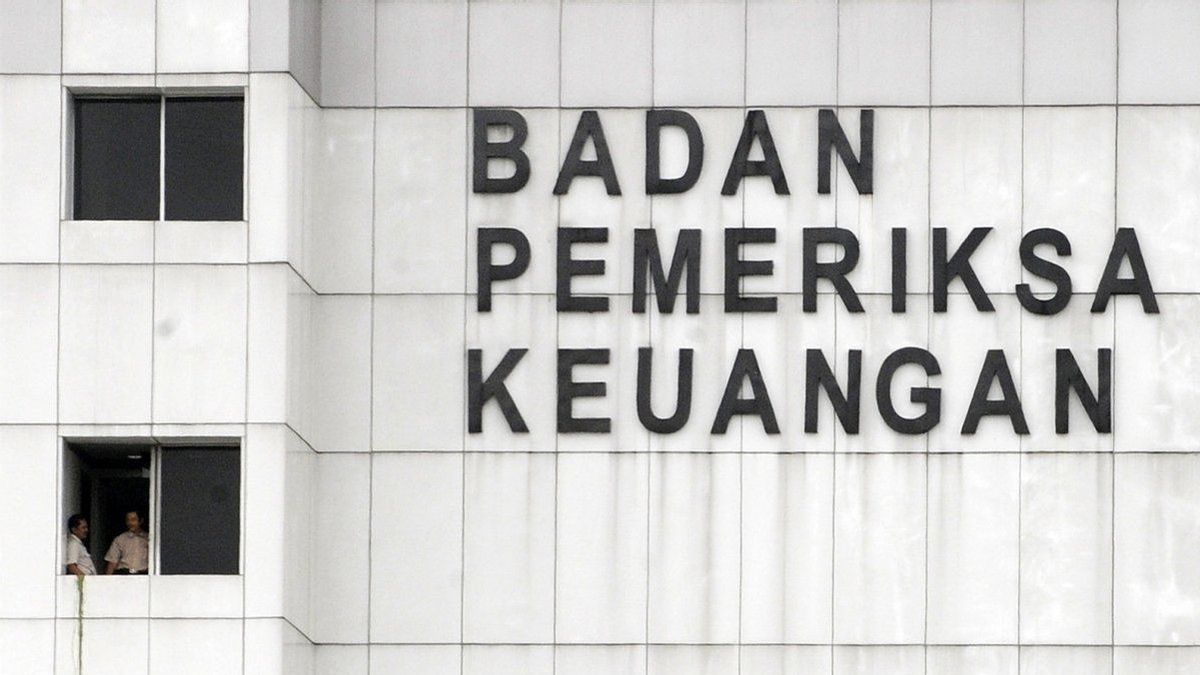
The nation's founders did not forget to include matters of state financial supervision into the 1945 Constitution. The Supreme Audit Agency (BPK) also emerged. The presence of the BPK is not easy. The financial supervisory body must work hard to exist.
The proclamation of Indonesian independence was greeted with joy on August 17, 1945. Indonesia was finally free from the shackles of colonialism. However, that does not mean that Indonesia's path to becoming a country is smooth.
Proclamation is considered only a start. The main problem is to form the basis of the state. This narrative makes those who are members of the Indonesian Independence Preparation Committee (PPKI) work extra.
They must be able to summarize the basic state to realize Indonesia's legitimacy as a sovereign country on August 18, 1945. PPKI again tried to find a solution to the idea raised by a national figure, Soepomo at the previous PPKI meeting.
The idea is related, among other things, to state financial arrangements. Soepomo formulated the determination of the state budget to be carried out every year. The determination needs to be approved by the House of Representatives (DPR). Soepomo also thought about creating a budget supervisory body. BPK, his name.
The goal is to check the responsibility of state finances. He considered this function to be similar to a similar institution in the colonial era called the Green's Algemene. This wish was then achieved and included in the 1945 Constitution. Articles specifically related to BPK are present in Article 23 Paragraph 5.
The way the government uses spending money that has been approved by the DPR must be commensurate with this decision. To check the government's responsibility, there needs to be a body that is free from the influence of government power.
"An agency subject to the government cannot carry out such a heavy obligation. On the other hand, the agency is not a body that stands above the government. Therefore, the power and obligation of the Agency is stipulated by law." Article 23 Paragraph 5 of the 1945 Constitution.
BPK did not immediately stand up. The condition of the country that was chaotic in the Revolutionary War (1945-1949) became a cause. However, the government was finally able to realize the establishment of the BPK on January 1, 1947. Its presence is proof that the presence of the BPK cannot be separated from the emergence of the 1945 Constitution.
To implement Article 23 paragraph (5) of the 1945 Constitution, the Minister of Finance based on Circular Letter dated December 10, 1946 No. 003 21-49 announced about the establishment of a Supreme Audit Agency. The agency was present and held a 'Preparatory Office' in Magelang.
The results of the Preparatory Office's work were realized by the establishment of the State BPK based on the Government's Determination in Yogyakarta on December 28, 1946 No. 11/UM. BPK started working on January 1, 1947," said Loemaksono in his writing in the ABRI Work Mimbar magazine entitled The Role of the Supreme Audit Agency in National Development and the State (1994).
BPK's journey was not smooth at the beginning of its birth. Instead of being placed in the center of the Yogyakarta (Indonesian capital during the Revolutionary War) government, BPK was actually placed in Magelang.
Conditions so that BPK can prepare its functions and role so that it matures in the midst of the turbulent Revolutionary War. The task of compiling BPK's work is too heavy. This condition is because BPK employees are limited.
Only nine people work. The first chairman of the BPK was R. Soerasno. BPK also managed to accommodate its duties, from the composition to the way it works. The information was then sent to government agencies on April 12, 1947. As a result, all government agencies recognized the presence of the BPK.
Recently, BPK's tough task made them no longer have an office in Magelang. The Indonesian government then moved the BPK to Yogyakarta on November 6, 1948. BPK also had time to change its name in the 1950s.
BPK has turned into the Financial Supervisory Board. This condition was because Soekarno made himself the highest holder of power. This means that everything is controlled by Bung Karno. The institution is no longer in accordance with the 1945 Constitution, where the institution should not be able to dictate to the government.
SEE ALSO:
-
 | MEMORI
Kasus Kriminalisasi Guru Supriyani: Pendidik yang Dituduh Aniaya Anak Polisi
21 Juli 2025, 21:50



The role and name of the Financial Supervisory Board was only returned to the BPK in the New Order era. This condition made BPK then the front line that examined and was responsible for state financial audits.
In time, as with other state institutions, President Soekarno became the holder of the highest examination and research power over the preparation and management of state finances. The chairman and deputy chairman of the BPK was also appointed as coordinating ministers and ministers in the cabinet during the Old Order era.
"When the New Order emerged, the position of BPK was returned to its original position and function as a high state institution. New Order also issued Law no. 5 of 1973 concerning BPK," said Patrialis Akbar in the book State Institutions According to the 1945 Constitution of the Republic of Indonesia (2013).
The English, Chinese, Japanese, Arabic, and French versions are automatically generated by the AI. So there may still be inaccuracies in translating, please always see Indonesian as our main language. (system supported by DigitalSiber.id)
Most Popular Tags
#Prabowo Subianto #donald trump #firearm #8791 #giias 2026Popular


