
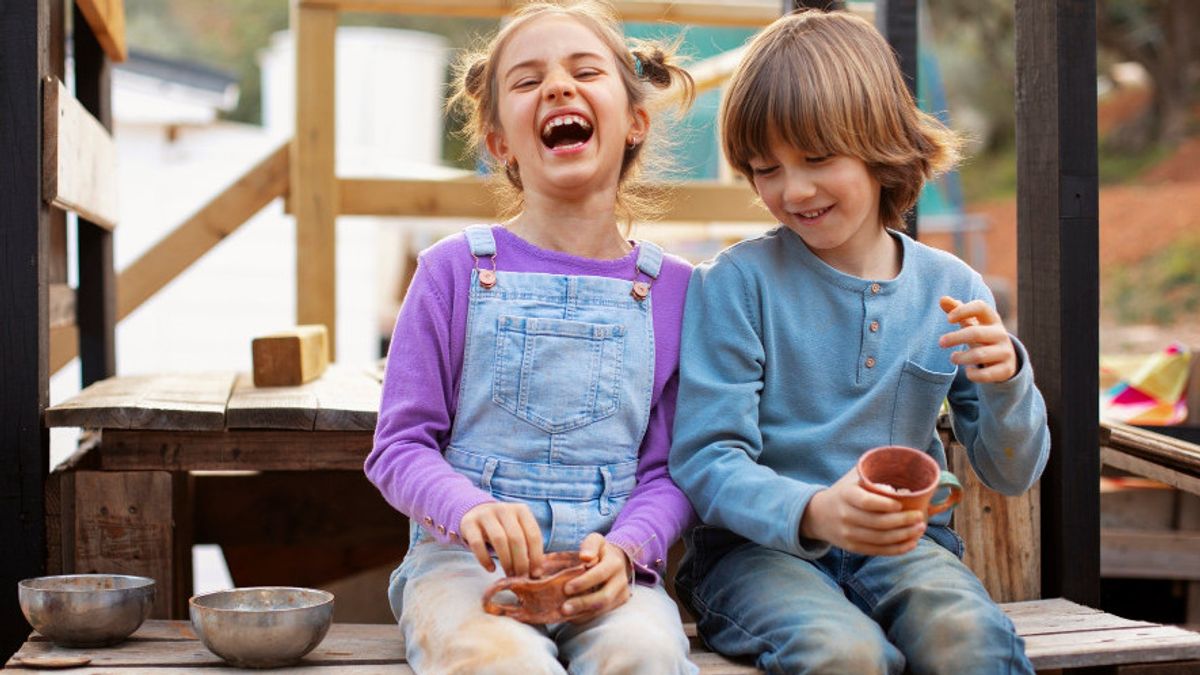


YOGYAKARTA - Helping children be more confident when making friends and socializing is often a challenge for many parents. There are children who are easy to get along with new environments, but there are also those who need more time to feel comfortable. In the world of parenting, children's social skills are important to help them build healthy relationships, understand other people's emotions, and feel accepted in their surrounding environment. The good news is that socializing skills are not something that just comes up, but can be trained slowly through daily habits.
1. Help your child recognize his own feelingsBefore children learn to understand others, they need to recognize their own emotions first. Children who are able to understand feelings such as sadness, disappointment, embarrassment, or anger are usually easier to control their responses when interacting with friends. Therefore, parents can help children name the emotions they are feeling.
For example, you can say, "It seems like you were disappointed because you weren't invited to play." Simple sentences like this help children feel understood while learning to recognize their own emotions. Quoting Parents, Friday, May 22, the ability to understand feelings is an important foundation in children's social skills.
Social ability is not just about being able to speak, but also being able to listen. Many children are still learning to understand when to speak and when to pay attention to the interlocutor. This is important because healthy friendships are usually built through two-way communication.
You can train him through light conversations at home or while playing with the family. Teach children to wait for their turn to speak without interrupting other people's conversations. This little habit helps children be more easily accepted in their social environment.
3. Don't rush to solve the child's problemWhen children fight with friends or feel excluded, parents often want to intervene immediately. In fact, children also need to learn to deal with social conflicts with the right accompaniment. Experiences like this help them learn to find solutions and understand other people's points of view.
Try to invite your child to discuss what is really happening. Ask how he feels and what he thinks can be done to improve the situation. That way, children learn to solve social problems without always relying on parents.
Not all friendships have a good influence on children. Therefore, it is important to help them understand that good friends should respect, support, and make each other feel comfortable. Children also need to know that they have the right to say no when they are treated badly.
This discussion can be done through everyday stories or experiences that children experience themselves. Avoid directly blaming your child's friends for this, as it can make them close themselves. Focus on helping children recognize healthy and unhealthy relationships slowly.
5. Give children the opportunity to socializeChildren's social skills develop through real-life experiences. Therefore, children need the opportunity to play, cooperate, and interact with many people. Group activities, playing with peers, or community activities can help them be more confident when socializing.
Even so, it's important to understand that every child has a different speed. A quiet child does not mean that they are incapable of making friends. The most important thing is to help them feel comfortable being themselves when interacting with others.
6. Be an example in socializingChildren learn a lot from the way parents interact with others. The way you talk, listen, resolve conflicts, to treating others will be observed and imitated by children. Therefore, real examples are often more effective than long advice.
When children see parents being friendly, respecting others, and being able to communicate well, they will learn to do the same. A warm home environment also helps children feel safer to develop their social skills. Little by little, children's confidence when making friends and socializing can also grow more naturally.
Helping children be more confident when making friends and socializing does require an instant process. However, with the right support, children can learn to build healthy and comfortable relationships with others. In the process of children's social development, simple things like listening to their stories, providing emotional support, and practicing daily communication can have a big impact. In the end, children's social skills are not about being the most popular, but about feeling safe, confident, and being able to build good relationships with their surrounding environment.
The English, Chinese, Japanese, Arabic, and French versions are automatically generated by the AI. So there may still be inaccuracies in translating, please always see Indonesian as our main language. (system supported by DigitalSiber.id)
Popular


