
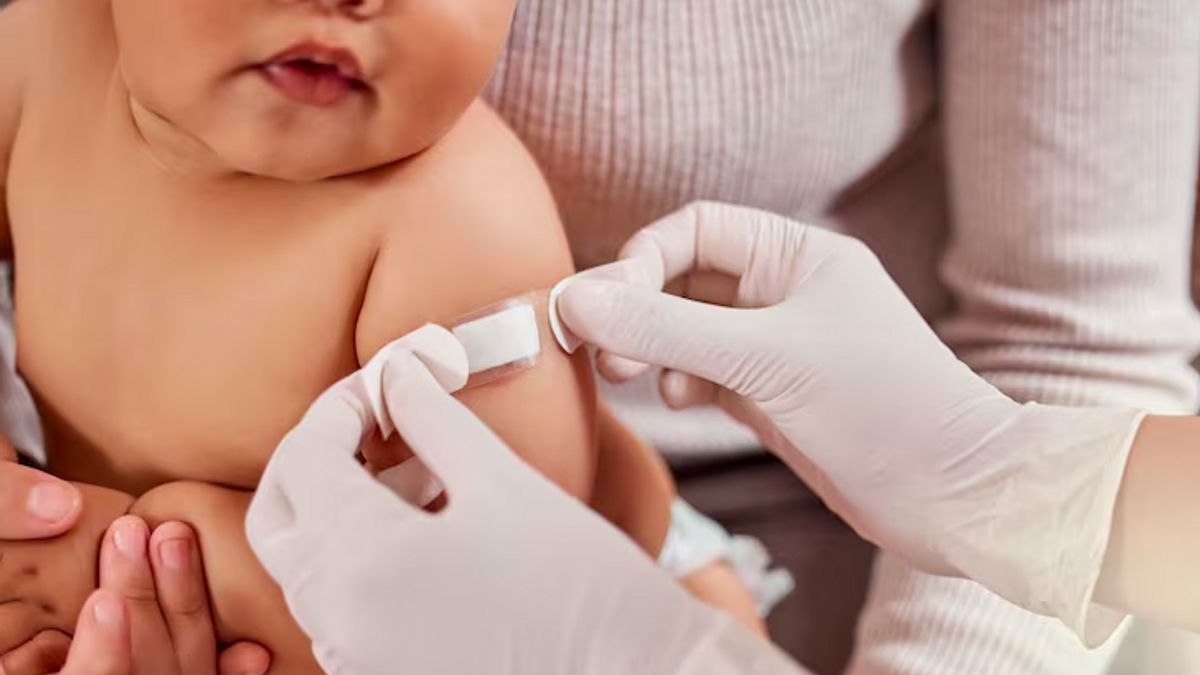


JAKARTA - The basic needs of babies are not only limited to the intake of nutrients from Breast Milk (ASI), but also protection against various diseases through immunization.
Breast milk plays an important role in meeting the nutritional needs and increasing the baby's immunity, but the protection is general. To prevent certain diseases that are at serious risk, babies still need vaccinations as part of early health protection efforts.
The Indonesian Pediatric Association emphasizes the importance of vaccination even though the child's need for breast milk has been met.
"Not everything in breast milk can prevent certain diseases. For example, why after the baby is born, hepatitis vaccines are given, polio vaccines are given, and diphtheria, pertussis and tetanus vaccines are given?" said Member of the Coordinating Working Unit (UKK) for Growth and Social Pediatrics IDAI Dr. dr. Rodman Tarigan, Sp.A, Subsp.T.K.P.S (K) in an online discussion in Jakarta, Tuesday, May 5.
Rodman explained that vaccination has a different function than breast milk. If breast milk provides general protection while meeting nutritional needs, vaccines work specifically to protect the body from certain diseases that have the potential to cause more serious risks.
Some diseases that require special protection through vaccines include hepatitis, polio, diphtheria, and tetanus. These diseases are caused by viruses or bacteria that originate from the outside environment and can easily infect babies whose immune systems are still developing.
Exposure to the disease can also occur from everyday interactions, even from the closest environment such as the family. Simple physical contact can be a transmission path if it is not accompanied by awareness of health conditions.
"For example, being kissed by his parents, being kissed by his grandmother, someone holding him may not be ready for his hand, or again during the incubation period, he is actually sick but unconscious, he kisses, his grandchildren kiss, start to be exposed and finally the baby gets sick," he said.
However, Rodman emphasized that breast milk remains the best source of nutrition for babies, especially in the first six months of life, and is recommended to continue until the age of two.
Breast milk contains various important substances such as proteins, carbohydrates, and antibodies that have been adjusted to the needs of the baby. These contents play a role in building the immune system and protecting against various infections.
"Breast milk can increase immunity, protect (babies from) infections, and also maintain energy. So it's very complete, because it is said that one drop of breast milk is very extraordinary," he said.
He also reminded the public of the importance of being smarter in filtering information, especially in the midst of increasingly rapid information flows.
The English, Chinese, Japanese, Arabic, and French versions are automatically generated by the AI. So there may still be inaccuracies in translating, please always see Indonesian as our main language. (system supported by DigitalSiber.id)
Most Popular Tags
#Prabowo Subianto #donald trump #firearm #8791 #giias 2026Popular


