


Gender equality is still an important issue in development, including in Indonesia. Although various advances have been made, women still face challenges in obtaining equal access, opportunities, and roles in various sectors of life.
The momentum of the commemoration of Kartini Day every year is also a reminder that the struggle for gender equality is not yet fully complete.
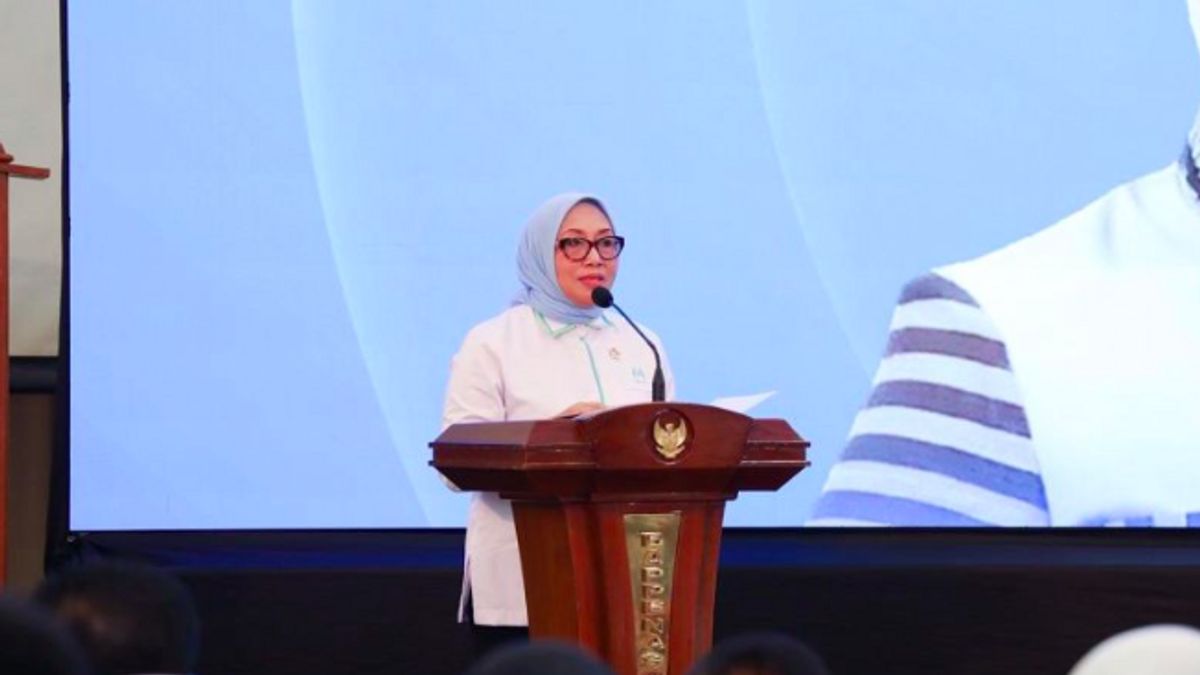
Minister of Empowerment of Women and Child Protection, Arifah Fauzi, stated that on the commemoration of Kartini Day 2026, the challenge towards gender equality is still quite large.
"Various challenges towards gender equality are still being faced. In today's context, these challenges come in the form of various forms of inequality in access, participation, control in the process of implementing development, and obtaining the benefits that women get from development results," he said in Jakarta.
He explained that this condition is reflected in the achievement of the Gender Development Index (IPG) and the Gender Inequality Index (IKG), which are important indicators in measuring the success of gender mainstreaming in Indonesia.
Data from the Central Statistics Agency (BPS) shows that the IPG in 2024 is at 91.85. This figure indicates an increase in the quality of women's development from year to year, although the rate of increase tends to slow down in the last decade.
"Indonesian women still have problems in access to the economy, education and health," he said.
Meanwhile, the Gender Inequality Index (IKG) in the same year was recorded at 0.421. Although it showed a decrease compared to the previous year, this figure still indicates a gap in the aspects of reproductive health, empowerment, and women's economic participation.
Several other indicators also show the challenges that are still faced. For example, about 24.8 percent of women give birth outside of health facilities, as well as cases of women giving birth for the first time at the age of under 20 years.
In the employment sector, the participation rate of the female workforce is still lagging behind that of men, namely around 56.42 percent, while men reach 84.66 percent.
In the political field, women's representation is also not optimal. The percentage is in the range of 15 percent in the district/city and provincial DPRD, and around 22 percent in the DPR RI.
In addition, the gap is also seen from the distribution of regions. It is recorded that there are 13 provinces that are still in the low IPG category, which shows that gender inequality is quite significant and requires serious attention.
"Therefore, the state must continue to be present and strive to strengthen women's empowerment through the direction of national development policies," he said.
He added that strengthening the role of women is part of the national development commitment, including in the priority agenda which emphasizes the improvement of human resources quality, mastery of science and technology, education, health, and the expansion of the role of women, youth, and people with disabilities.
The English, Chinese, Japanese, Arabic, and French versions are automatically generated by the AI. So there may still be inaccuracies in translating, please always see Indonesian as our main language. (system supported by DigitalSiber.id)
Popular


