


JAKARTA - With the onslaught of fast fashion products that are fast and affordable as they are today, local fashion designers are faced with a major challenge to remain relevant while having their own characteristics.
However, behind these challenges, Indonesia actually has a strength that many other countries do not have, namely the richness of traditional textiles that are full of cultural values and visual uniqueness.
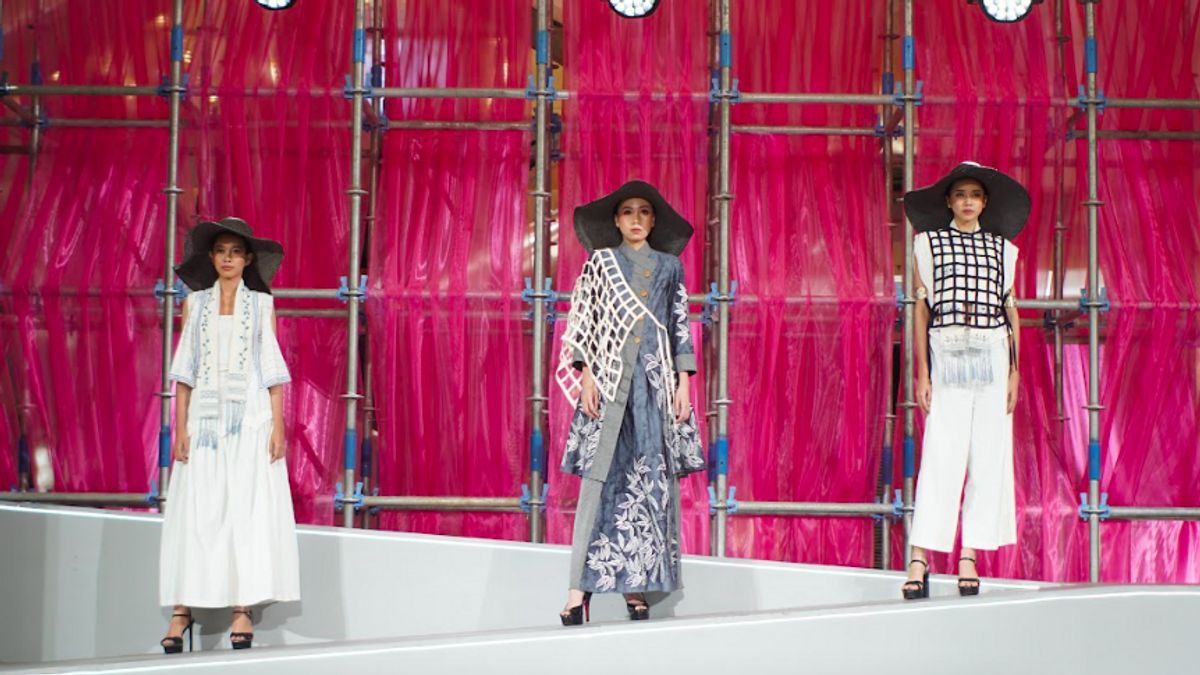
The 7th Ramadan Runway 2026 event in Kota Kasablanka became one of the stages that emphasized the importance of returning to the roots of culture as a competitive strategy. Not just about trends, but how designers are able to present authentic, sustainable works, and have a strong story behind each design.
The Chairman of the APPMI, Poppy Dharsono, emphasized that the richness of Indonesian culture can be an endless source of inspiration for designers, especially those spread across various regions.
"The cultural heritage of our ancestors is extraordinary. Each province has its own uniqueness which is very rich, and it can be a source of inspiration for designers," he said in Kota Kasablanka, Jakarta, recently.
According to him, the utilization of textiles in fashion works not only preserves cultural sustainability, but also becomes a way to build Indonesian fashion identity in the eyes of the world.
Poppy assessed that in the face of tight industry competition, local designers should strengthen their characters through the use of traditional fabrics such as batik, songket, ulos, and ikat fabrics.
"Indonesian fashion must be our identity. In terms of culture, we have an identity, in terms of economy, we can be independent," he said.
He also highlighted the importance of making textiles a value-added commodity that not only benefits designers, but also artisans in the region.
"How do we make this heritage a commodity that can provide a livelihood for artisans, while enriching the treasure of Indonesian fashion," he explained.
One of the keys to keeping textiles relevant in the modern market, according to Poppy, is a simpler but elegant design approach.
Then a simple design actually demands higher technical ability from the designer, ranging from cutting patterns to arranging silhouettes.
"If it's too crowded, the beauty of the fabric is not visible. It's the simple design, the character of the fabric that is the center of attention," he said.
Furthermore, Poppy emphasized that creative exploration is still needed, but it should not eliminate the original identity of the fabric. Designers are now required to be able to explore the fabric or fabric of the archipelago into modern fashion according to the needs of the current market.
"We don't have to follow that trend completely. It's how we process traditional fabrics into something modern, that's the task of the designer's creativity," he said.
Ramadan Runway itself is an annual event resulting from the collaboration between the Indonesian Fashion Entrepreneurs Designers Association (APPMI) Jakarta and Kota Kasablanka. "Blooming Ramadan" is the theme of the fourteenth edition which collaborates with more than 60 well-known designers and 80 local tenants, Ramadan Runway is held from March 5-29, 2026 at the Grand Atrium, Mosaic Walk, and Fashion Atrium Kota Kasablanka.
The English, Chinese, Japanese, Arabic, and French versions are automatically generated by the AI. So there may still be inaccuracies in translating, please always see Indonesian as our main language. (system supported by DigitalSiber.id)
Most Popular Tags
#Prabowo Subianto #donald trump #2026 World Cup #Febrie Adriansyah #8791Popular


