
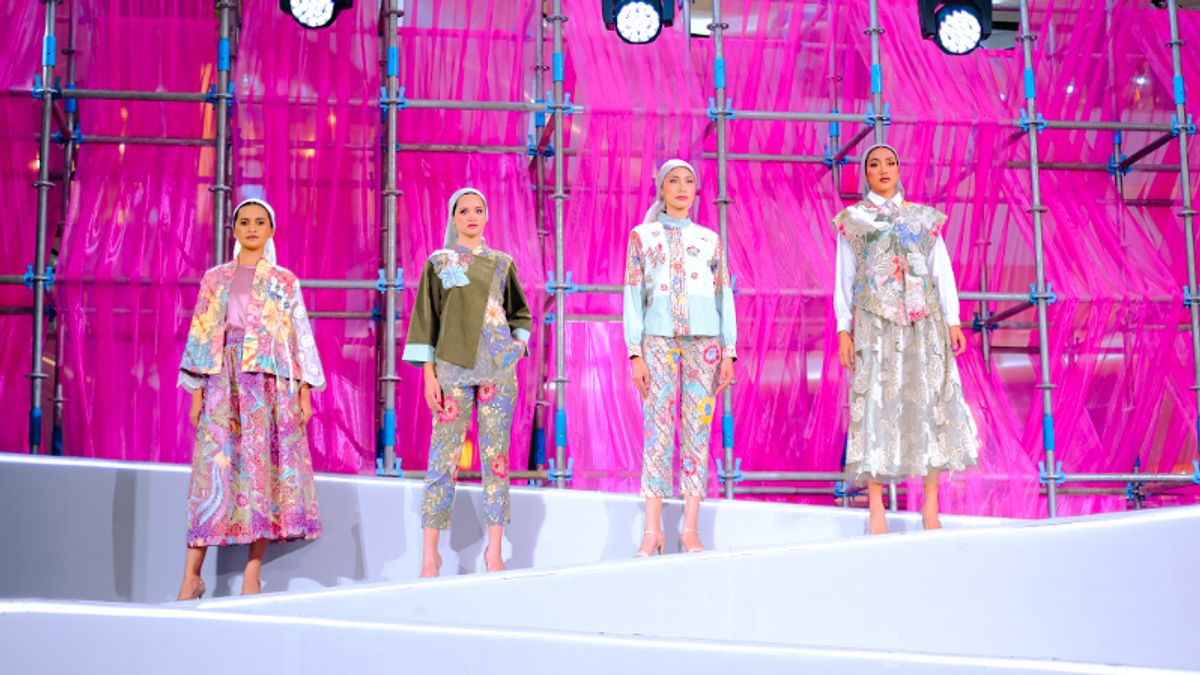


JAKARTA - The trend of Lebaran clothes with floral motifs is still popular from year to year. Even though fashion trends change, the flower motif is still the choice because it can bring a fresh and elegant impression.
Now, his innovations are even more diverse, ranging from color games, embroidery techniques, to decorative applications that make the look more modern without leaving the classic feel.
Floral motifs themselves are often present in the Raya collection, including for iftar and Eid al-Fitr 2026. The use of decorative elements in the form of flowers is considered capable of creating a more lively and festive atmosphere, in line with the spirit of celebration after undergoing fasting.
In addition, the floral motif also has a meaning that is closely related to nature, growth, and new hope. These values make it not just a seasonal trend, but also part of the tradition in Muslim fashion during Ramadan.
The Chairman of the Indonesian Fashion Designers and Entrepreneurs Association (APPMI) Jakarta, Dana Duriyatna, said this motif remains a distinctive feature in the Lebaran collection.
"The floral motif remains a signature because this Eid collection wants to present a cheerful impression to celebrate Eid al-Fitr. Flowers, one of them is a symbol of cheerfulness," he said.
The diversity of interpretations of floral motifs is visible in the fifth day of the Ramadan Runway 2026. A number of designers present different approaches, ranging from ethnic touches to modern silhouettes.
Clue, for example, combines ethnic floral motifs with layering such as outer, vest, and long shirt in pastel and earth tone palettes. Meanwhile, Yasokhy presents layered style through vests, kimono outer, to sleeveless long dresses with similar nuances.
The exploration of motifs is also visible in Willmich's work which adds floral decorative elements not only on clothing, but also accessories such as headgear and details on the shoulders. A different approach is shown by Mierto X Queend by making floral motifs the main accent, including flower decorations on the chest as a statement.
Meanwhile, Rryni House presents floral embroidery with a touch of a soft kebaya silhouette, followed by Kunce Manduapessy who applies a similar motif on a long dress and a long scarf. Other designers such as Sarah Dewanto, Ria Atelier X Gayatri, and Nara X Candrika also process floral motifs through embroidery techniques on their tunic collections.
Floral motifs are also present in various other forms of clothing, such as a satin viscose kaftan from Kean Signature to a collection of tunics and blouses from Nosa's by Putri Ersa. The Ikatara X Pahsila collaboration also features a decorative approach that enriches the variety of floral designs.
The entire collection is in line with the theme "Blooming Ramadan" which was raised in the Ramadan Runway 2026. The theme describes Ramadan as a moment of growth and beauty, like a flower that blooms.
"Blooming Ramadan can be understood as a poetic expression that describes the holy month as a beautiful spring and full of spiritual growth," said Dana.
Ramadan Runway is an annual event held by APPMI Jakarta together with Kota Kasablanka. This year, the event involved more than 60 designers and dozens of local tenants, as well as a space for exploration and promotion for the development of the Indonesian fashion industry during Ramadan.
The English, Chinese, Japanese, Arabic, and French versions are automatically generated by the AI. So there may still be inaccuracies in translating, please always see Indonesian as our main language. (system supported by DigitalSiber.id)


