

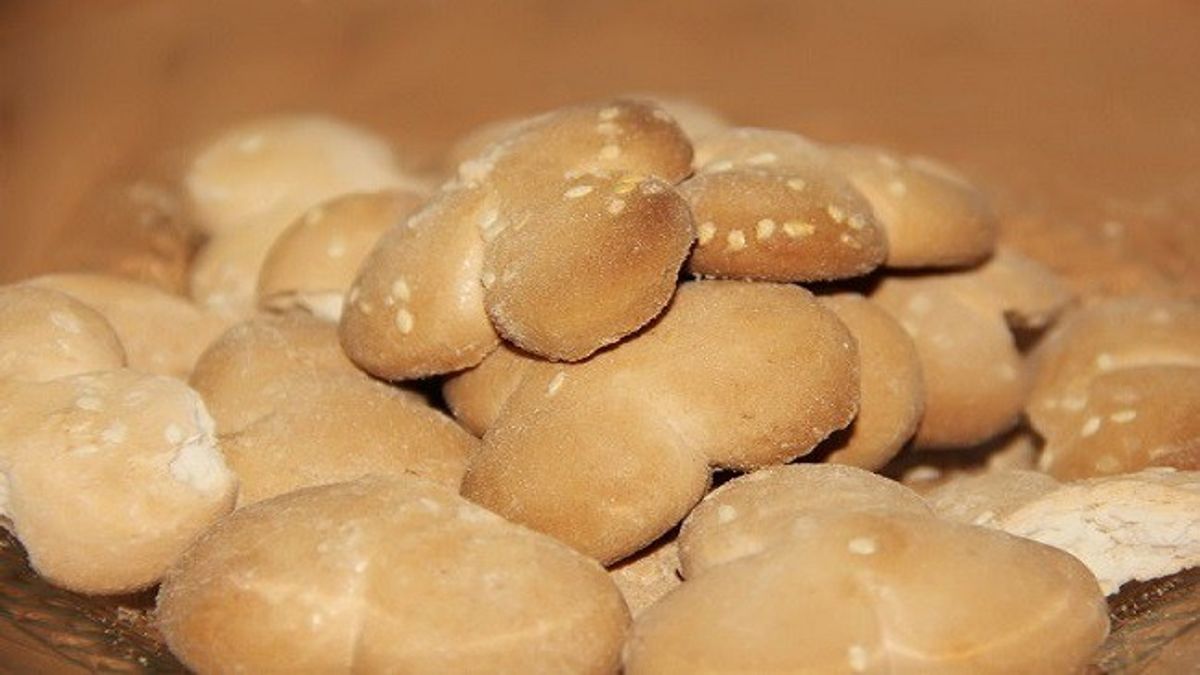


JAKARTA - In Bangka, Bangka Belitung Islands Province, one of the cakes that often appear during Idulfitri and Iduladha is the rintak cake. The shape is small, usually resembles a flower. The color is not striking. The taste is also not excessive. But precisely because of this, this cake is easily recognized and difficult to replace. When the house is crowded with guests, rintak is almost always served at the table.
This cake has long been known as a traditional cake of the Bangka Belitung people. Not only appearing during holidays, rintak is also often found in coffee shops. That is, he does not live solely as a seasonal cake. He has become part of the eating habits of the local community.
The basic ingredients are simple. From a number of sources, the core of this cake is based on sagu flour or tapioca flour, coconut milk, and sugar. In some recipes, the dough is also added with eggs, brown sugar, orange leaves, or sesame. Not complicated, but still demanding accuracy.
The way to make it also has a typical stage. The flour is usually roasted first until it feels light. The coconut milk is then cooked with sugar and additional ingredients such as orange leaves to give it a scent. After that, the coconut milk mixture is added to the flour little by little while stirring until the dough is just right to be formed. After that, the dough is printed, generally in the shape of a five-petaled flower, then baked until it is cooked. The baking time is about 25 to 30 minutes.
What makes the rintak survive is not only its shape or tradition, but also its taste. This cake plays on two sides that hit the Indonesian people's tongue, namely sweet and savory. When bitten, the outside feels crunchy, then slowly melts more gently in the mouth. Because the taste is not too heavy, the rintak is suitable for serving repeatedly for guests who come and go.
That's where the strength of the cake is. It's not fancy, but it's always just right. The ingredients are simple, the way to make it is not short, and the end result feels familiar. In many houses in Bangka, this cake still survives for one understandable reason. It's delicious, light, and suitable for holidays or coffee drinking friends.
The English, Chinese, Japanese, Arabic, and French versions are automatically generated by the AI. So there may still be inaccuracies in translating, please always see Indonesian as our main language. (system supported by DigitalSiber.id)
Popular


