
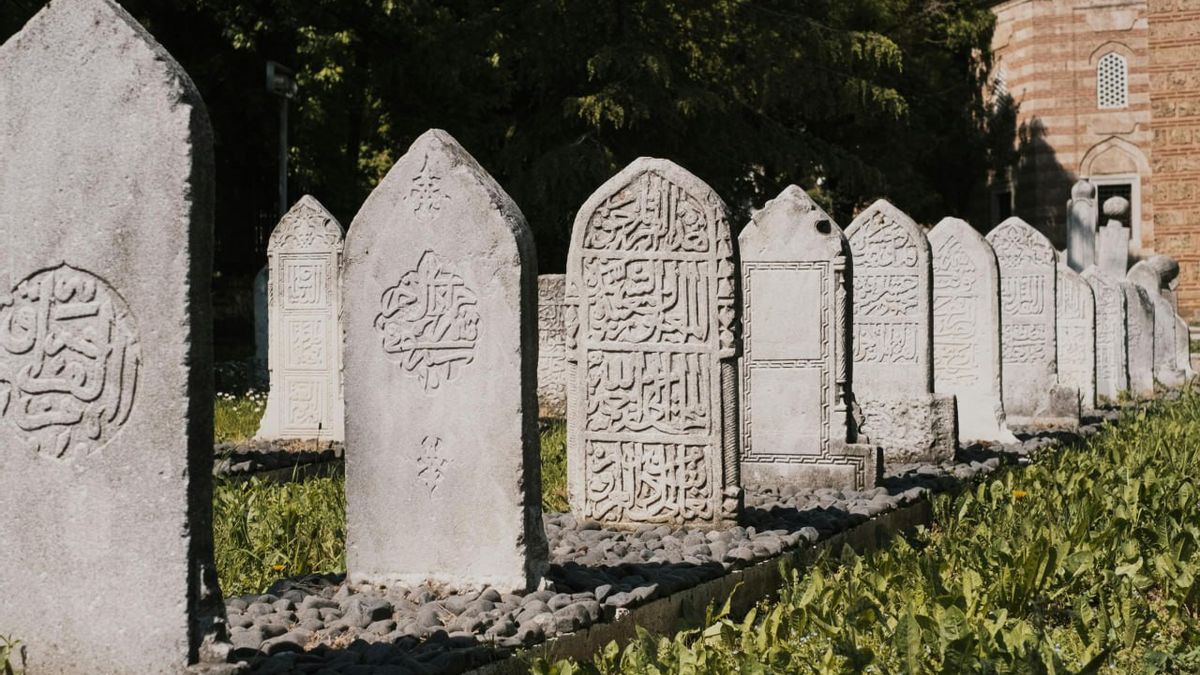


YOGYAKARTA - Ramadan is a month in which the gates of heaven are opened wide with so much righteous deeds. In this atmosphere of worship, it is not uncommon to hear the sad news of fellow believers leaving. There is a mixed feeling, on the one hand there is sadness because of loss, but on the other hand there is hope that dying in Ramadan is a sign of husnul khatimah.
Is it true that those who die in the month of Ramadan have special privileges? Is it true that dying in the month of Ramadan automatically becomes a guarantee of safety in the afterlife? Let's review together the explanation from the scholars so as not to cause misunderstanding in understanding God's mercy.
The Privilege of Dying in the Month of RamadanFirst, we need to understand that in essence, what determines a person's heaven or hell is his righteous deeds during his life, not merely the time or place of his death. This is one of the things emphasized by Sheikh Nur Ali Salman in his fatwa issued by Dairatul Ifta Jordan:
"Entering heaven is because of God's grace, and the reason is because of good deeds. The month of Ramadan is a time to do good deeds. But it does not mean that anyone who dies in the month of Ramadan will go to heaven. Entering heaven is because of the cause of deeds as I have mentioned," he quoted from NU Online.
In other words, humans do not have the right to judge someone's fate in the afterlife based solely on the time or place of his death. God's mercy is much broader than just being associated with a certain time. The task of humans is to increase good deeds and hope to die in a state of husnul khatimah.
The fatwa also clarifies misconceptions that often arise when interpreting several hadiths about the excellence of Ramadan. If a believer dies in Ramadan or in a noble place such as Mecca or Medina, then it is hoped that this will be the cause of increased mercy and forgiveness from God for him. However, it is still not an absolute guarantee of entering heaven.
The point is, what determines a person's safety is not the time of his death, but the good deeds he brings. Associating heaven only with a place or time of death is as if it limits the extent of God's mercy. In fact, His mercy encompasses everything.
But even though it is not a guarantee of entering heaven, dying in Ramadan still has its advantages. One of the reasons is because this month is a time when Muslims are actively worshiping. Many people fast, increase charity, and strengthen their relationship with God.
In a shahih hadith narrated by Imam Ahmad, it is mentioned about the virtue of a person who dies while fasting:
"Whoever says La ilaha illa-Allah (there is no god but Allah) in the hope of Allah's pleasure, and it is his last deed, then he will enter Paradise. Whoever fasts one day in the hope of Allah's pleasure, and it is his last deed, then he will enter Paradise. Whoever gives charity in the hope of Allah's pleasure, and it is his last deed, then he will enter Paradise."
This hadith shows that the key is righteous deeds done towards the end of life. If someone dies while fasting or performing other worship, then it is a good sign. Not only because it is Ramadan, but because he died in a state of obedience.
This is also reinforced by the hadith in Muslim's biography which states that every human being will be resurrected according to the state when he died. This means that a person who dies while doing good deeds will be resurrected in the same state on the day of resurrection.
Therefore, the priority of dying in the month of Ramadan is more related to the opportunity for a person to die in a state of worship. People who fast, give alms, or recite in this month are in a series of righteous deeds. If death comes in this state, then it is a sign of husnul khatimah.
In the end, what determines is not when someone dies, but how he lives his life. Consistent good deeds are the main ingredients to get God's mercy. The time and place of death are just one of the conditions that can be a good sign.
In addition to discussing the privilege of dying in the month of Ramadan, follow other interesting articles at VOI.ID. So as not to miss the latest news, follow and monitor our social media accounts!
The English, Chinese, Japanese, Arabic, and French versions are automatically generated by the AI. So there may still be inaccuracies in translating, please always see Indonesian as our main language. (system supported by DigitalSiber.id)


