
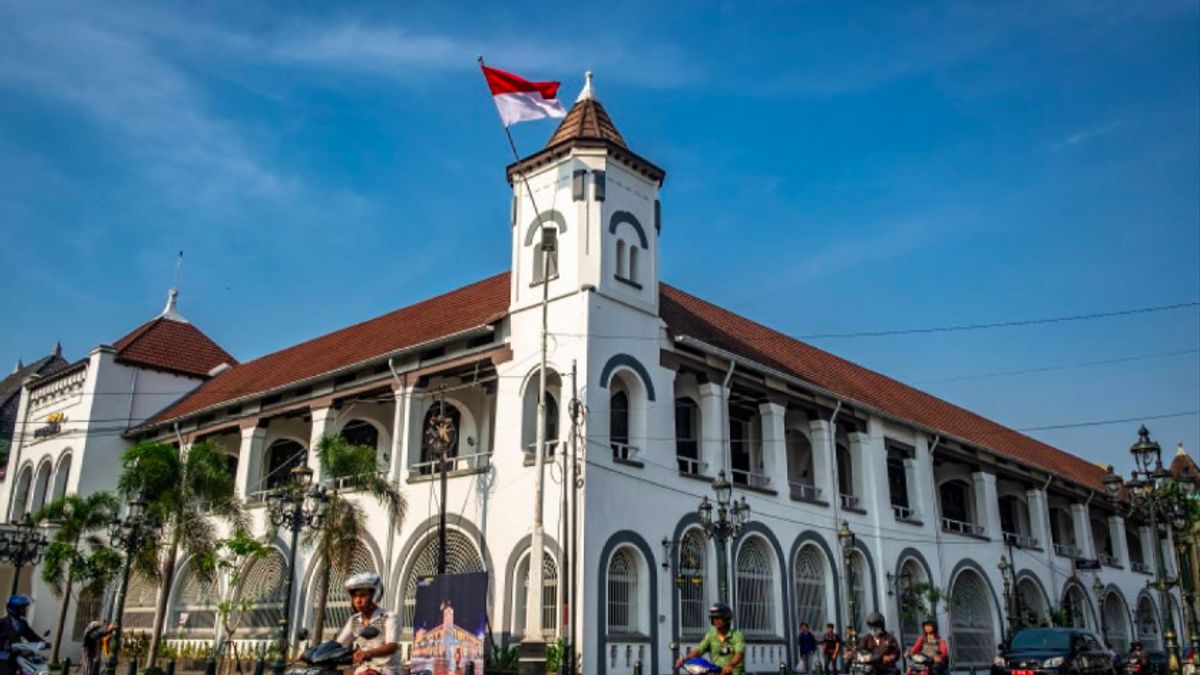


JAKARTA - Efforts to revitalize cultural heritage are one of the important steps in maintaining the sustainability of historical heritage as well as reviving its social and educational functions for the community.
Through physical improvements, governance strengthening, and more relevant use of the times, revitalization is expected to make cultural sites and museums as learning spaces, tourism, and a common identity.
Throughout 2025, the Ministry of Culture recorded that it had revitalized 152 cultural sites and museums spread across various regions of Indonesia. This achievement is considered as part of the government's ongoing efforts to protect and care for national cultural wealth.
Director General of Cultural and Traditional Protection (PKT) of the Ministry of Culture, Restu Gunawan, said that the revitalization and restoration of hundreds of sites reflect the country's commitment to maintaining the continuity of cultural heritage. Some of the museums that are included in the revitalization program include the Harimau Cave Museum, Belitung Maritime Museum, as well as a number of other museums in the region.
This was conveyed by Restu in the Hearing of the Working Committee for the Preservation of Cultural Heritage with Commission X of the Indonesian House of Representatives in Jakarta, Monday. He explained that in addition to museums, the Ministry of Culture also carried out restoration and preservation of various cultural heritage sites.
A number of buildings and historical sites that received attention include the Kayu Jao Mosque in Solok Regency, the Gunongan Site in Aceh, Arjuna Temple, as well as various other sites managed by the Cultural Preservation Agency in a number of regions.
According to Restu, this achievement was also supported by cross-sectoral collaboration, including cooperation with the private sector through the public-private partnership (PPP) scheme. In 2025, the Ministry of Culture managed to realize the cooperation in the construction and renovation of the Sanggabuwana Stage at the Kraton Surakarta, as well as the renovation of the Ranggawarsita Tomb in Klaten.
He revealed that so far the restoration of cultural heritage buildings has often been hampered by limited budgets and resources, so that in one year only one structure can often be handled. Through collaboration with the private sector and the involvement of vocational high school (SMK) students who receive special training, the restoration process can run more effectively and efficiently.
"This collaboration is one solution to accelerate conservation efforts in the midst of budget and human resource limitations," said Restu.
In the field of museum management, the performance of the Museum and Cultural Heritage Public Service Agency (BLU) also showed positive results. Throughout 2025, the realization of BLU revenue was recorded at Rp. 62 billion, or around 145.4 percent of the target of Rp. 57 billion.
Restu emphasized that the Ministry of Culture would continue to develop the use of cultural heritage and museums responsibly. These efforts are aimed at ensuring that cultural heritage not only preserves its historical value, but is also able to provide economic and social impacts for the community in a sustainable manner.
"The potential of cultural heritage and museums is still very large to be developed, and we will continue to optimize it without eliminating the important values of the nation's cultural heritage," he concluded.
The English, Chinese, Japanese, Arabic, and French versions are automatically generated by the AI. So there may still be inaccuracies in translating, please always see Indonesian as our main language. (system supported by DigitalSiber.id)
Popular


