
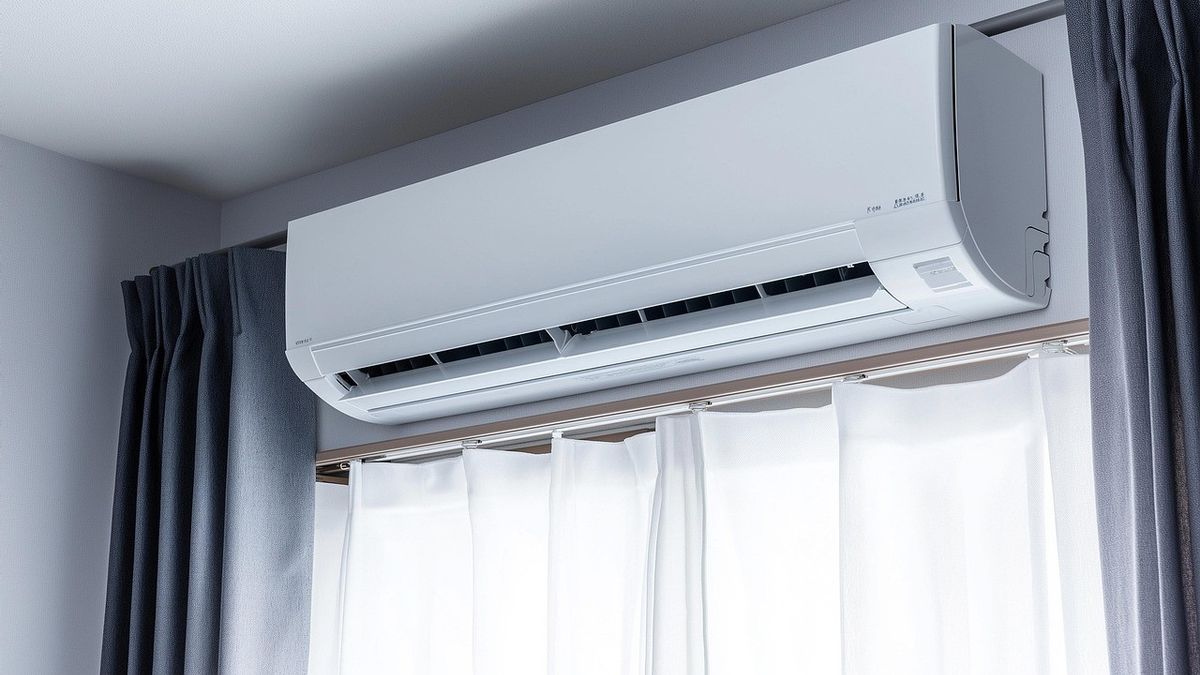


YOGYAKARTA - Find out the difference between inverter and non-inverter AC so you can choose the right type of air conditioner for your home and office.
AC inverters and non-inverters have the same function, namely regulating temperature, controlling humidity, and improving air quality in the room through the filtration system. Even so, the two have different ways of working, so they affect electricity consumption, comfort, and long-term costs.
Knowing the difference between inverter and non-inverter AC can help us choose the AC that best suits our needs. In addition, we can also determine the type of room air conditioner that is most efficient and economical to use every day.
The difference between AC Inverter and Non InverterThe difference between AC inverter and non-inverter can be seen from the way the compressor works. AC inverter uses a compressor with a speed that can adjust the needs, while non-inverter AC uses a compressor with a fixed speed.
In more detail, the following are some differences between inverter and non-inverter AC types, as compiled by VOI from various sources:
Power ConsumptionAC inverters are known to be more energy efficient because they use compressors with variable speeds. When first turned on, the electrical power used is relatively small, and after the room temperature is stable, the electricity consumption will automatically decrease. The electricity savings of AC inverters can even reach 30-40 percent.
On the other hand, non-inverter AC works with an on/off system. When the room temperature changes, the compressor will turn on again with high power. This working pattern makes non-inverter AC more electricity-intensive.
How the Compressor WorksAC inverter converts AC electric current into DC so that the compressor can work stably and adjust the cooling needs. The compressor does not often turn off and on, so the power usage is more efficient.
Meanwhile, non-inverter AC will stop working when the temperature is reached and turn on again when the temperature rises. Every time the compressor turns on, it takes a lot of energy, so that electricity consumption is less efficient even though the cooling feels fast.
Noise LevelIn terms of comfort, inverter air conditioners tend to be quieter. A compressor that works stably produces a smooth and unobtrusive sound, especially when used in the bedroom.
Non-inverter ACs usually make more noise, especially from the outdoor unit when the compressor is on. This noise can be felt more if the age of the AC is quite long.
Durability and Service LifeAC inverters have a relatively longer service life because the compressor workload is lighter. The compressor rotation can adjust the needs so that it does not experience excessive pressure.
Conversely, non-inverter air conditioners often experience heavy workloads due to repeated on/off systems. This makes the compressor work harder and potentially break down faster.
Maintenance and Service CostsThe cost of maintaining non-inverter AC is generally cheaper than inverter AC. Inverter AC uses a larger type of freon and pipe, so the service cost is relatively higher.
Even so, both types of air conditioners still need to be cleaned regularly every 3-4 months, including filters, evaporators, and fans, so that their performance remains optimal and the air remains healthy.
AC Unit PriceIn terms of price, inverter air conditioners are indeed more expensive than non-inverter air conditioners because they use more advanced technology. However, the price is comparable to the energy efficiency, additional features, and long-term electricity savings offered.
That's the explanation about the difference between AC inverters and non-inverters. Get other interesting news updates only at VOI.id.
The English, Chinese, Japanese, Arabic, and French versions are automatically generated by the AI. So there may still be inaccuracies in translating, please always see Indonesian as our main language. (system supported by DigitalSiber.id)
Most Popular Tags
#Prabowo Subianto #donald trump #firearm #8791 #giias 2026Popular


