
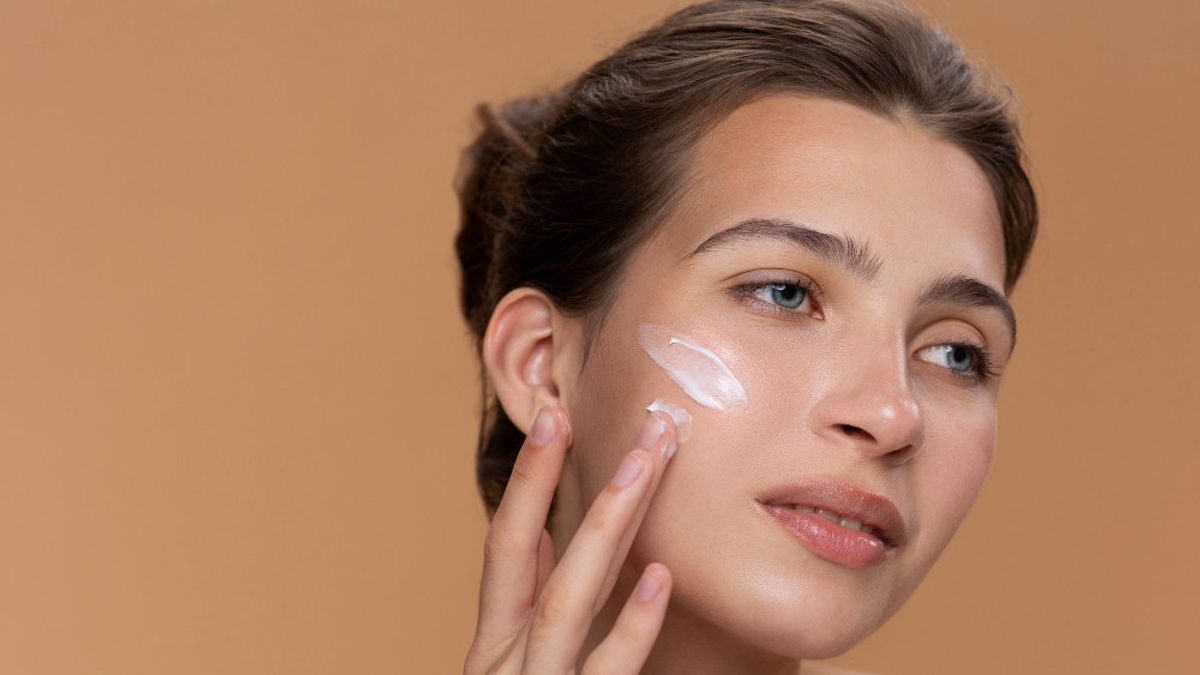


YOGYAKARTA - Can sunscreen be used at night? This question often arises, especially in the midst of increasingly complex skincare trends. Many people think that the more often sunscreen is used, the more the skin will be protected. In fact, this understanding is not entirely correct. To avoid skin care mistakes, it is important to understand the function of sunscreen and when the best time to use it.
Sunscreen is basically designed to protect the skin from exposure to ultraviolet or UV rays from the sun. Exposure to UVA and UVB rays during the day can trigger premature aging, hyperpigmentation, and increase the risk of skin cancer. That's why sunscreen is a mandatory product in the morning to afternoon skincare routine.
The main function of sunscreen that needs to be understoodSunscreen works by absorbing or reflecting UV rays before penetrating the skin layer. This product is equipped with SPF and broad spectrum protection to ward off the harmful effects of the sun. The longer the skin is exposed to the sun without protection, the greater the risk of damage that occurs, even if the weather looks cloudy.
However, this function is only relevant when there is sun exposure. At night, there is no UV light, so sunscreen no longer plays its main role as a skin protector.
Can sunscreen be used at night?Technically, sunscreen can be used at night and does not immediately cause harm. However, this use is often considered a misunderstanding in skin care. Sunscreen is not formulated to help skin regeneration while sleeping, but for external protection from the sun.
Using sunscreen at night also does not provide additional benefits for the skin. In fact, the sunscreen layer can inhibit the absorption of night skincare products such as serums or creams that are designed to improve skin conditions while you rest.
At night, the skin enters a natural recovery phase. This is the best time to use products that focus on hydration, cell repair, and soothing the skin after a day's activity. Products such as night moisturizers, serums with certain active ingredients, or treatment creams are actually more needed than sunscreen.
Instead of using sunscreen, citing the Mayo Clinic, Tuesday, January 13, thoroughly cleansing the face and continuing with the appropriate skincare will help the skin stay healthy and balanced. With the right routine, the skin can breathe and work optimally throughout the night.
Common mistakes in using sunscreenOne of the common mistakes is to consider sunscreen as a versatile product that can be used anytime. In fact, the use of sunscreen should focus on the morning to the afternoon, especially before going outdoors. At night is not the right time to rely on sunscreen as part of skin care.
Understanding the function of each skincare product will help you avoid ineffective routines and potentially burden your skin. So, answering the question of whether sunscreen can be used at night, the answer is yes, but it is not necessary and does not provide significant benefits. Sunscreen is most effective when used during the day to protect the skin from UV rays. Meanwhile, at night, it is best to use it for treatments that support the skin's natural recovery process.
The English, Chinese, Japanese, Arabic, and French versions are automatically generated by the AI. So there may still be inaccuracies in translating, please always see Indonesian as our main language. (system supported by DigitalSiber.id)


