
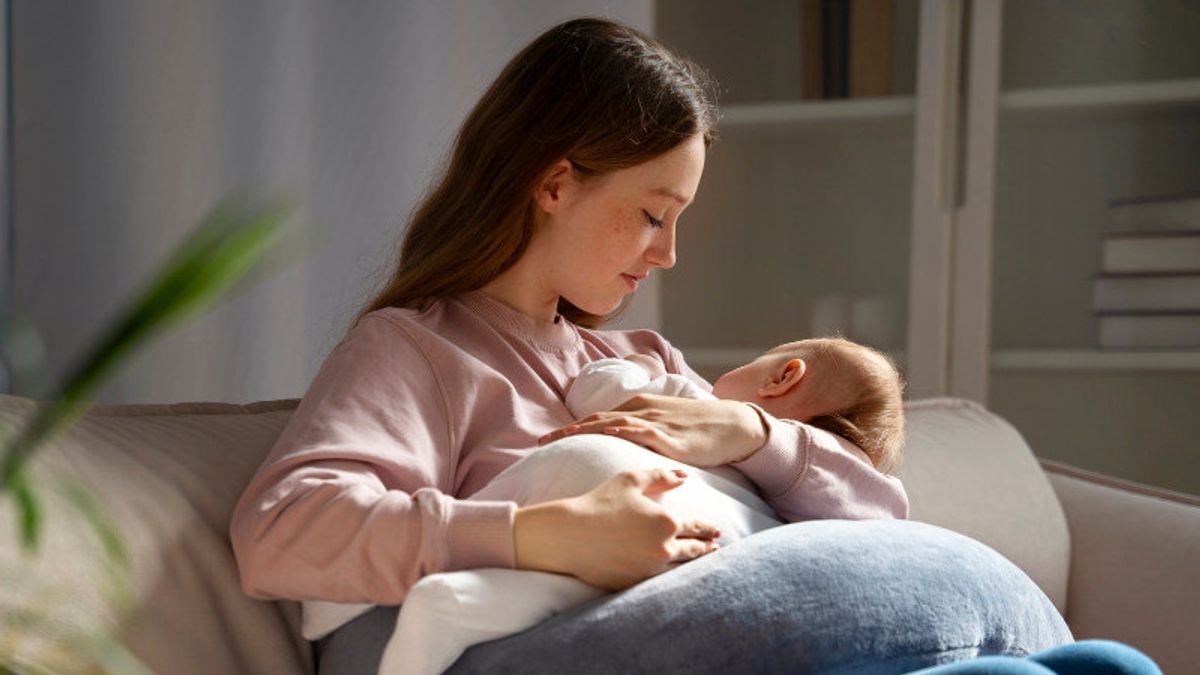


YOGYAKARTA - Babies who only want to sleep when they are carried are a common experience, especially in the first weeks of birth. Although it feels exhausting, this condition does not mean that there is something wrong with your parenting style. Babies are still adapting to the outside world and need consistent security. To help you be calmer, here are nine reasons why babies don't want to sleep without being carried, complete with how to overcome it gradually and safely.
1. Babies are still adapting to the outside worldAfter nine months in a warm and narrow womb, the outside world feels very wide for babies. The sling gives a sensation similar to being in the womb so that babies feel calmer. You can help by holding your baby so that his body feels more "hugged" when sleeping.
2. Requires a sense of security from physical contactSkin contact, heartbeats, and the scent of your body give your baby a natural sense of security. When placed in bed, this sense of security can disappear instantly. The solution, create a soothing sleeping environment with dim lighting and a consistent bedtime routine.
Moro reflex often makes babies surprised when they are placed, so they immediately wake up and cry. Quoting MomJunction, Friday, December 26, the Moro reflex is a natural response in newborns when they feel surprised, for example due to loud noises or sudden changes in position, which is characterized by an open hand movement and then close again.
This reflex is normal in babies and usually decreases on its own as the nervous system matures, generally disappearing in the first few months of life. Wearing the right swaddle, a little can help limit hand and foot movements so that babies are not easily startled.
4. A cradle sleep association has been formedIf from the beginning the baby always sleeps while being carried, he learns that that is the only way to fall asleep. You can start changing it slowly by carrying it until the baby is sleepy, then put it to bed before it really falls asleep.
Babies who are too tired are more difficult to sleep and tend to be fussy. In this condition, the sling is the fastest way to calm down. Watch for signs of drowsiness so that you can put your baby to sleep before he is too tired.
6. Sleeping environment is less comfortableLoud noises, inappropriate room temperature, or too bright lighting can make it difficult for babies to sleep on their own. Make sure the sleeping area is quiet, cool, and comfortable so that babies don't rely on the carrier to calm down.
7. Baby is still hungry or uncomfortableAn unfed stomach, wet diapers, or flatulence can make it difficult for babies to sleep without being carried. Make sure their basic needs are met before bedtime so that they can fall asleep more easily in their bed.
8. Baby looking for gentle movementsThe movement when carried mimics the natural rocking that soothes babies. You can replace it with a gentle rocking on the crib or bassinet, as well as adding white noise to provide a similar calming effect.
9. Emotional needs are highThere is a phase where babies need extra closeness with parents. This is not a bad habit, but part of emotional development. Stay responsive, but gradually introduce babies to independent sleep in a gentle and consistent way.
Babies who don't want to sleep without being carried are often a normal part of the adaptation process and the early development of life. By understanding the causes and implementing the right ways to overcome them, you can help your baby feel safe while learning to sleep in his own place. The key is patience, consistency, and an empathetic approach so that bedtime becomes more comfortable for you and your little one.
The English, Chinese, Japanese, Arabic, and French versions are automatically generated by the AI. So there may still be inaccuracies in translating, please always see Indonesian as our main language. (system supported by DigitalSiber.id)


