


YOGYAKARTA - If you ask what the first building in the world is, most people immediately think of the Giza Pyramids or Stonehenge, but the answer is much more surprising than that.
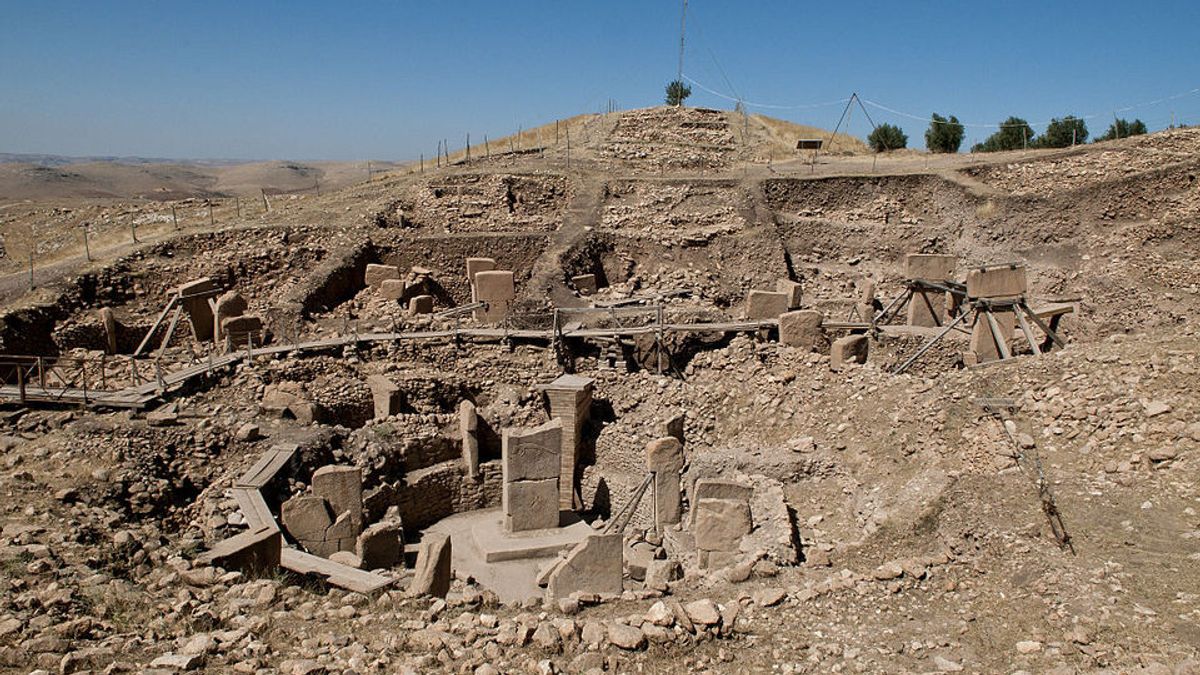
Göbekli Tepe is a 11,000-year-old megalithic complex, now recognized as the oldest architectural structure ever discovered. This monumental structure found in Turkey has completely changed our understanding of early human civilization.
The discovery of this site in 1994 shook the archaeological world because it proved that our ancestors were already capable of building complex structures even before they knew agriculture.
How did people in the past build without modern technology? Summarized by VOI from the UNESCO website, here are some facts you need to know:
Göbekli Tepe is located in the Germuş Mountains, Southeast Anatolia, Turkey. This site is the world's first building with an age of around 9,600 to 8,200 years BC.
This megalithic structure was built by hunter-gatherers in the Neolithic Pre-Pottery period, long before humans knew agriculture.
Göbekli Tepe itself is around 11,500 years old, or 6,000 years older than Stonehenge and 7,000 years older than the Giza Pyramids. This building complex features round-oval and rectangular structures that were likely used for religious rituals and funeral ceremonies.
This discovery proves that monumental architecture existed much earlier than anyone ever imagined.
English:
What makes this world's first building so special are its distinctive T-shaped stone pillars. Some of the pillars reach 5.50 meters in height and are carved from the surrounding limestone plains.
These pillars feature low and high carvings of wild animals such as foxes, snakes, birds, and bulls.
More amazing, the T-shaped pillars are actually an abstract representation of the human form. Some of the pillars feature carvings of clothing such as belts and sashes.
Read also the article which discusses This is the Proof of the Persian Theory in the History of the Entry of Islam into Indonesia
The construction technology used was very advanced for its time. Imagine stones weighing tens of tons being cut, transported, and erected without the use of metal or wheels.
The circular design of these structures suggests a strong communal and ritual function. Interestingly, there is no evidence of permanent settlement at the site indicating that the site was purely built for religious ceremonial purposes.
The discovery of Göbekli Tepe revolutionized our understanding of the evolution of human civilization. Previously, experts believed that the sequence of development began with agriculture, permanent settlements, then monumental buildings.
However, Göbekli Tepe proves the opposite, namely starting from monumental buildings, organized communities, to agriculture. To understand how old the world's first building is, here is the comparison:
This difference of thousands of years shows that Göbekli Tepe is truly in a class of its own as the earliest manifestation of monumental architecture ever discovered.
Göbekli Tepe as the world's first building has changed the way we understand the origins of human civilization. This monumental heritage reminds us of the creative genius of ancient man that should be valued and studied further.
The English, Chinese, Japanese, Arabic, and French versions are automatically generated by the AI. So there may still be inaccuracies in translating, please always see Indonesian as our main language. (system supported by DigitalSiber.id)


