


YOGYAKARTA - Being free from filth or dirt is one of the conditions for validity in worship. One type of impurity that must be purified is mutawasitah impurity. Impurity itself is divided into three types, including mughallazhah impurity (heavy impurity), mutawassithah (moderate impurity), and mukhaffafah impurity (light impurity). In this article, we will discuss how to clean Mutawasithah Impurity.
As explained, najis mutawasitah is a type of najis that is considered moderate. Quoted from the book Tata Cara Shalat Lengkap yang Dicintai Allah dan Rasulullah by Yoli Hemdi, some things that belong to this type of najis are everything that comes out of the anus and the navel (except semen) of humans and animals, carrion (except marine animals, grasshoppers, and humans), everything that intoxicates, and milk from animals that are forbidden in Islam.
In the book "Prayers, Prayers, Juz 'Amma & Important Practices", according to Arifin, urine, blood, pus, and animal feces other than dogs and pigs are some examples of mutawassithah filth.
In the Complete Book of Prayer Guide by M. Khalilurrahman Al-Mahfani & Abdurrahim Hamdi, najis mutawassithah is mentioned as divided into two, namely ainiyah najis and hukmiyah najis.
Najis ainiyah is a type of najis whose shape or form is clear, for example human or animal feces, as well as blood, while najis hukmiyah is najis whose shape is not visible, but its aroma is smelled, for example the smell of urine and alcohol.
Syaikh Abdurrahman Al-Juzairi explained in Al-Fiqh 'Ala Al-Madzahib Al-Arba'ah, the scholars of the four schools of thought agree that purifying the body, clothing, and place of the person who performs salat is obligatory.
The order to purify oneself is also written in Surah Al Mudassir verse 4. Allah SWT said,
And your clothes, so purify them.
"And your clothing, sanctify it!"
In the shahih hadith it is also explained that the Prophet SAW said,
No prayer is accepted without purification, and no charity is accepted from a miser.
"It will not be valid and accepted for a person to pray (worship) until he is clean and neither will it be accepted from haram wealth." (HR Muslim)
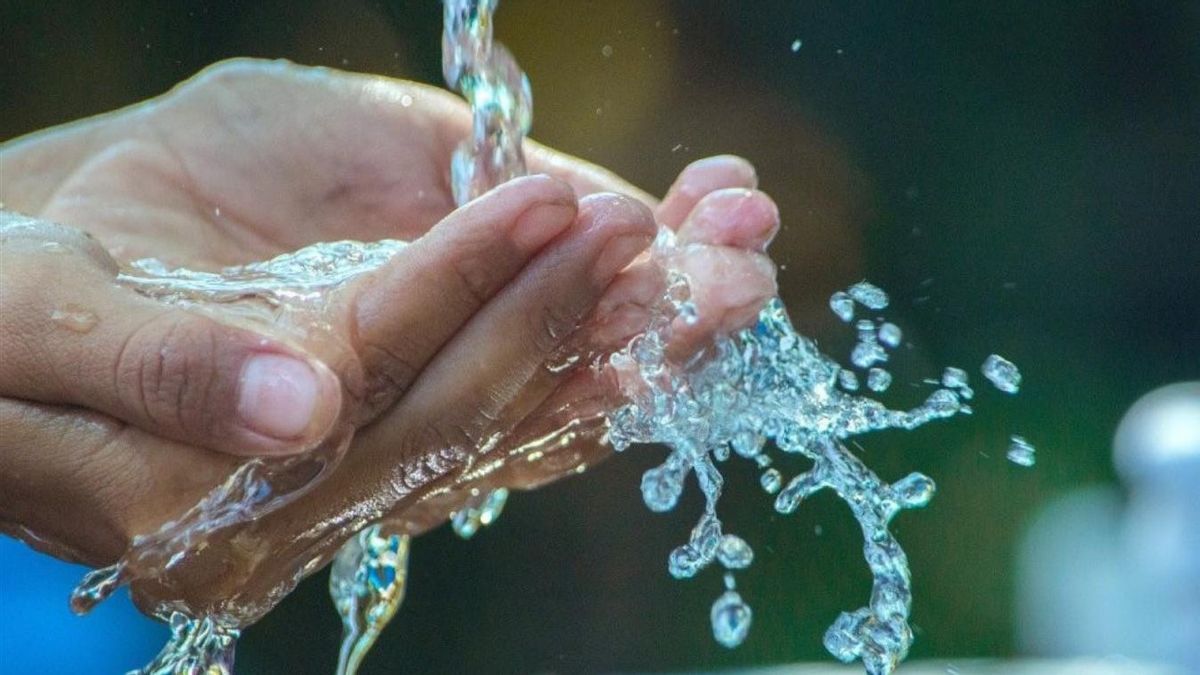
How to Clean Najis MutawassithahThe way to purify mutawassithah is to wash the part that is contaminated with water until the color, smell, or taste is gone.
Meanwhile, the water used to clean this filth is muthlaq water or water used according to its original nature. For example, rainwater, seawater, well water, river water, and any water that comes out of the earth, snow or melting ice.
In Al-Fiqh 'ala al-madzahib al-khamsah, Muhammad Jawad Mughniyah said, according to the agreement of the scholars, muthlaq water is holy and sanctifies.
In his case, if a child defecates on the floor of the living room, the first step to clean it is to remove the dirt on the floor first. Thus, the 'ainiyah dirt is gone and what is left is the hukmiyah dirt.
After being sure that the dirty form no longer exists (with no color, smell and taste and the floor also looks dry), then the next time you pour water on the floor that is infested with feces. The act of pouring water is enough in the area of the feces, and it is considered holy even if the water is stagnant or seeps into it. The next step, we can wipe it again until the floor is dry, clean, and does not bother the people around it.
This is a review of how to clean mutawassithah feces. Hopefully useful. Visit VOI.id for other interesting information.
The English, Chinese, Japanese, Arabic, and French versions are automatically generated by the AI. So there may still be inaccuracies in translating, please always see Indonesian as our main language. (system supported by DigitalSiber.id)


