

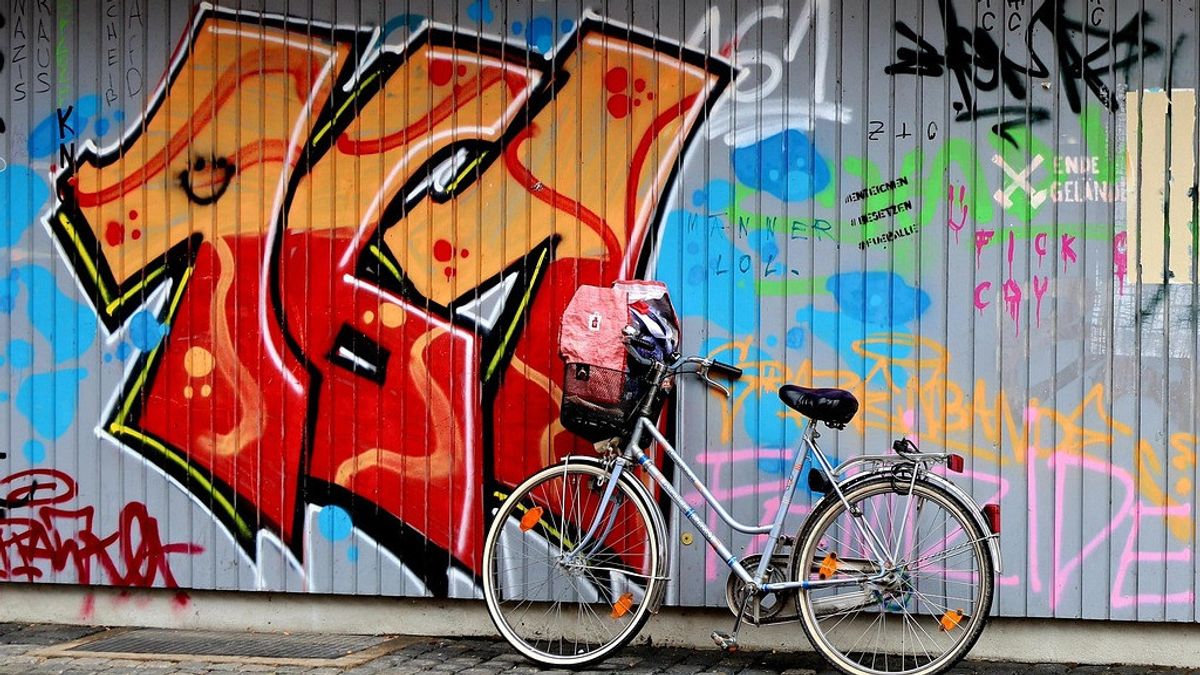


YOGYAKARTA - What is meant by composition in fine art? This term refers to the arrangement of elements and visual elements in a work to create a harmonious, balanced and attractive appearance.
The application of composition can be found in various forms of art, such as painting, photography, graphic design, fine art, performing arts and many more.
Well, this article will explain the concept of composition in fine art and its types. Let's see the explanation!
Referring to the book Art and Culture by Harry Sulastianto et al., composition is interpreted as the arrangement of visual elements that convey the impression of unity, rhythm, and balance in a work so that the work looks aesthetic.
In fine art, visual elements can be lines, shapes, colors, textures, values (levels of darkness or brightness), and negative space (the space between these elements).
The purpose of applying composition in fine art is to create balance, harmony, and a strong focal point. In addition, composition also serves to direct the viewer's eyes to the entire visual field.
When composing visual elements, artists usually consider design principles, such as unity, rhythm, proportion. And contrast.
For example, if visual elements are arranged too densely in one area, it can cause unwanted visual tension.
In fine art, the rule of thirds allows the artist to place the main elements in a balanced way in the field of the image.
At least, there are five types of compositions that are useful for arranging and arranging image objects so as to produce attractive and pleasing works of art.
The following is an explanation of the five types of composition in fine art:
Symmetric composition in art refers to the arrangement or arrangement of the image object that is placed symmetrically between the right and left sides.
The symmetrical composition will make the drawn object have a uniform shape and size. This is intended to create a sense of visual balance throughout the drawing.
Meanwhile, asymmetrical composition is the arrangement of unbalanced visual elements on the left and right sides. However, the arrangement of objects with asymmetrical composition still pays attention to the proportion of unity, and balance.
The next type of composition in fine art is the central composition, in which visual elements are placed in the center of the image field. In this type of composition, the placement of objects is adjusted to the proportions of their shapes and is balanced to create unity between the elements of the image.
The central composition is used by the artist to draw the viewer's attention to the object placed in the center of the picture.
Rhythmic composition in fine art is the arrangement of visual elements such as lines, shapes, and colors to create a sense of movement, flow, and harmony in a picture.
The application of this type of composition produces a repeating pattern that provides dynamics and order, so that an image does not feel boring.
In fine art, the open composition of the photographed model creates a dynamic impression and extends beyond the frame, giving a sense of open space and directing the viewer's gaze beyond the rich boundaries.
English:
Meanwhile, the closed composition creates a sense of control and focus within the frame, arranging all elements within the visual boundary so that the viewer's eyes are not directed outward.
That's an overview of what composition in art means. Hopefully this information can add to the reader's insight. to get updates on other featured news, keep reading VOI.ID.
The English, Chinese, Japanese, Arabic, and French versions are automatically generated by the AI. So there may still be inaccuracies in translating, please always see Indonesian as our main language. (system supported by DigitalSiber.id)


