
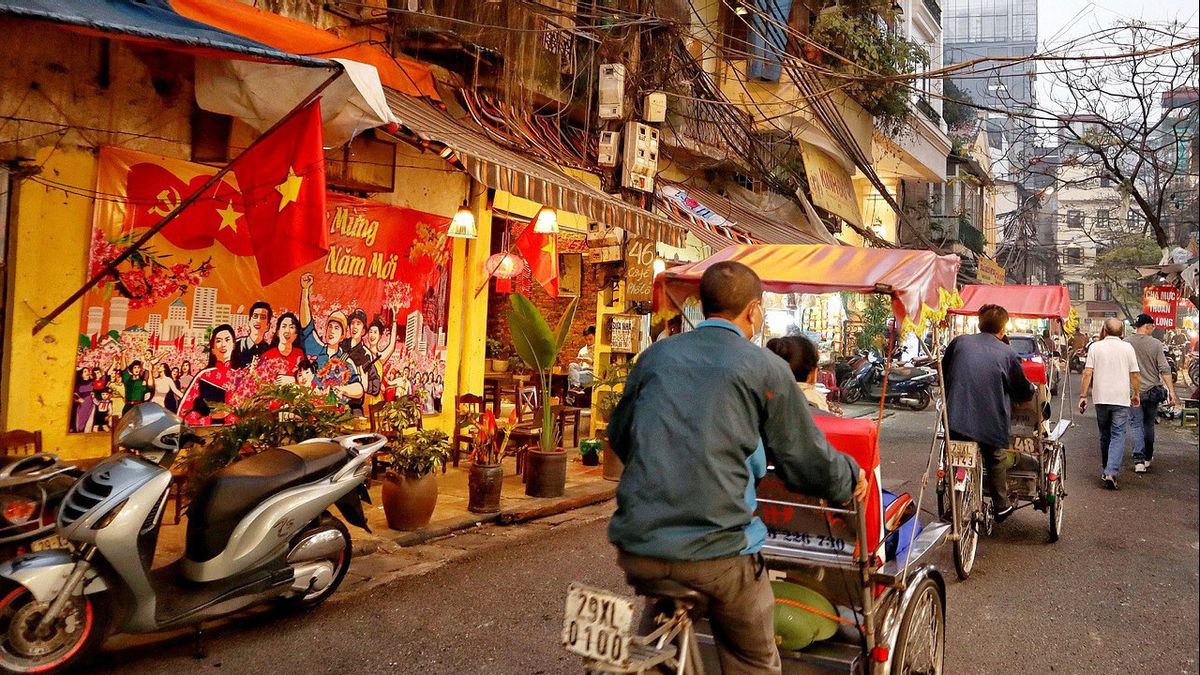


YOGYAKARTA - Ethnics living in Vietnamese countries consist of various groups with different cultures and languages. Although there are many ethnic groups, most of Vietnam's population comes from the ethnic Kinh which reaches around 85.32 percent of the total population.
Apart from the ethnic Minh, there are still ethnic minorities such as Tay, Thai, Muong, and Hoa that also enrich the diversity of Vietnamese culture. The following will be discussed by the five greatest ethnic groups living in Vietnam, complete with cultural, language, and regional characteristics.
Every ethnicity in Vietnam has an important role in shaping a rich and diverse national identity. By understanding these ethnicities, we can see how history and geography affect cultural diversity in Vietnam. Here are the 5 greatest ethnicities in Vietnam.
Ethnic Kinh is the largest ethnic group in Vietnam. They are known as natives of lowlands and coastal areas, and are the main drivers in national economic and cultural development. The Vietnamese language used everyday comes from this ethnicity.
Ethnic Kinh is known to have a distinctive family name, one of which is 'Nguyen', which is the most common surname in Vietnam. In its history, this ethnicity played a major role in the formation of the kingdom and government of Vietnam.
Ethnic Tay is the second largest ethnic minority group in Vietnam, with a population of about 1.92 percent. They generally live in mountainous areas north such as Cao Bang, Lang Son, and Bac Kan. The life of the Tay people is still very dependent on agriculture and natural products from mountainous areas.
Tay is included in the Tai-Kadai family and is still widely used in everyday communication. They have traditional dances and music that is distinctive and known as beautiful handicrafts.
SEE ALSO:
-
 | LIFESTYLE
10 Senjata Tradisional Sumatera Barat yang Masih Diwariskan hingga Kini
25 November 2025, 05:25 -
 | LIFESTYLE
Jadi Sarana Pemersatu! Berikut Contoh Kolaborasi Budaya yang Mesti Anda Ketahui
22 November 2025, 18:45
The Thai or Thai Dam ranks third with about 1.89 percent of the population. They mainly live in northwestern provinces such as Dien Bien, Lai Chau, and Son La. Culturally, they have similarities to ethnic Thai in neighboring Southeast Asian countries.
The language used is Thai Dam, which is included in the Tai-Kadai family. This ethnicity is known for its elegant traditional dances, people's music, and traditional ceremonies that describe harmony with nature. They also maintain a strong community-based social system that is passed down from generation to generation.
Ethnic Muong is the fourth largest ethnic group in Vietnam, with a population of about 1.51 percent. They inhabit mountainous areas in the central and western parts such as the provinces of Hoa Boh and Thanh Hoa. They use Muong, including in the Mon-Khmer branch and have similarities to Vietnamese.
Ethnic Muong has unique music, traditional clothing, and rituals, such as war dances and harvest ceremonies. Some Moung culture has an influence from the ethnic Minh. The closeness of the relationship between Muong and Kinh ethnicity makes many of their cultural values exchange and develop together.
Ethnic Hoa or Chinese Vietnamese are the fifth largest ethnicity with a population of about 1.32 percent. They are scattered in big cities such as Hanoi and Ho Chi Minh City, as well as in coastal and trade areas. This ethnicity is known as a group that is active in economic and business activities.
The languages used by the Hoa ethnicity are various Chinese dialects, and they still maintain ancestral traditions such as Chinese New Year celebrations. The culinary and Chinese art brought by ethnicity have mingled with local culture and created a distinctive mix.
That is the explanation of the 5 largest ethnic groups living in Vietnam. This ethnic diversity not only enriches art and culture, but also shows the social harmony that has been formed for centuries in Vietnam.
The English, Chinese, Japanese, Arabic, and French versions are automatically generated by the AI. So there may still be inaccuracies in translating, please always see Indonesian as our main language. (system supported by DigitalSiber.id)
Most Popular Tags
#Prabowo Subianto #donald trump #Febrie Adriansyah #8791 #giias 2026Popular


