
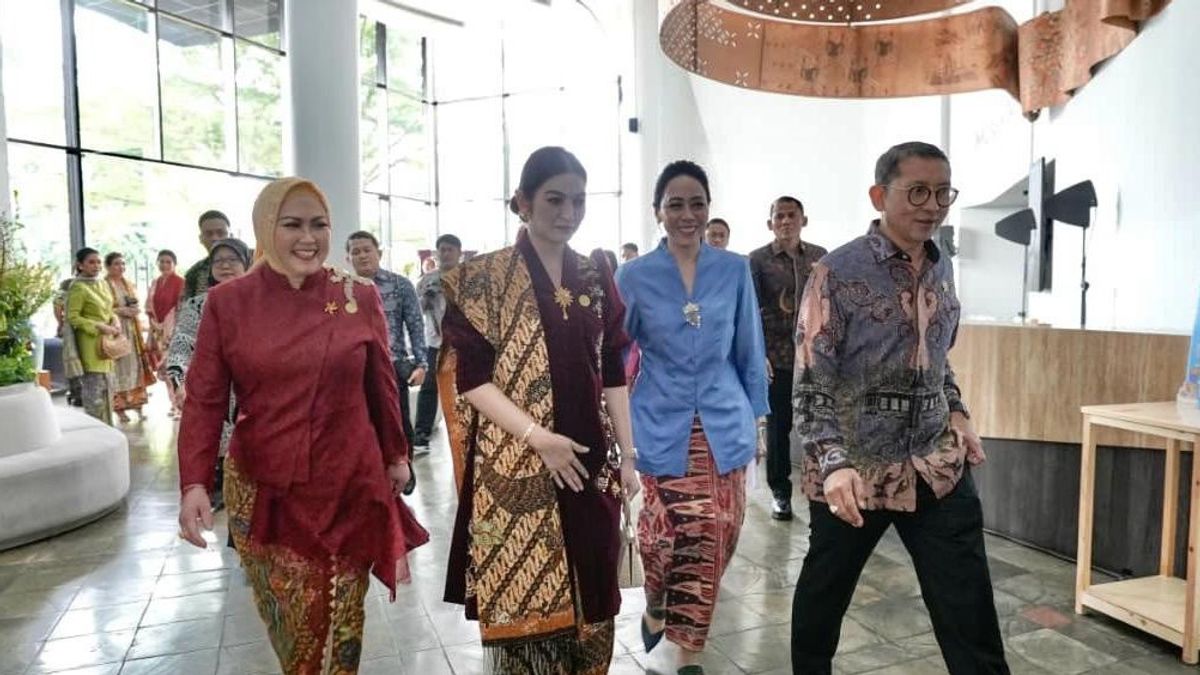


JAKARTA - Batik is not just a legacy. Seruni, the Red and White Cabinet with the Ministry of Culture of the Republic of Indonesia held a Indonesian Scent' at the Indonesian Batik Museum, Tuesday, October 28. This event prompted batik to become a lifestyle for young people. Held to coincide with National Batik Day and Youth Pledge, this activity affirms the commitment to maintaining cultural sustainability.
The event was opened by Pembina Seruni, Selvi Gibran Rakabuming, with the theme Searching the Meaning and Charm of Batik Reviving Sustainability. This activity was chosen to coincide with the momentum of the commemoration of National Batik Day every October 2, as a reminder that batik is not just a legacy, but an identity that must be treated.
In his remarks, as a member of Division III of Social and Cultural Affairs Seruni representing the Ministry of Culture, Grace Katharine Fadli Zon emphasized that this event reflects the government's determination to develop a comprehensive batik ecosystem starting from production to public education. "Indonesia's batik sustainability will continue to be maintained as long as we are together committed..." he said.
The main event in the form of Cultural seeds featured seven figures of batik craftsmen from different regions: Yogyakarta (Nik batik), Surakarta (sogan), Cirebon (merawit), Lasem, Pekalongan (Indigo), Tuban (Gedog), and Madura (Gentongan). Each one presented the techniques and motifs typical of the region. This agenda shows how the local heritage of batik is transformed into economic and cultural forces.
According to the Head of the Museum and Cultural Heritage of the Ministry of Culture, Indira Esti Nurjadin, the seven regions have been visited previously to ensure that all stages of the batik ecosystem are pre-production, production, distribution, promotion, consumption, education organized as a sustainable system and provide life power for the batik community.
BACA JUGA:
-
 | LIFESTYLE
Budaya Kerja Sehat yang Bikin Karyawan Betah dan Semakin Produktif
28 Agustus 2025, 19:35



Selvi Gibran in his speech said that the diversity of batik motifs from each region shows how rich the Indonesian nation's culture is. He also gave a special message to the younger generation: I have great hopes ... our young generation is proud of batik as the identity of the nation.
Symbolically, the event opens with Selvi pulling the line using a canting and proceeds to batik to be used as a batik motif as a symbol that traditional canting traces continue to the future.
The next series are batik demonstrations by national designers: Ghea Panggabean (Batik Tuban), Ari Seputra (Yogyakarta, Pekalongan, Solo), Ellylle (Lasem, Madura, Pekalongan), and Wilsen Willim (Cirebon).
A number of high-profile officials were also present at the event. Such as the Minister of Culture Fadli Zon, the Chairperson of the DPR Puan Maharani, the Chairperson of the MPR Lestari Moerdijat, and the Director General of Cultural Protection as well as the Head of the Museum and Cultural Conservation.
The event closed with a visit to exhibitions made by seven of Indonesia's largest batik-producing areas. The Ministry of Culture emphasized that batik that has been recognized by the world is not only a legacy but a challenge to remain relevant in a lifestyle, creative economy, and national identity.
With this agenda, the Traces of Indonesia's Slamming through Seruni's Red and White Cabinet emphasized that love for batik is not just nostalgia, but a real action to maintain cultural heritage so that it is not only remembered but lived.
The English, Chinese, Japanese, Arabic, and French versions are automatically generated by the AI. So there may still be inaccuracies in translating, please always see Indonesian as our main language. (system supported by DigitalSiber.id)


