
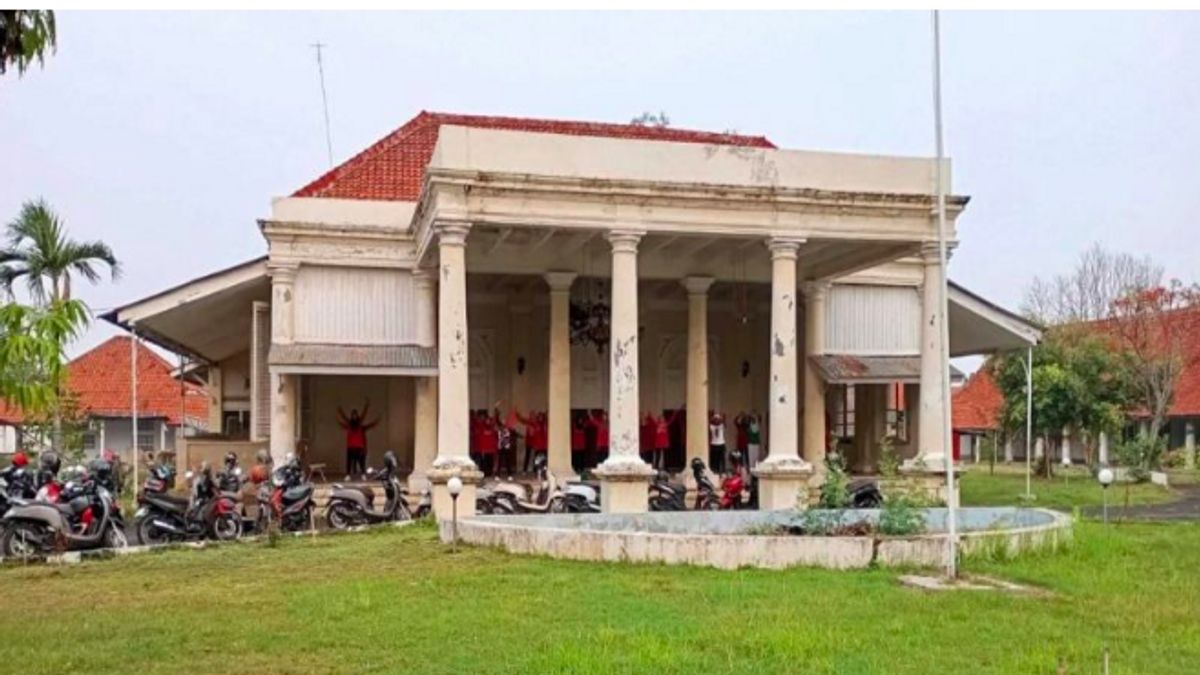


JAKARTA - Efforts to preserve historical heritage continue to be carried out by the Pekalongan City Government, Central Java. Through a long process, as many as 19 buildings and historical objects are now officially designated as cultural heritage, out of a total of 100 objects that have been identified.
Most of them are located in the Jalan Jetayu area, known as the city's historical heritage center.
Head of the Pekalongan City Tourism, Culture, Youth and Sports Office Sabaryo Pramono in Pekalongan, Wednesday, said that the process of determining cultural heritage went through a long and measurable stage.
"The process is not instantaneous but through a long and measurable stage. This process involves various elements ranging from field surveys, in-depth studies, to verification by a team of cultural experts from the city, provincial, to central levels," he said.
He explained, at the survey stage, identification was carried out on buildings or objects that had high historical and cultural values to be categorized as cultural heritage.
After that, an in-depth study was carried out with the regional, provincial, and representative culture team from the ministry under the Culture Service to ensure the authenticity and feasibility of each object.
SEE ALSO:
-
 | LIFESTYLE
Reaksi Menpar Widiyanti Soal Raja Ampat yang Dijadikan Tambang Nikel
04 Juni 2025, 21:55



"From the results of the survey and identification, there are around 100 objects that are considered to meet the initial criteria as cultural heritage. However, only a few have succeeded through all stages of verification and official determination," he said.
Some of the objects that have obtained cultural heritage status include the Pekalongan Resident Office, the State Junior High School Building 1 and 13 Pekalongan City, as well as a number of historical artifacts such as statues at the Batik Museum and ancient colonial past safes.
Sabaryo emphasized that the determination of cultural heritage status is not just an administrative recognition, but is also followed by a commitment to preservation and protection from the City Government. This effort includes maintaining the authenticity of the shape of the building, architecture, and historical values inherent in each object.
"Buildings that have been designated as cultural heritage must not be changed. Authenticity must be maintained as part of efforts to maintain cultural heritage. Preservation of cultural heritage is not only to commemorate the past but also as a means of learning and pride of the present and future generations," he said.
The English, Chinese, Japanese, Arabic, and French versions are automatically generated by the AI. So there may still be inaccuracies in translating, please always see Indonesian as our main language. (system supported by DigitalSiber.id)
Most Popular Tags
#Prabowo Subianto #donald trump #firearm #8791 #giias 2026Popular


