
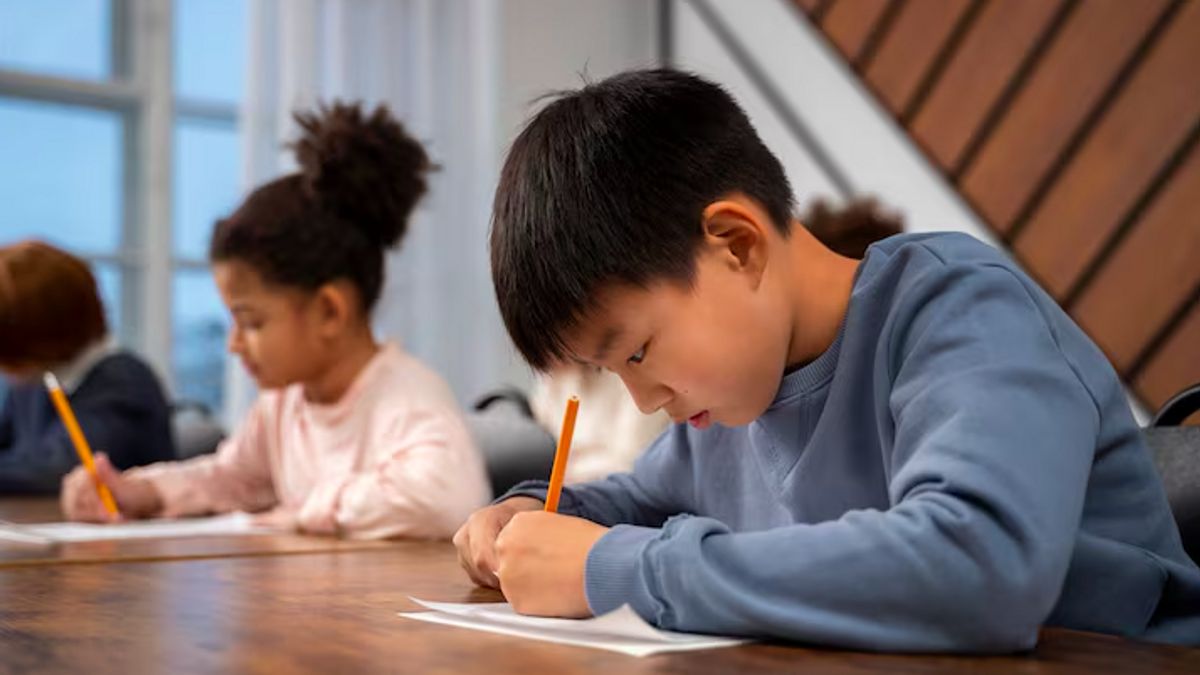


JAKARTA - Education not only talks about academics, but also about how to shape the character and spirit of leadership from an early age.
At school, values such as discipline, responsibility, concern, and critical thinking skills become an important foundation for children to grow up to be resilient and with integrity.
Especially in the world which is now full of digital distraction, shaping children's character to have empathy and leadership spirit is a challenge as well as an urgent need. Schools play an important role in instilling moral and leadership values that will provide children with global life.
The values of leadership or leadership need to be instilled in children from an early age so that they can be independent and have global insight.
"To have a leadership spirit, children now need to be well mentally trained in the midst of massive social media attacks", said Head of the 100th Anniversary Committee, Bustanil Arifin, in the 100th Anniversary of Bustanil Arifin at the Al-Izhar School complex, Pondok Labu, South Jakarta, recently.
Rezy said the moral message about leadership was always emphasized by his grandfather, Minister of Cooperatives for the 1983'1993 period, Bustril Arifin. According to him, the late Bustanil Arifin always emphasized the importance of morality, tolerance for anyone regardless of religious background or belief, and the spirit not to seek enemies.
"Nationalism and global mindset are also important values inherited so that the younger generation of Indonesia is able to compete with other nations," he explained.
According to Rezy, Bustanil Arifin is not only the founder of Al-Izhar, but also a value provider for the younger generation in shaping quality characters.
"Through this one century anniversary, we want to remind you that true education is born from love, integrity, and commitment to build a complete Indonesian human being. His legacy is not just buildings and institutions, but a way of thinking that learning is worship and educating the nation is a call," he said.
SEE ALSO:
-
 | LIFESTYLE
Mengupas “Daddy Issues”, Luka Keterikatan dari Masa Kecil yang Terbawa Sampai Dewasa
04 September 2025, 15:25 -
 | LIFESTYLE
Ortu Perlu Tahu, Ini 4 Penyebab Anak Bisa Menjadi Keras pada Diri Sendiri
23 Juli 2025, 13:47


On the same occasion, Prihanti Handayani, Head of the Department of Operations for KB'S SD Al-Izhar Education, said character education is a living process, not just a theory in lessons, but is built through children's daily habits in schools. So that apart from academics, children are also expected to have good behavior.
Prihanti explained that values such as discipline, concern, fragility, and penchant for reading are important pillars that continue to be strengthened.
"Those four things will form a solid basis of leadership because children with good character will be able to survive and bring benefits in the future.
Implant of leadership is carried out in stages according to the age of children. In the playing group, for example, children begin to learn to interact outside the home and get to know the new environment. While in kindergarten, they are accustomed to small routines and responsibilities. In elementary school, children begin to learn to manage their time and activities independently.
Meanwhile, when they get older, their characters are directed to be able to lead themselves and their friends.
"We want them to pass, they are ready to interact and lead the environment outside the school," Prihanti explained.
However, the challenge of character education is now getting bigger amidst the swift flow of digital information. Children grow up in the fast and open era of social media, sometimes without filters. Children are now very open to information, sometimes without filters.
"In maintaining the focus of learning, the school applies policies without the use of gadgets during class hours. Children are invited to interact directly, think critically, and learn with an in-depth approach in order to understand the meaning of each matter studied," he added.
Schools also provide space for freedom for students, especially at the youth level, so that they learn to be responsible for their choices. Through project-based discussions and learning, they are trained to assess information from various perspectives.
"They learn that not all information is true. From there the value of responsibility appears," said Prihanti.
The success of character education is also inseparable from synergy with parents. Schools, said Prihanti, cannot run alone. For example, every year, schools involve parents in various activities, ranging from being resource persons according to their profession to storytelling for children. Schools also often help parents recognize their children's talents that may not be seen at home.
"Sometimes at school we see potential that parents have not realized. We help direct it so that it can be developed together," he said.
True leadership starts from the ability to lead oneself. Therefore, the values of discipline, empathy, and responsibility instilled from an early age are expected to be provision for life.
"Schools are only eight hours. The rest are education from families and the community. Therefore, synergy is very important so that the values we planted can continue to grow at home," he concluded.
The English, Chinese, Japanese, Arabic, and French versions are automatically generated by the AI. So there may still be inaccuracies in translating, please always see Indonesian as our main language. (system supported by DigitalSiber.id)


