


YOGYAKARTA - Evidence of Persia's theory in the history of Islam's entry into Indonesia is one of the important discussions in the study of the history of the archipelago.
This theory states that the spread of Islam in Indonesia is heavily influenced by scholars and traders from Persia who carry teachings, culture, and Islamic traditions to their homeland.
According to this view, Islam, which entered Indonesia, was not brought directly by the Arabs or Indians, but through the influence of ethnic culture and religious teachings.
Interestingly, the influence of Persia can be seen from various aspects, ranging from Islamic education systems, arts, to religious celebrations such as the commemoration of Ashura. Through close trade and religious relations, elements of Persian culture slowly mingle with local culture and form a distinctive Indonesian Islamic identity.
Reporting from MUSTAF JOURNAL: Journal of Al-Quran Science and Hadith, Vol. 5 No. August 2, 2025, the basis of Persian Theory is the discovery of a number of elements of Persian culture, particularly those related to Shia tradition, in the practice of Islam of the people of the archipelago.
The view of Persia's Theory also received support from several experts, one of whom was the PA Hoesein Djajadiningrat, a prominent Indonesian historian.
Hoesein Djajadiningrat said that there are several reasons that strengthen this theory, including:
According to Hoesein Djajadiningrat, the teachings of Persia's sufism have a major influence on the development of Islamic mysticalism in Indonesia. The concept of manggaling kawula gusti taught by Sheikh Siti Jenar, for example, reflects the wahdat al-real doctrine introduced by Al-Hallaj, a well-known figure from Persia.
Also read the article discussing Kebaya Philosophy: Traces of History and Hidden Cultural Meaning
In the Arabic letter spelling system in traditional pesantren, especially in remote areas of Banten, terms from Persian are still used.
These teachings, for example, West Java (Arab: fatah) to produce the sound a,jar (Arab: kasrah) to produce the sound i or e, as well as pes (Arab: dhammah) to produce the sound u or o. Until now, some students are still memorizing by reading alif West Java a, alif jar i, and alif pes u/o.
SEE ALSO:
-
 | LIFESTYLE
Reaksi Menpar Widiyanti Soal Raja Ampat yang Dijadikan Tambang Nikel
04 Juni 2025, 21:55



The commemoration of Ashura, which falls on 10 Muharram, is an important tradition in the Shia community to commemorate the death of Sayyid Husain bin Abi Talib in Padang Karbala.
This tradition is also known in several regions in Indonesia, such as Java, Aceh, and Minangkabau, which commemorates it by making Ashura porridge.
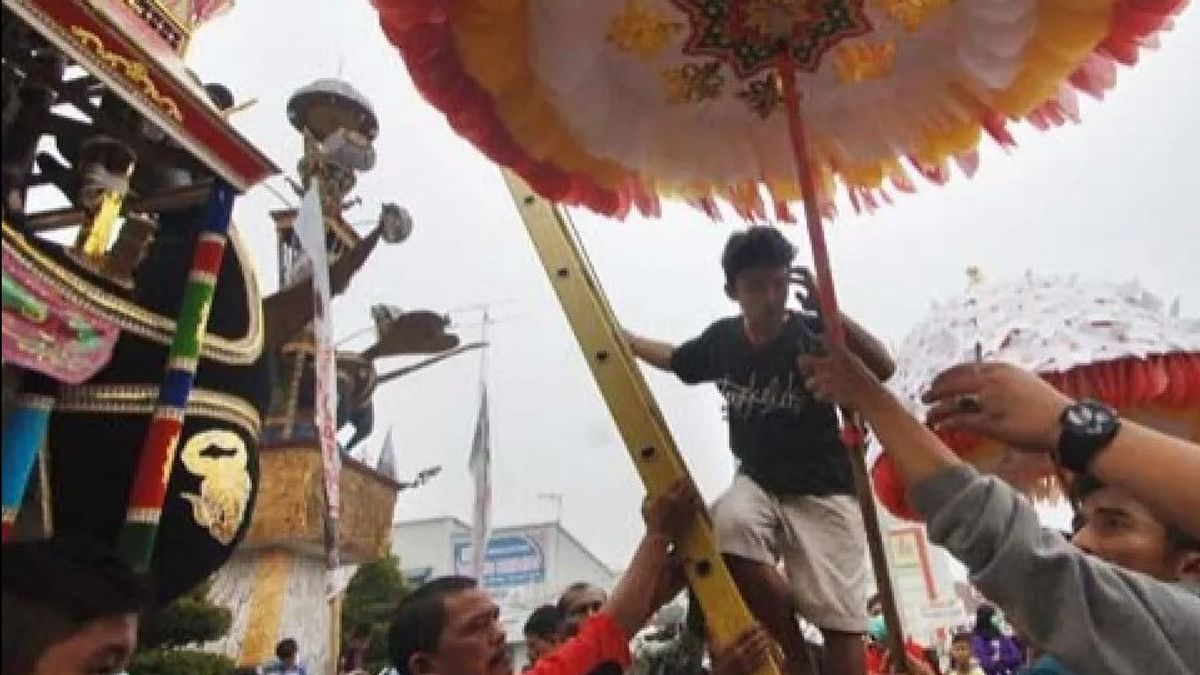
Even in the western region of Central Sumatra, the community held a fire ceremony, namely a procession carrying a replica of the Husain coffin which was then poured into the river or sea. The replica krada is called a fire extinguisher, which comes from Arabic.
Through the above evidence, Persian theory shows that the influence of culture, teachings of sufism, and religious traditions from Persia have an important role in shaping Islamic characters in Indonesia.
The traces of the Persian theory can still be found in religious practices, the language of teaching the Qur'an, to the tradition of religious warnings of the people of the archipelago.
In addition to discussing evidence of persia theory, follow other interesting articles on VOI, to get updated news, don't forget to follow and monitor all of our social media accounts!
The English, Chinese, Japanese, Arabic, and French versions are automatically generated by the AI. So there may still be inaccuracies in translating, please always see Indonesian as our main language. (system supported by DigitalSiber.id)
Most Popular Tags
#Prabowo Subianto #donald trump #firearm #8791 #giias 2026Popular


