
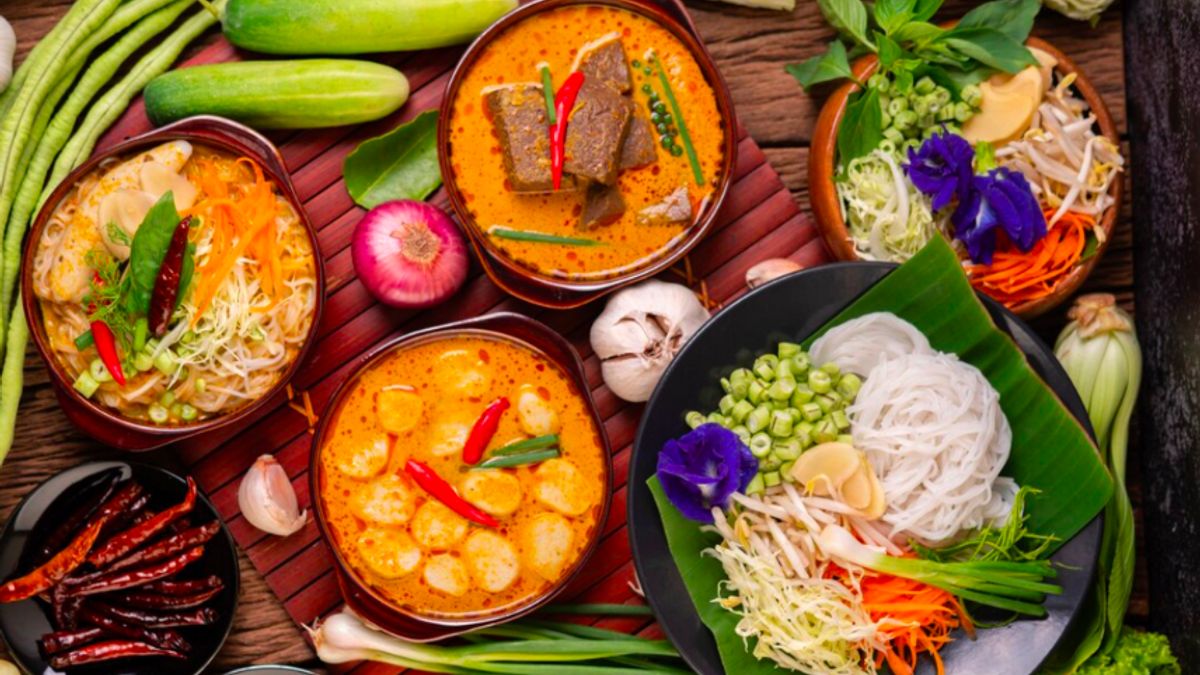


JAKARTA - Thai cuisine may not be for those who can't stand it. But for strong and brave flavor lovers, Thailand's culinary delights are a tasteland.
Maybe you're trying to understand the secret of Thai taste by cooking Thai-style dishes at home. Maybe you've just enjoyed an amazingly delicious plate of Thai food and curiosity about the secret behind the deliciousness.
It turns out that everything boils down to the four main flavor pillars that form the basis of Thai cuisine, namely acid, sour, sweet, and spicy.
At first glance it sounds simple, but it turns out that the salt taste in Thai cuisine does not only come from ordinary salt. Each taste has its own distinctive ingredients which are not always easy to find in public kitchens.
The following are the ingredients that make up 4 pillars of Thai cuisine flavors, as reported by The Daily Meal page.
1. The first pillar is an acid, which comes from a special taste of fish sauce or shrimp paste. These two ingredients provide a rich layer of savory flavor as well as a distinctive aroma with character. This combination is widely used in dishes such as the ppaya mud (som tent) or Thailand green pimp.
2. The second pillar is asam, which is the main feature of Thai cuisine. Although lime juice is often used, Thais often choose Javanese to give a softer and fruit-flavoured sour taste, so that they balance the spicy taste perfectly.
3. Furthermore, there is a sweetener, which usually comes from palm sugar. Sugar can usually be used, but sugar can give a deeper sweet taste and a little lecherous.
4. Finally, of course, rasapedas is the most easily recognized feature of Thai cuisine. This taste comes from a mixture of fresh and dry chilies, and sometimes add black or white pepper to provide a sharp but not excessive sensation.
SEE ALSO:



These four pillars combine to create a tug-of-war that makes Thai cuisine so memorable. However, each dish always relies on the balance between the four elements.
Although Thai cuisine focuses on flavor balance, that doesn't mean all elements are always present at the same level. In some dishes, one taste can become more dominant, but it is still supported by other flavors.
An example is tom fire, which is famous for being spicy so that it can make the nose runny, but the taste of fresh acid remains the main character. These two pillars are spicy and acid balances with each other.
If you look at the southern region of Thailand, there are dishes such as Khua Kling (kari dried meat) or Kaeng Tai Pla (kari from fermented fish jeroans) which are known to be very spicy. Although the spicy taste dominates, these dishes still have a depth of taste from ingredients such as mushrooms, turquoise leaves, tomatoes, terung, shallots, and sweet onions.
In several dishes such as Thailand's yellow pimp, coconut milk is added to give a sweet touch that balances its spicy taste.
Of course, many other ingredients also play important roles such as serial, enveloping, and orange leaf.
But the main secret of the delicious Thai cuisine is the ability to unite the four pillars of the flavor in perfect harmony. With a little understanding of how to balance the four flavors, you can also master the authentic cooking arts of Thai cuisine at home.
The English, Chinese, Japanese, Arabic, and French versions are automatically generated by the AI. So there may still be inaccuracies in translating, please always see Indonesian as our main language. (system supported by DigitalSiber.id)
Most Popular Tags
#Prabowo Subianto #donald trump #firearm #8791 #giias 2026Popular


