
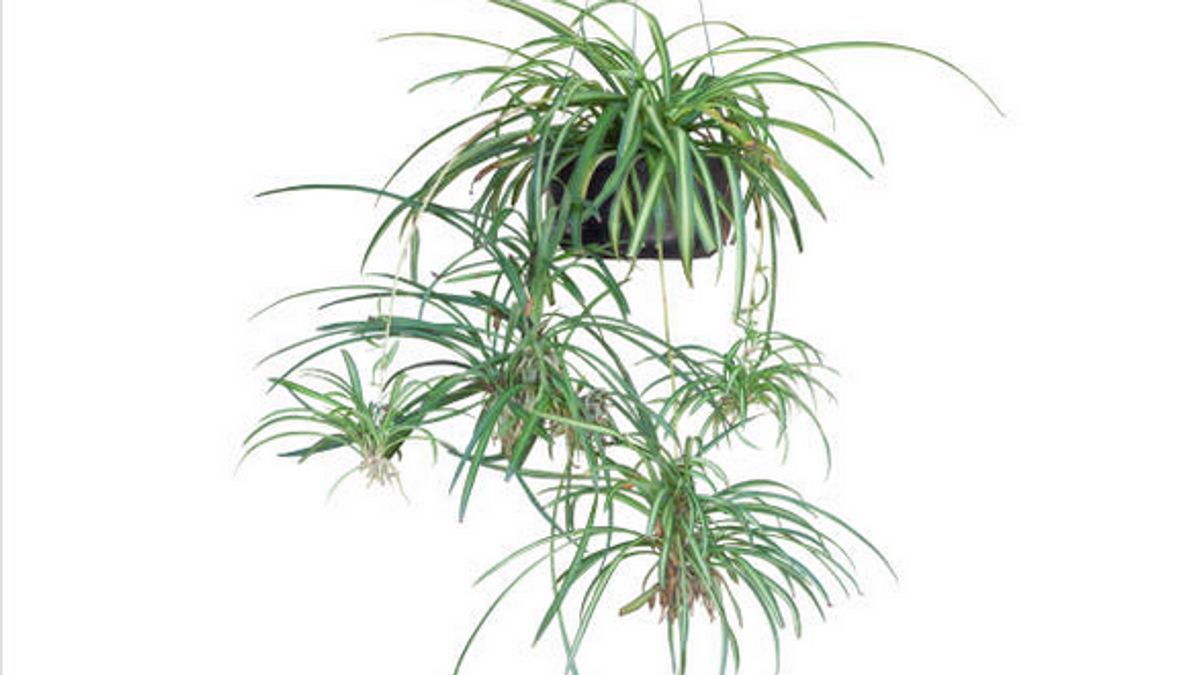


YOGYAKARTA - Air plants, often called water plants or in plant science known from the Tillandsia genus, have a very different character than ordinary ornamental plants. This plant is unique because it can grow without planting media, be it soil or water. Tillandsia is an epiphytic plant, which can grow in the air. But the roots of this plant are not to absorb nutrients, but only serve as a tool to stick to the surface, such as tree skin, stone, or other decorative objects.
One of the other uniqueness of tillandsia plants is its ability to absorb water and nutrients through leaves, especially through a special structure called trichomes. This trichomes functions to capture water vapor, dew, and dust from the air as a source of moisture and nutrients.
The shape of the leaves, colors, and how tillandsia grows that 'floating' or hanging makes it a decorative and artistic element. In addition, several species produce flowers that are bright and striking in color, even though these flowers appear only once in a lifetime. After flowering, air plants usually produce small shoots that will grow into new plants.
As explained above, tillandsia can absorb water vapor and dew and dust as a nutrient to keep growing. Well, to care for tillandsia or water plants, you can follow the following method.
It is important to put tillandsia in a place that gets bright light. But avoid being exposed to sunlight directly because it causes the leaves of this plant to catch fire. Citing Pilstrils Nursery, Wednesday, September 17, it is recommended to put tillandsia on a window facing the east or west. At this location, tillandsia will get soft light from the morning or evening sun.
If there is a room that lacks natural light at home, you can use artificial lights from fluorescent lights or full spectrum planting lights for a minimum of 12 hours/day so that plants can photosynthesize properly. However, make sure the light distance from the plant is not too far so that the intensity of light is adequate.
Even though it doesn't use soil, tillandsia still needs water. For watering, it can be done by soaking (soaking) and spraying (mining). Soaking is done by soaking all plants in the water for about 30 minutes to an hour, depending on species and environmental conditions.
After soaking, shake peopleandsia and position upside down over the towel so that the remaining water can overflow out. Note, plants must be completely dry after being soaked. Because if the plant remains wet for too long, the base or leaves can rot.
Meanwhile, misting is very helpful, especially in dry weather or low humidity in the environment. Water spraying can be done several times a week, depending on the air in the house. Some types of air plants with hairy leaves or many trichomes are usually more sensitive to immersions, so it is more suitable to get moisture through spraying.
Tellandsia plants grow at temperatures between approximately 1032 degrees Celsius, depending on the type. But ideally it is in a comfortable range of home temperatures. Reported by BBC Gardeners World Magazine, avoiding making it too cold or in an area with very hot air directly exposed to the sun. Air circulation is also very important. To prevent decay, it must dry but get enough moisture. So placing in a place with good ventilation or use of small fans can help dry the plants after watering.
Although tillandsia plants do not use planting media, they still need fertilization. So that these air plants thrive, use special fertilizers for air plants or fertilizers for diluted bromeliad or orchid plants. Settlements are usually only needed once a month or two months depending on the season. In addition, after flowering plants and produce pups, this small shoots can be separated when they are about a third to half the size of the parent plant.
Also pay attention to yellowing or dry leaves. These dead leaves should be removed so that the plants look neat and the energy of the plants is more focused on the healthy part.
SEE ALSO:
-
 | LIFESTYLE
Lahan Sempit Tak Jadi Masalah, Ini 5 Inspirasi Dekorasi Untuk Taman Minimalis
18 November 2021, 14:13
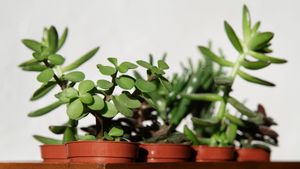
Don't water tillandsia too often. This will make the plant wet for too long and make the roots or leaves rot easily. Pay attention to the light that newsandsia plants get. Don't let it get too hot so that the leaves burn. Well, if the air is very dry, make sure the tillandsia plant is sprayed with water to maintain the humidity.
Tellandsia plants are an attractive choice for decorative ornaments. In addition to beautifying the home room, you also don't bother changing the planting medium. Although it is classified as easy to grow, tillandsia plants must be properly cared for so that they thrive in the room or on the terrace of the house.
The English, Chinese, Japanese, Arabic, and French versions are automatically generated by the AI. So there may still be inaccuracies in translating, please always see Indonesian as our main language. (system supported by DigitalSiber.id)
Popular


