


JAKARTA - Deaths from measles have shocked Indonesia once again. In Sumenep Regency, Madura, 20 children reportedly died from measles from February to August 2025.
This figure is a serious alarm for the government and the public, considering that measles is one of the most contagious diseases in the world.
Indonesian Minister of Health, Budi Gunadi Sadikin, during his visit to Sumenep, Madura, East Java, on Thursday, August 28, 2025, emphasized that measles has a very high transmission rate.
"One person can infect 18 people with measles. So, this is indeed the most contagious disease," he said, as quoted from the Ministry of Health's website on Saturday, August 30, 2025.
However, the Minister of Health emphasized that measles can be prevented with highly effective vaccination. However, many children still have not received complete immunizations, increasing the risk of an outbreak.
According to the Mayo Clinic, measles, also known as rubeola, is a viral infection that is transmitted through the air or through contact with contaminated objects. This disease most often affects children, but adults can also be infected if they have not been vaccinated.
While most people recover within 7–10 days, measles remains dangerous because it can cause serious complications and even death, especially in young children and people with weakened immune systems.
Symptoms
Measles symptoms usually appear 7–14 days after exposure to the virus. Some signs to watch out for include:
- High fever of up to 40–41°C.
- Dry cough.
- Runny nose.
- Red, watery eyes (conjunctivitis).
- Small white spots inside the mouth (called Koplik spots), which usually appear 2–3 days after the initial symptoms.
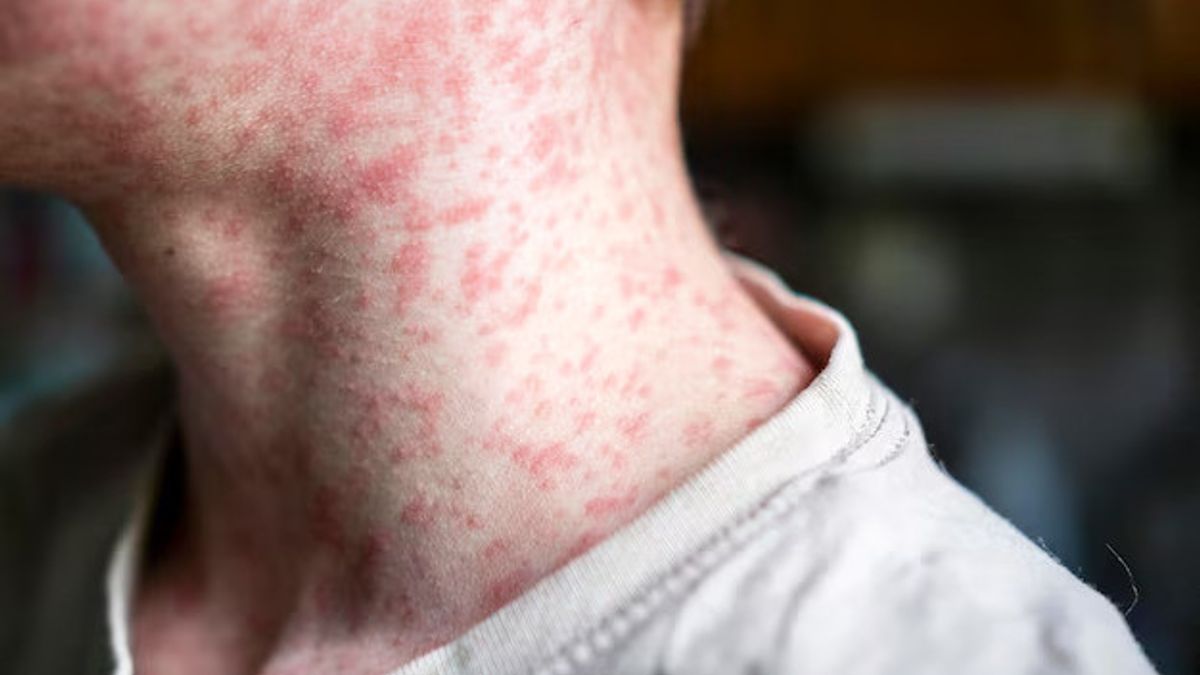
- A rash of red spots that begins on the face and behind the ears, then spreads to the chest, back, and legs.
It's important to remember that measles sufferers can transmit the virus from four days before the rash appears to four days afterward. This means that measles can spread even before the sufferer is aware they are sick.
Causes & Risk Factors
Measles is caused by the measles virus, which is only transmitted between humans. Transmission occurs when an infected person coughs, sneezes, or talks, and droplets enter the air and are inhaled by others. The virus can also remain on surfaces and survive for up to two hours.
Highest risk factors:
- Never having been vaccinated or having only received one dose of the vaccine.
- Living in an area with a measles outbreak.
- Children under the age of vaccination.
- People with weakened immune systems, such as those with malnutrition or certain medical conditions.
Treatment
Currently, there is no specific medication to kill the measles virus. Treatment aims to relieve symptoms and prevent complications, including:
- Getting enough rest and maintaining fluid intake to prevent dehydration.
- Fever-reducing medication as recommended by a doctor.
- Vitamin A supplementation, which has been shown to reduce the risk of serious complications.
- Hospitalization if complications such as pneumonia or encephalitis occur.
Prevention
The best prevention is vaccination. The MMR (Measles, Mumps, Rubella) or MMRV (including varicella/chickenpox) vaccine has been shown to be up to 97% effective when given with two complete doses.
Measles vaccination schedule:
- First dose: 12–15 months of age.
- Second dose: 4–6 years of age.
Infants aged 6–11 months can receive the vaccine earlier if they are in an area with a measles outbreak. Adults who have never been vaccinated or have only received one dose should complete their vaccination schedule, especially if they frequently travel or work in high-risk environments.
Illustration of measles (Photo: Freepik/maisheva_natalya)
The English, Chinese, Japanese, Arabic, and French versions are automatically generated by the AI. So there may still be inaccuracies in translating, please always see Indonesian as our main language. (system supported by DigitalSiber.id)
Most Popular Tags
#Prabowo Subianto #donald trump #firearm #8791 #giias 2026Popular


