
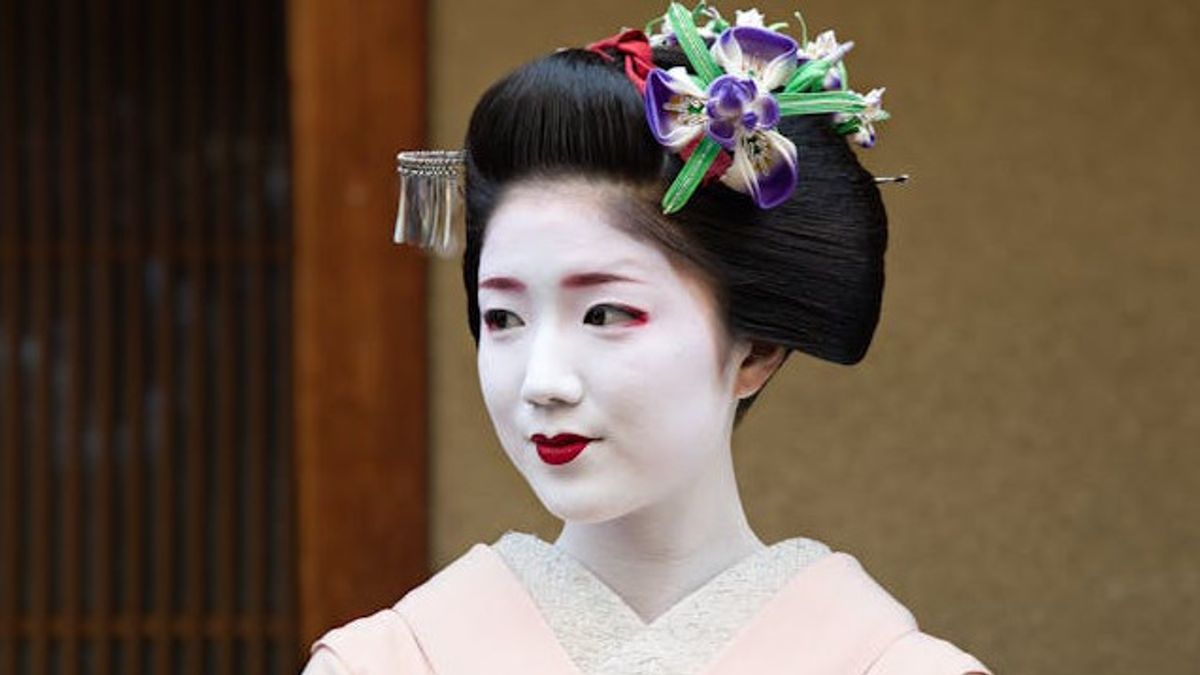


JAKARTA - Japan has become a major tourist destination for various reasons, including its natural beauty, historical wealth, and its significant influence on global pop culture. One of the most popular destinations is the Gion district in Kyoto, where tourists come to see a glimpse of the Geisha and maiko (canon Geisha) that walks elegantly on the streets. While it may be tempted to take photos, it can get you into trouble. Taking a picture of the Geisha without their permission is prohibited in Gion and fines can be imposed.
This rule stems from the behavior of tourists who have had problems for years. Unfortunately, women who work in Kyoto's Geisha district are often treated like tourist attractions. And visitors aggressively try to take pictures of them without permission. This problem was completely out of control in 2019. Where, some tourists looked to pull out the geisha clothes, chase them for photos, take out their canzashi (traditional Japanese hair ornaments), and blame the geishas with cigarette butts. Responding to this violation, the Gion district put up banners containing the threat of fines up toites of up toites. 10,000 ($68) for anyone taking photos of the women.
Although the pandemic had an impact on the decline in tourists to Japan, now travel has increased again. The country welcomes 36.9 million foreign tourists by 2024, statistics that broke records and increased 47.1 percent from the previous year. Responding to the surge in tourists who often ignore the rules not to take pictures of Geisha, Kyoto officials prohibit tourists from entering private streets in Gion in 2024.
SEE ALSO:
-
 | BERITA
10 Tradisi Tahun Baru di Berbagai Negara, Dari yang Unik hingga Ekstrem
28 Desember 2022, 20:10

Understanding the meaning of Geisha culture makes it clear why these protective measures are needed. Geisha means "suniman", because they must be proficient in various talents including singing, playing musical instruments, and dancing to appear on the show and entertaining guests. In addition, entertainers must be good at talking and may also need to learn other challenging skills, such as stringing flowers or calligraphy. Geisha is a rare and unique part of Japanese culture. And treating them with respect to helping preserve the tradition.
The English, Chinese, Japanese, Arabic, and French versions are automatically generated by the AI. So there may still be inaccuracies in translating, please always see Indonesian as our main language. (system supported by DigitalSiber.id)


