
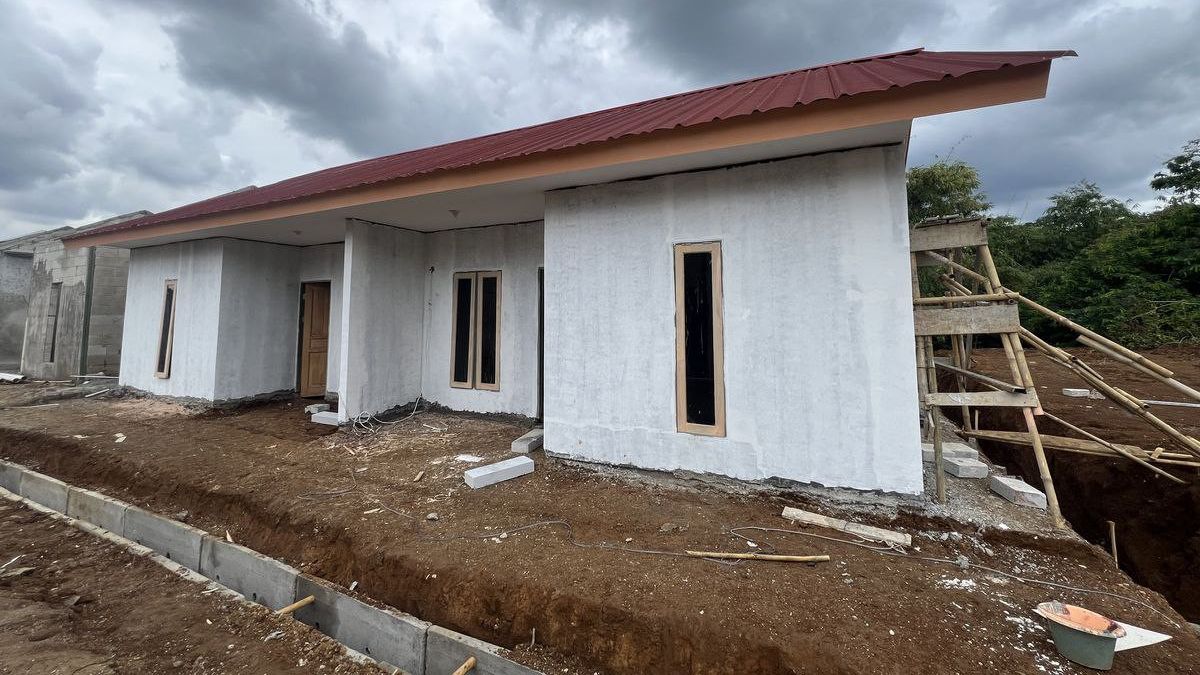


YOGYAKARTA - Earthquakes can occur at any time, without warning, and on a scale that has the potential to damage buildings and threaten human life. Therefore, earthquake house buildings are a necessity, especially in areas that are often rocked by earthquakes. One of the vital elements in the construction of anti-earthquake houses is the selection of building materials.
It should be understood that building earthquake-resistant houses is not just a matter of architectural design, but a combination of a strong and flexible structure, a solid foundation, as well as building materials that can dampen and withstand earthquake forces.
In recent decades, awareness of the importance of earthquake-resistant buildings has increased, especially seismic experts have not been able to predict when and where the earthquake will occur. Therefore, a preventive approach to earthquake-resistant construction is the best solution.
Here are some types of building materials that are suitable for building earthquake-resistant houses:
Light coal is the main choice for wall materials in earthquake-resistant construction. As the name implies, these bricks have light weight but still have high durability. Lighter material weight will reduce the overall building load, so that when an earthquake occurs, shocks do not cause major collapse.
In addition, light brick is also easy to install, has good thermal isolation power, and is resistant to fire.
In modern construction, light steel is a favorite material, especially for the roof frame and modular structure. Light steel is flexible to shocks, meaning it can follow the movement of the ground without being immediately broken or collapsed.
Another advantage of lightweight steel is its durability to corrosion, light weight, and ease of installation. This makes it one of the best materials in an anti-earthquake building.
Concrete is a material that is very commonly used, but not all concrete has the same resistance to earthquakes. Earthquake-resistant concrete is concrete made with a comparison of the right mixture of materials, the use of quality aggregates, and the appropriate water level.
In addition, strengthening with bone iron is very important to increase the durability to lateral pressure from earthquakes. If applied properly, concrete can be a very strong and sturdy structural element.
Although it seems simple and traditional, wood actually has characteristics that are very suitable for earthquake-resistant buildings. Wood is more elastic, so it can adapt to soil movement. In addition, this material is light, easy to obtain, and relatively cheap.
The use of wood is found in traditional houses that are proven to be more earthquake resistant than rigid conventional concrete buildings.
FPondasi adalah struktur dasar dari sebuah bangunan yang mengungkap beban seluruh. Batu kali atau batu gunung sering digunakan dalam buruk rumah tahan gempa karena kekuatan dan kepadatannya yang tinggi. Fondasi yang kuat sangat penting untuk mencegah bangunan dijabatkan hebat saat gempa.
SEE ALSO:
-
 | BERITA
Polisi Ringkus Kelompok Pelajar Pelaku Penyiraman Air Keras di Tanjung Priok
03 Agustus 2025, 16:30 -
 | BERITA
Pemberian Abolisi dan Amnesti Dinilai Strategi Prabowo Jinakkan Oposisi
03 Agustus 2025, 16:13 -
 | BERITA
Ahmad Muzani: Abolisi dan Amnesti Presiden Prabowo Sudah Dipertimbangkan dengan Matang
03 Agustus 2025, 16:10


Mortar serves as a binder between building elements, such as brick or stone. In earthquake-resistant buildings, mortar quality is key. A good mortar mixture consists of cement, sand, and water with the right composition. Solid Mortar will create a strong bond between building elements, so that the structure does not crack easily or escape when shaken by an earthquake.
Building earthquake-resistant houses is no longer just an option, but a necessity, especially in areas prone to disasters. The selection of building materials such as light brick, light steel, foundational stone, quality concrete, and even natural materials such as wood and bamboo greatly determines the safety of building structures when an earthquake occurs.
With the precise knowledge and application of earthquake-resistant construction technology, the risk of damage and casualties can be minimized. Investment in earthquake-resistant materials is an investment for a safer and more sustainable future.
The English, Chinese, Japanese, Arabic, and French versions are automatically generated by the AI. So there may still be inaccuracies in translating, please always see Indonesian as our main language. (system supported by DigitalSiber.id)
Most Popular Tags
#Prabowo Subianto #donald trump #2026 World Cup #venezuela #konflik timur tengahPopular


