
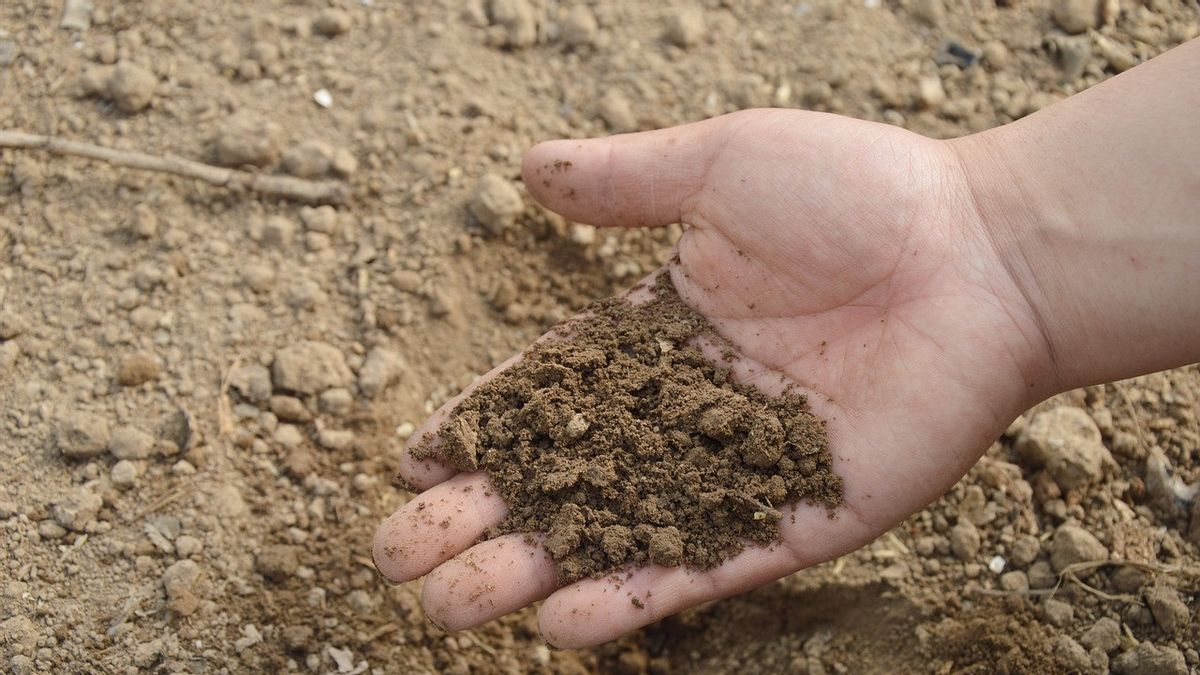


YOGYAKARTA - The physical properties of the soil can be an indicator to determine the fertility of the soil. The physical properties of the soil can be observed directly, such as texture, structure, consistency, color, to temperature or temperature.
Soil physical properties can affect the availability of water, air, and nutrients for plants, as well as the potential of the land to produce. Let's see what the physical properties of the soil are in the review below.
Physical Properties of SoilSoil physical properties are soil properties determined by its constituent materials. Compiled from various sources, there are at least 7 soil physical properties that can be used as indicators of soil fertility. The following is the list:
Soil TextureAccording to the Ministry of Education and Culture's Learning Resources, soil texture is interpreted as the size of the particles that make up the soil.
Each type of soil has a different particle size. The types of soil are distinguished based on the size of the particles, namely sand, clay, and clay soil.
The proportion of the three ingredients can determine the soil texture. The soil texture can affect porosity, permeability, infiltration, and water content capacity.
Soil StructureSoil structure is a soil characteristic that describes the arrangement of soil particles that join one with another to form small clumps.
Soil structure affects the movement of water and air in the soil, the availability of nutrients for plants, root growth, and the activity of microorganisms.
The types of soil structures are granular, crumb, prism, column, block, and plate structures.
Soil PorositySoil porosity is defined as the ability of soil to absorb water. this is related to the density of the soil.
The denser the soil, the less the soil's ability to absorb water. Well, good or fertile soil is a soil with high porosity, because it will make it easier for plant roots to penetrate the soil in search of organic matter.
Not only that, the high soil porosity can also hold rainwater, so that plants do not lack water.
Color of the EarthSoil color is the most easily recognizable physical characteristic of soil. Soil color differences are generally influenced by organic matter content.
Dark-colored soil, such as black or dark brown, usually contains high organic matter. Thus, dark-colored soil has good fertility levels.
Soil InducerQuoted from the book Social Knowledge of Geography for SMP Class 2 by Idianto Mu'in MK, soil parent material is the main material of the soil formed through chemical, biological, and physical processes.
Generally, the soil parent material consists of (SiO2), Calcite (CaC)3), Feldspar, and Biotic. Soil parent material can affect the physical properties of the soil, such as texture, permeability, percolation rate, and mineral reserves.
Soil ConsistencySoil consistency is interpreted as the ability of the soil to stick to other objects, as well as to avoid deformation or separation due to external forces. Soil consistency is influenced by the clay composition contained in it.
Soil TemperatureThe ground has varying temperatures, ranging from extreme cold levels of -20 degrees Celsius to extreme heat levels of 60 degrees Celsius.
Soil temperature can affect the germination of plant seeds, the growth of plant roots, and the availability of nutrients for plants.
So that's the information about the physical properties of the soil. Get updates on other featured news only at VOI.ID.
The English, Chinese, Japanese, Arabic, and French versions are automatically generated by the AI. So there may still be inaccuracies in translating, please always see Indonesian as our main language. (system supported by DigitalSiber.id)


